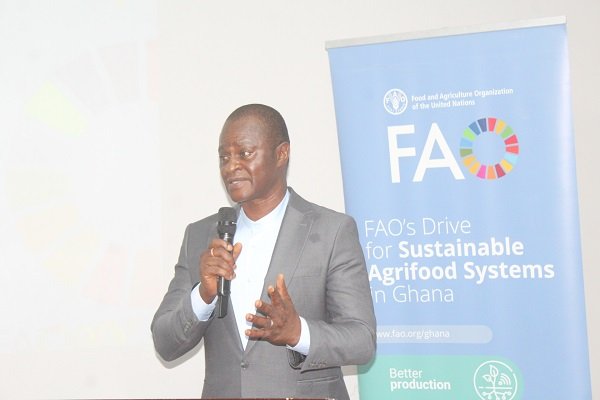
The Director-General of the National Disaster Management Organisation (NADMO), Major Dr Joseph Bikanyi Kuyon, has called for stronger coordination among stakeholders to support the development and implementation of a comprehensive national disaster risk reduction strategy.
He said the strategy was critical to safeguarding lives, protecting livelihoods and preserving national development gains.
According to him, Ghana could no longer rely solely on disaster response mechanisms in the face of increasing climate-related and human-induced disasters, stressing the need for a proactive and preventive approach to disaster management.
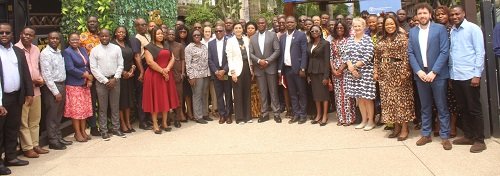
Major Dr Kuyon made the call in Accra yesterday during a high-level stakeholders’ consultation organised by NADMO in collaboration with the Food and Agriculture Organisation (FAO) to develop Ghana’s National Disaster Risk Reduction Strategy and Action Plan.

The consultation brought together representatives from government institutions, metropolitan, municipal and district assemblies, development partners, academia, civil society organisations and the private sector to deliberate on measures to strengthen disaster preparedness and resilience nationwide.
Major Dr Kuyon emphasised the need for a national framework that clearly defined roles and responsibilities, strengthened institutional coordination, promoted risk-informed development and ensured that disaster risk reduction was integrated into the plans and budgets of ministries, departments, agencies and local authorities.
He noted that the increasing frequency and complexity of disasters, including floods, coastal erosion, fire outbreaks, epidemics and the effects of climate change, posed significant threats to lives, property and socio-economic development.
The Director-General stressed that disaster risk reduction could no longer be treated as a peripheral issue, but must be placed at the centre of national planning, local governance and development implementation.
He described the consultation as a critical step towards developing a practical and inclusive framework to strengthen disaster prevention, preparedness, response and recovery efforts at both national and local levels.
Major Dr Kuyon added that Ghana could draw lessons from countries such as Senegal, where strong political commitment, institutional collaboration and stakeholder engagement had contributed to effective disaster risk reduction.
The Country Representative of FAO in Ghana, Ms Priya Gujadhur, also underscored the need for collective action in addressing the growing threats posed by climate change and disaster risks.
She said climate-related hazards, including droughts, floods, tidal waves, coastal erosion and prolonged dry spells, were increasingly affecting vulnerable communities and undermining food security, agricultural productivity and national development.
Ms Gujadhur noted that meaningful disaster risk reduction required collaboration among government, communities, civil society, the private sector, development partners and academia.
She pointed out that agriculture remained one of the most vulnerable sectors to climate-related shocks, particularly in developing countries, where droughts accounted for a significant proportion of losses.
Citing the prolonged dry spell experienced in northern Ghana in 2024, she said it had adversely affected agricultural production and livelihoods, highlighting the urgent need to strengthen resilience-building measures.
Ms Gujadhur further indicated that investments in disaster risk reduction and anticipatory action yielded significant economic benefits.
According to her, evidence from FAO showed that investments in disaster risk reduction at the farm level generated returns three times higher than the initial cost, while every dollar invested in anticipatory action could result in up to seven dollars in avoided losses.
She therefore stressed the need for increased investment in early warning systems, preparedness measures and coordinated interventions to minimise the impact of disasters on vulnerable populations.
Ms Gujadhur added that the ongoing process would contribute to the establishment of a National Technical Working Group on Early Warning and Anticipatory Action, under the leadership of NADMO, to enhance coordination and ensure timely response to emerging risks.
BY CLIFF EKUFUL
Follow our WhatsApp Channel now! https://whatsapp.com/channel/0029VbAjG7g3gvWajUAEX12Q