Ghana’s public finance transformation: The journey, lessons, and future of IPSAS adoption
The landscape of public financial management in Ghana has been undergoing a quiet but profound revolution in the recent past. At the heart of this transformation is the adoption of the International Public Sector Accounting Standards (IPSAS) by Ministries, Departments, Agencies (MDAs), Metropolitan, Municipal, and District Assemblies (MMDAs), and State-Owned Enterprises (SOEs). This shift from traditional cash-based accounting to a modern, accrual-based system is more than just a technical accounting change; it is a fundamental step towards greater transparency, accountability, efficiency, effectiveness, and value for money and improved governance for the benefit of every Ghanaian.
The journey so far: A strategic march
Ghana’s IPSAS journey did not begin overnight. It has been a deliberate and phased process, championed by the Government of Ghana through the Ministry of Finance, spearheaded by the Controller and Accountant-General’s Department (CAGD), and hugely supported by the Institute of Chartered Accountants (ICAG).
The first major milestone was the adoption of the Cash Basis IPSAS in 2014 in the preparation of accounts. This was a crucial starting point, standardising how the government reported its cash inflows and outflows. It provided a clearer and more consistent picture of national budget execution and served as a necessary foundation for the more complex transition to come, which virtually came.
The ultimate goal, however, has always been the full implementation of the Accrual Basis IPSAS. This is the gold standard for public sector accounting worldwide. Unlike cash accounting, which records transactions only when cash is received or paid, accrual accounting recognizes economic events when they occur, regardless of cash movement. This means that for the first time, the government can accurately account for and report on its assets (like roads, buildings, and equipment) and its liabilities (such as Debts, pensions, and arrears). This journey towards full accrual adoption is well underway, with significant progress in policy development, capacity building, and the preparation of inaugural accrual-based financial statements for the government’s trial balance.
Key lessons learned along the way
The path to IPSAS implementation is complex, and Ghana’s experience has yielded invaluable insights:
1. Leadership and Political Will are Non-Negotiable: The transition to IPSAS is a massive, cross-governmental endeavour. Its success hinges on sustained commitment from the highest levels of government. The continuous support from the Ministry of Finance, the CAGD, and ICAG has been the single most critical success factor and deserves recommendation.
2. Capacity Building is a Continuous Process: IPSAS is a highly technical field. A significant challenge has been the need to build a critical mass of accounting and finance professionals across all MDAs and MMDAs who are proficient in accrual accounting. This has required, and will continue to require, massive investment in recruitment, training, and continuous professional development (CPD).
3. Technology is an Enabler, Not a Silver Bullet: Implementing IPSAS requires robust Financial Management Information Systems (FMIS). While Ghana has made strides with systems like the Ghana Integrated Financial Management Information System (GIFMIS), the journey has highlighted that technology must be supported by strong processes and skilled people. The system is only as good as the data entered into it.
4. The Challenge of Asset and Liability Valuation: One of the most daunting tasks has been the identification and valuation of the government’s vast portfolio of assets and liabilities. How do you value a decades-old bridge or a historical government building? This process has been painstaking but essential for true financial transparency. The Controller and Accountant-General’s Department has developed systems to record all state assets, including legacy assets, to help solve this problem. However, their implementation and enforcement remain major obstacles.
5. Change Management is Decisive: Resistance to change is natural. Moving from a familiar, long-established cash system to a new, complex accrual system requires careful change management to win the hearts and minds of all stakeholders, from accountants to policymakers.
Insights for the future: The payoff for Ghana
The full adoption of IPSAS is not an end in itself; it is a means to a much greater end. The insights it will provide are transformative:
- Enhanced Decision-Making: With a complete picture of the government’s financial health, policymakers can make more informed decisions about infrastructure investment, debt management, and resource allocation. They will understand the true cost of service delivery and the long-term implications of today’s policies.
- Strengthened Accountability and Transparency: IPSAS-compliant financial statements are easier for citizens, investors, and international partners to understand and compare. This deters corruption, builds trust in public institutions, and enhances Ghana’s credibility in the international financial markets.
- Improved Debt and Resource Management: By having a clear view of both assets and liabilities, the government can better manage its debt portfolio and plan for future obligations, leading to greater fiscal sustainability.
Conclusion: Steadfast on the Path
Ghana’s journey towards full IPSAS adoption is a testament to its commitment to sound and transparent public financial management. While challenges remain, the progress made so far is commendable. The lessons learned are being incorporated into a more robust implementation strategy.
As the nation continues on this path, it is imperative that all stakeholders—Parliament, civil society, the media, and the public—support this crucial initiative. The ultimate destination is a Ghana where public finances are managed with the highest degree of professionalism and openness, fostering economic growth and ensuring that public resources are used effectively and efficiently for the development of our nation. The journey is demanding, but the destination—a more accountable and prosperous Ghana—is well worth the effort. Together, we can build the robust public financial management system that the citizens yearn for.
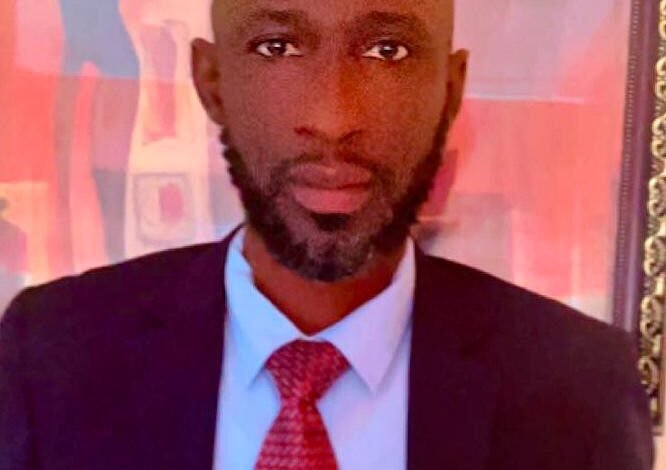
The author is a Member of the Institute of Chartered Accountants, Ghana.
🔗 Follow Ghanaian Times WhatsApp Channel today. https://whatsapp.com/channel/0029VbAjG7g3gvWajUAEX12Q
🌍 Trusted News. Real Stories. Anytime, Anywhere.
✅ Join our WhatsApp Channel now! https://whatsapp.com/channel/0029VbAjG7g3gvWajUAEX12Q


![IT must be one of the most difficult – and exasperating – tasks in the world to be the President of a nation like Ghana. For you may travel all over4 the world, talking to the leaders of “the developed nations”, to try persuade them that the pandemic that is afflicting the world, Covid-19 (with its variants) is a truly global destroyer and thatnowhere is safe from it, until everywhere is safe. You may deploy your most eloquent language to point out that although, the scientists of the “developed countries” have managed to manufacture a vaccine that has been seen to work against the pandemic, the politicians of the “developed countries” are, contrary to undertakings they have made to the World Health Organisation (WHO) hoarding the vaccine in their countries. Reports suggest that whereas the governments of the “developed countries” are targeting 100 percent of their populace for vaccination, and getting closer to their objective every day, less than 10% of the populace of the developing countries have so far been vaccinated, as a result of a lack of vaccines. Is this fair? you ask. Air travel (you continue) has made international contacts extremely easy. And since the Covid-19 virus and its latest variant (Omicron) in particOman Ghana versus Covid-19 08 www.ghanaiantimes.com.gh GHANAIAN Times Features TUESDAY, DECEMBER 21, 2021ular, are very transmissible. So it is in everyone's educated self-interest to see that all people on the planet are fully vaccinated. As a result of your Government's efforts, you hear that plenty of vaccines have arrived in your country and you are emboldened to announce that your Government will soon be able to vaccinate its entire adult population. Then, you get the shock of your life: an intelligence report tells you that some mischievous people are spreading the fake news that if a person allows himself or herself to be vaccinated, the “vaccine will make that person vote for your governing NPP whether he/she wants to do so or not!” WHAAAAT! How does one counter such fake news? If the Government say it is not true, the conspiracy theorists shoot back, “And are you so naïve as to expect them to admit that the vaccine will make you vote for the NPP?” Wow! Are people so wicked that despite the gains that the world has already made through vaccination (such as the elimination of small pox from the world and the near-extinction of polio and yellow fever) they try to dissuade others from taking advantage of anti-Covid vaccination? Especially since people who are clever enough to invent such fake news must know of the horrible pain that Covid-19 subjects people to, before it finally kills them? What makes the anti-Covid vaccination story doubly awful is that its seeds are sown on pre-fertilised ground. In the past, some wicked scientists in the developed countries have allowed themselves to be used by their [usually racist] governments to administer harmful vaccines and other medications to people, using the lie that such interventions can save them from certain disease. One of the most devastating such deceptions occurred in the United States in 1932. Below is the horrible story as told on the OFFICIAL website of the US CENTRES FOR DISEASE CONTROL [CDC]: https://www.cdc.gov/tuskegee/timeline.htm QUOTE: THE U.S. PUBLIC HEALTH SERVICE SYPHILIS STUDY AT TUSKEGEE In 1932, the USPHS, [US Public Health Service] working with the Tuskegee Institute, began a study to record the natural history of syphillis. It was originally called the “Tuskegee Study of Untreated Syphillis in the Negro Male” (sic) [now referred to as the “USPHS Syphilis Study at Tuskegee”]. The study initially involved 600 Black men — 399 with syphillis, 201 who did not have the disease. Participants’ informed consent was not collected. Researchers told the men they were being treated for “bad blood,” a local term used to describe several ailments, including syphillis, anaemia, and fatigue. In exchange for taking part in the study, the men received free medical exams, free meals, and burial insurance (sic)! By 1943, penicillin was the treatment of choice for syphilis and becoming widely available, but the participants in the study were not offered treatment. In 1972, an Associated Press story about the study was published. As a result, the Assistant Secretary for Health and Scientific Affairs appointed an Ad Hoc Advisory Panel to review the study. The advisory panel concluded that the study was “ethically unjustified”; that is, the “results [were] disproportionately meagre, compared with known risks to [the] human subjects involved.” In March 1973, the panel advised the Secretary of the Department of Health, Education, and Welfare to instruct the USPHS to provide all necessary medical care for the survivors of the study. The Tuskegee Health Benefit Programme was established to provide these services and in 1975, participants’ wives, widows and children were added to the program. In 1995, the program was expanded to include health, as well as medical, benefits. The last study participant died in January 2004. The last widow receiving THBP benefits died in January 2009. ... I973, a class-action lawsuit was filed on behalf of the study participants and their families, resulting in a $10 million, out-of-court settlement in 1974. On May 16, 1997, President Bill Clinton issued a formal Presidential Apology [over the study.] UNQUOTE In Ghana, the fake news that the anti-Covid vaccine would make people “vote for the NPP” has already begun to cause disagreements in some households. A family known to me has had to dismiss its house-help because she obstinately refused to take the jab. To illustrate the way the way the political message contained in the fake news has been camouflaged, I offer a version of the last conversation between the head of the household and the house-help: BOSS: Hey, “A”, you are very lucky! Instead of you going around to look for the vaccinators, they are coming to our estate! HOUSE-HELP: They are coming here? B: Yes! H: But Boss, I told you that my brother took the jab and had to be admitted into hospital. B: It doesn't mean that you too will become ill if you get the jab. It affects different people in different ways. Look, as you know, I have had all my own jabs and I have never been ill – as you know! H: But Boss, if you have taken all your jabs, then you are PROTECTED, are you not? B: Yes, I am. H: In that case, even if I become infected because I have not taken the jab, I cannot transmit the disease to you and YOU will be all right? B: I can't say that! Because, as I have explained to you, the pandemic can affect different people in different ways. H: Then the jab is useless? B: Listen, I can't take any risks with such a dangerous disease. Either you take it or you leave, I am sorry. I cannot allow you to expose me and my family to the risk of catching Covid. As I reported earlier, the House-help chose to leave. Both her Boss and I are convinced that it wasn't mere logicthat made her decide not to take the jab. She was probably under the influence of a church/cult. Or political propaganda! • Omicron cases at Kotoka International Airport are amongst the unvaccinated](https://ghanaiantimes.com.gh/wp-content/uploads/2021/12/GT-8.pdf-Adobe-Acrobat-Pro-DC-4-220x150.jpg)