Journalists urged to prioritise conflict-sensitive reporting
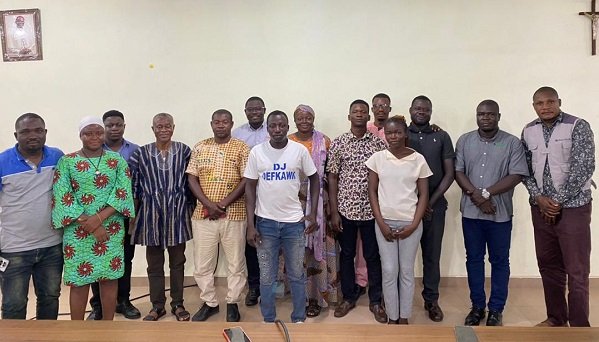
Journalists and media practitioners in the northern part of the country have been urged to prioritise conflict-sensitive journalism in their coverage of conflicts and related developments.
The Navrongo-Bolgatanga Catholic Diocesan Development Organisation (NABOCADO), the development wing of the Catholic Church, said reporting that focused on narratives capable of de-escalating tensions was critical to restoring peace in communities affected by conflict.
The organisation made the call at a conflict-sensitive reporting workshop for journalists in Bolgatanga on Wednesday.
The Director of Justice, Peace and Humanitarian Response (JPHR) at NABOCADO, Mr Theophilus Abolga Suhuruba Atia, said the workshop formed part of the implementation of the organisation’s Integrated Peace Building for Improved Food and Nutrition Supply (INPEACE) project.


He said the project, which was being implemented from June this year to May 2029, covered four districts in the Upper East and North East regions.
The beneficiary areas are the Bawku Municipality, Kassena-Nankana West, Bunkpurugu-Nakpanduri and Yunyoo-Nasuan districts.
Mr Atia said the main objective of the project was to reduce violent conflicts and improve social cohesion in communities within the Navrongo-Bolgatanga Diocese.
He said under the project, NABOCADO had established community peace agents in border communities and recruited 31 border monitors who had been trained to identify early warning signs of violence and alert the appropriate authorities to enable timely intervention.
Mr Atia disclosed that there were 77 “active conflicts” in communities within the diocese, 72 per cent of which were land-related.
He described the project’s contribution to restoring calm in some conflict-prone communities in the two regions as significant and called for sustained collaboration among the media, the Regional Peace Council and other peace advocacy groups.
He said such collaboration was necessary to make further progress in conflict prevention and resolution.
“Peace journalism is very essential in sustaining relative peace in communities, and that is what our friends from the media have to do in times of conflict,” he said.
He said “In peace building, we concentrate on prevention, and that is what NABOCADO is doing. We throw a challenge to the media to focus on efforts to de-escalate tensions when conflicts brew.”
The immediate-past Upper East Regional Executive Director of the Peace Council, Mr Ali Anankpieng, said responsible journalism could contribute to de-escalating and ending conflicts.
He cautioned journalists against sensationalism in conflict reporting, saying it could exacerbate already volatile situations.
“While violence is taking place, peace efforts are going on. A conflict-sensitive reporter should be interested in amplifying narratives on stakeholders’ resolve to bringing the unfortunate situation under control instead of concentrating solely on painting a gloomy picture about it,” he cautioned.
FROM FRANCIS DABRE DABANG, BOLGATANGA
You can now read the *Ghanaian Times* and *The Spectator* newspapers digitally on [TimesNewsPlus](https://timesnewsplus.com/newspapers).
Follow our WhatsApp Channel now! https://whatsapp.com/channel/0029VbAjG7g3gvWajUAEX12Q