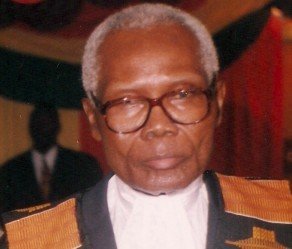
Justice Daniel Francis Kweipe Annan at 20 : The standard he set for Parliament and the Republic
Twenty years after his passing, Rt. Hon. Justice Daniel Francis Kweipe Annan remains one of the principal architects of Ghana’s Fourth Republic. As the first Speaker of Parliament under the 1992 Constitution, he did more than preside over a new Legislature. He helped shape its culture, define its constitutional role and establish traditions that have enabled our democratic experiment to endure.
His memory deserves reflection. At a time when constitutional democracies face growing strain, Justice Annan’s life offers enduring lessons in leadership, restraint and fidelity to public service.
Theodore Roosevelt once observed that history belongs not to the critic, but to the person who enters the arena in pursuit of a worthy cause. Justice Annan belonged to that tradition. He accepted the difficult responsibility of leading a Parliament whose future was uncertain and he did so with quiet confidence, intellectual discipline and unwavering respect for the Constitution.
When Ghana inaugurated the Fourth Republic in January 1993, success was far from guaranteed. The country was emerging from more than a decade of military rule. Many questioned whether democratic governance would survive beyond a single electoral cycle.
Justice Annan entered that moment with the experience of a distinguished jurist and the temperament of a nation builder. Having retired from the Bench, he answered the call to return to public service and became the first Speaker of Parliament under the new constitutional order. He was entrusted with leading an institution that was itself finding its identity.
Consider the weight of history he carried into that chair. Our First Republic produced two National Assemblies. The first was elected under multi-party competition. The second was returned unopposed in 1965, after the country was, rather unfortunately, compelled into a one-party state. It was swept away within months by the coup of February 1966. Our Second Republic, which lasted from 1969 to 1972, produced a single Parliament before the Republic itself was overthrown by another military intervention. Our Third Republic, from 1979 to 1981, produced one more before suffering the same fate. Four Parliaments across three Republics. Not one was permitted to grow old. Justice Annan broke that pattern. Under his stewardship, and that of those who followed him, the Fourth Republic has since sustained nine Parliaments, and counting.
As Speaker, Justice Annan did not just preside. He taught the House what it meant to be a Parliament. In a lecture on the powers, privileges, and immunities of this institution, he explained that Parliament may be called “a master of its own procedures.” But even that mastery is bounded. “Executive approval is needed in some instances,” he said, and the Supreme Court remains the final interpreter of the Constitution (Annan, 1996a). A Minority Leader of that day once took a parliamentary decision to the Supreme Court. He wanted to test its constitutionality. Justice Annan did not treat this as a challenge to the House. He treated it as proof that no branch of government stands above the law. Not even this one. That is a lesson Parliament, of every persuasion, still needs.
He also insisted that Parliament’s legitimacy is renewed outside its own walls. In 1996, Justice Annan opened the “Parliament in Retrospect” public forum at the National Theatre. There, he reminded the nation that the House had undertaken to “give account of its stewardship to the nation”. A Legislature that will not explain itself to the people cannot claim to serve them. He addressed the National Media Commission that same year. He was equally direct with the press. On matters touching the Presidency, the Judiciary, and the Legislature, he said, “objectivity, fairness and accuracy must be the watch words of media practitioners”.
He carried that same conviction abroad. Speaking to parliamentarians from Togo, Benin, Burkina Faso, and Côte d’Ivoire, he described Ghana’s foreign policy as rooted in “the fostering of the closest possible co-operation and collaboration with neighbouring states” bound by “ties of blood, history and culture” (Annan, 1996d). He carried this vision further still, in addresses to the House of Commons of Canada and the Standing Committee of China’s National People’s Congress that same year.
We would do him a disservice if we remembered him only as Speaker. He was a distinguished jurist who rose to the Court of Appeal bench. He was a member of the Provisional National Defence Council. There, he helped chart the path back to constitutional rule. He was a sportsman who led our Boxing Authority and Olympic Committee. That range is the range of a man who understood public service as one continuous obligation.
The confidence reposed in him by the Republic was extraordinary. Pursuant to Article 60(11) of the 1992 Constitution, he performed the functions of President of the Republic when both the President and the Vice President were outside the country. Few Speakers anywhere have been trusted to stand, even briefly, at the very apex of the state they served in Parliament. In recognition of this lifetime of distinguished service, Justice Annan was decorated with the Order of the Star of Ghana. It is one of our Republic’s most prestigious state honours. It is a fitting tribute to a man who wore the mantle of the Speakership, and on occasion the mantle of the Presidency itself, with the same quiet dignity.
Justice Annan’s legacy speaks with remarkable urgency to the challenges confronting constitutional democracies today.
As I reflect upon Justice Annan’s legacy, three lessons stand out with particular clarity;
First, institutional impartiality over party loyalty. His even-handed rulings, regardless of which Caucus raised a matter, are the antidote to Speakers and officials reduced to instruments of the executive control. That affliction is now partly driving democratic backsliding across our sub-region.
Second, accountability beyond the Chamber. His willingness to face citizens directly at “Parliament in Retrospect” models a form of answerability. It is a standard that demands our fidelity today. We must ensure that answerability to the people is never displaced by money, and that access to power is always earned through service, never purchased.
Third, submission to constitutional limits. His acceptance that even Parliament’s decisions may be tested by the Supreme Court affirms a simple truth. No institution, however powerful or well-financed, stands above the law (Annan, 1996a).
Across parts of Africa, coups are again fashionable. Political finance threatens to eclipse public trust. Ghana owes Justice Annan’s memory nothing less than the deliberate practice of the enduring standards he quietly but elegantly modelled. I dare say that in more ways than one, he was the standard.
Above all, one plain truth remains:
Any time an institution of state fails to rise above the partisan colours of those who head it, as has sadly become the norm in our politics today, we perform below his noble standard. Justice Annan did not lead a Government department. He led a Parliament that belonged to every Ghanaian, on every side. That is the measure he set. It is the measure by which history will judge whether we were worthy successors, or merely occupants, of the offices he once dignified.
As we commemorate 20 years since his passing, let us recommit ourselves to preserving the democratic values he defended.
Whenever Parliament opens its doors to public scrutiny, we honour his standard. Whenever we ask of the media nothing more than fair and accurate reporting, we honour his standard. Every time a Member accepts that even Parliament answers to the Constitution, we live out his standard. Three Republics gave Ghana four Parliaments. None saw a second term. The Fourth Republic has given us nine, and still counting. That is because a man once insisted this institution deserved to outlast the moment of its birth.
May his memory continue to instruct us. May God bless the Parliament of Ghana.
God bless our homeland Ghana and make her great and strong.
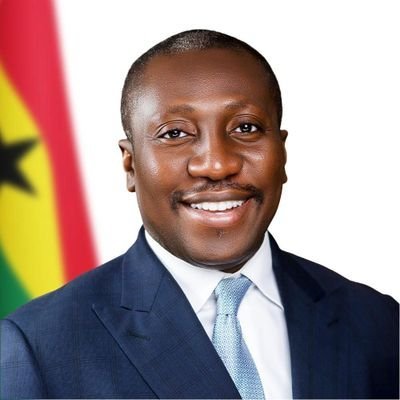
By Osahen Alexander Kwamena Afenyo-Markin
The writer is the Minority Leader, Parliament of Ghana
Follow our WhatsApp Channel now! https://whatsapp.com/channel/0029VbAjG7g3gvWajUAEX12Q