
KAIPTC organises e-learning awareness forum, exhibition… for W/African security personnel, civilians
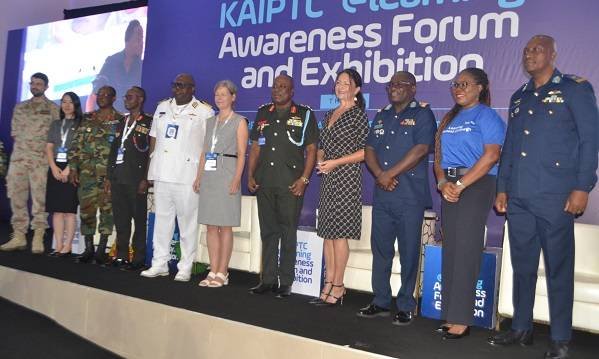
The Kofi Annan International Peacekeeping Training Centre (KAIPTC) has held its maiden e-learning awareness forum and exhibition to underscore the importance of e-learning in a continually technologically advancing world.
The forum, with support from the Norwegian embassy in Ghana and the German Agency for International Corporation (GIZ), brought together learners from across the West African sub-region, security personnel and civilians.
On the theme: “The future of KAIPTC learning: Developing capacities through innovative learning technologies”, the initiative is intended to bring higher education closer to learners by minimising the traditional in-person mode of teaching and learning.
E-learning, according to the Economy Times, is a learning system based on formalised teaching but the help of electronic resources with the use of computers and the Internet forms a major component of e-learning.
Opening the forum in Accra, yesterday, Maj. Gen. Richard Addo Gyane, Commandant of the KAIPTC, said e-learning is not only the future of education but the present.
“We stand at the precipice of a new era in education and training and e-learning is and will be one of the most versatile, booming, emerging and growing trends or product in the world of education,” he stated.
Technology, Maj. Gen. Gyane said, has obliterated geographical boundaries, enabling global collaboration in ways otherwise we could only dream of before.
He said though the KAIPTC has been proactive and undertaking e-learning on a limited bases, it peaked since the breakout of the coronavirus pandemic.
“Since the launch of KAIPTC’s inaugural e-learning course in 2020, there have been over 3,000 enrollments on the various available e-courses.
“This not only underscores the dynamic and viable nature of e-Learning as a means of delivering training but also its pivotal role in advancing strategic goals, ensuring financial sustainability, and maintaining the longevity of the center’s post-graduate academic programmes.”
That coronavirus-induced shift, he acknowledged, has significantly enhanced KAIPTC’s visibility within the technological ecosystem assuring that the centre is committed to enhancing its e-learning infrastructure to better serve stakeholders and extend its reach both locally and globally.
“Let us seize the opportunities that e-learning provides and share our knowledge and expertise with one another. Together, we can chart a path towards a brighter future for KAIPTC, our partners, and the broader global community we serve,” Maj. Gen. Gyane said.
The Norwegian Ambassador to Ghana, Ingrid Mollestad, said e-learning lifts the constraints from traditional learning of time, place, space, and pace.
In her view, by taking advantage of e-learning, the KAIPTC casts a wider net, reaching potential peace champions far and wide, ensuring they are equipped with essential knowledge on today’s most pressing challenges.
Teresa Krafft, in a speech read on behalf of the country director of GIZ, said the growing demand for innovative approaches to training through virtual learning in the peace and security environment, and the KAIPTC’s quest to diversify its course portfolio, was a welcome initiative.
BY JULIUS YAO PETETSI