Ghana’s merchandise trade has increased sharply from US$6.0 billion in 2004 to US$52.5 billion in 2025, reflecting significant changes in the country’s trade structure and a shift from years of trade deficits to a record trade surplus of GH¢148.3 billion last year.
The development was contained in a report on Ghana’s merchandise trade performance, which showed that exports accounted for 61.3 per cent of total trade in 2025, compared with 38.7 per cent for imports.
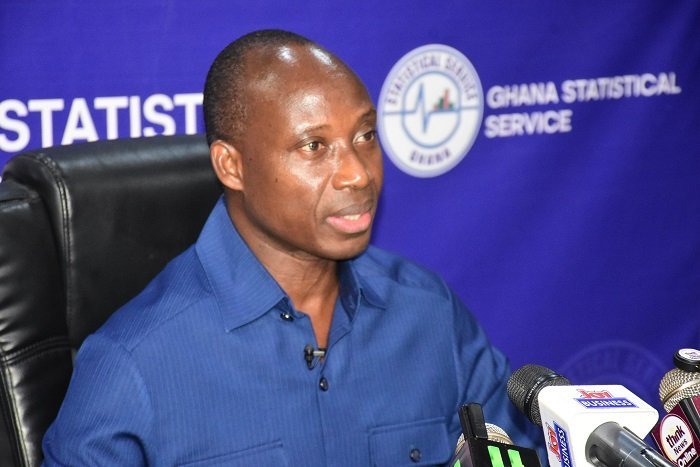
A statement issued by the Ghana Statistical Service (GSS) and copied to The Ghanaian Times yesterday said the report highlighted major changes in the country’s merchandise trade over the past two decades.
The report indicated that exports accounted for only 32.1 per cent of total trade in 2004, while imports represented 67.9 per cent, underscoring the significant improvement in Ghana’s export performance over the period.


It further showed that Ghana recorded trade surpluses in 2011, 2014, 2018, 2019, 2023, 2024 and 2025.
The surplus increased from GH¢5.3 billion in 2023 to GH¢44.7 billion in 2024 before reaching GH¢148.3 billion in 2025.
According to the report, gold remained the dominant component of Ghana’s exports, with its share rising from 38.5 per cent in 2004 to 63.1 per cent in 2025.
Cocoa beans and cocoa products, which accounted for 29.3 per cent of exports in 2004, saw their share decline to 14.0 per cent in 2025.
Mineral fuels and oils accounted for 8.8 per cent of exports in 2025.
The report, however, noted growth in non-traditional exports, with cocoa products increasing their share from 9.8 per cent in 2004 to 27.0 per cent in 2025.
Edible fruits and nuts also recorded growth, increasing from 6.1 per cent to 12.1 per cent, while plastics accounted for 8.5 per cent of exports in 2025.
On Ghana’s trading partners, the report identified Asia as the country’s largest export destination, accounting for 50.1 per cent of exports in 2025, compared with 26.8 per cent for Europe.
In 2004, Europe dominated Ghana’s exports with 51.2 per cent, while Asia accounted for only 7.9 per cent, indicating a significant shift in the country’s export markets over the period.
Asia also became Ghana’s leading source of imports, increasing its share from 26.9 per cent in 2004 to 48.4 per cent in 2025.
Europe’s share, meanwhile, declined from 45.9 per cent to 24.7 per cent over the same period.
On imports, mineral fuels and oils increased from 5.7 per cent in 2010 to 25.7 per cent in 2025, while vehicles and automotive parts accounted for 15.4 per cent.
Machinery and electrical equipment, which represented 21.9 per cent of imports in 2004, declined to 13.9 per cent in 2025.
BY EUGENE AMPIAW
Follow our WhatsApp Channel now! https://whatsapp.com/channel/0029VbAjG7g3gvWajUAEX12Q