MIIF records GH¢5.43bn mineral royalties in 2025 …with strong outlook for 2026

THE Minerals Income Investment Fund (MIIF) last year recorded total mineral royalty inflows of GH¢5.43 billion, the highest since its establishment, reinforcing government’s efforts to optimise revenue generation from the country’s mineral resources.
The figure surpassed the GH¢4.91 billion realised in 2024, representing a 10.8 per cent year-on-year growth and underscoring improved efficiency in royalty mobilisation and oversight.
The Chief Executive Officer of MIIF, Mrs Justina Nelson, disclosed this during a Civil Society Organisations (CSOs) roundtable engagement on Friday, where she attributed the strong performance to disciplined enforcement, strategic oversight and renewed institutional commitment.
She stated that the Fund had entered 2026 from a position of strength, revealing that first-quarter royalty collections for the year had already exceeded performance recorded over the same period in 2025.


“With the support of the Ghana Revenue Authority, we have surpassed our own record for the first quarter compared to last year. Full details of this achievement will be made public before the end of the month,” she said.
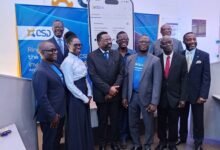
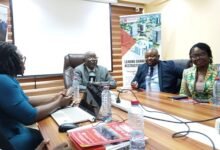
The roundtable brought together selected CSOs, policy institutions, think tanks and extractive sector advocacy groups to deliberate on amendments to the MIIF Act, the Fund’s mandate, strategic priorities, investment portfolio and recent royalty performance.
Mrs Nelson explained that the 2025 achievement was particularly significant, as it occurred during a period when the Ghana cedi appreciated strongly against major trading currencies, especially the US dollar.
She noted that while projections in 2024 placed the exchange rate at GH¢17 to one US dollar, the year ended at approximately GH¢11 to one US dollar, a development which ordinarily would have reduced the cedi value of mineral royalties.
“Had the projected exchange rate prevailed, royalty inflows would have been substantially higher. Nonetheless, delivering GH¢5.43 billion remains a remarkable achievement and demonstrates the resilience of Ghana’s mineral revenue framework,” she emphasised.
Mrs Nelson mentioned ongoing institutional reforms aimed at strengthening the Fund’s operational capacity and governance structures.
She said the reforms included the establishment of a Compliance and Environmental, Social and Governance (ESG) Department to ensure adherence to regulatory requirements, ethical standards and internal policies.
In addition, she said a Risk Management Department has been created, supported by a comprehensive governance risk framework and departmental risk registers to enhance the identification and mitigation of financial, operational and strategic risks.
Mrs Nelson indicated the formation of a Monitoring and Evaluation Department to track the performance of MIIF’s equity investments and ensure value delivery to the nation.
She commended civil society organisations for their consistent role in promoting transparency, accountability and reforms within Ghana’s extractive sector and broader governance landscape.
She acknowledged that CSOs had been instrumental in shaping public discourse on issues such as revenue management, environmental protection, local participation and value addition.
“Your vigilance and advocacy are indispensable to our work. MIIF exists for the long-term benefit of the nation, and we recognise the importance of engaging stakeholders to build trust and deepen understanding,” she said.
She reiterated MIIF’s commitment to transparency and continuous stakeholder engagement, noting that such interactions were essential in addressing public concerns and correcting misconceptions about the Fund’s operations.
Mrs Nelson added that recent amendments to the MIIF Act were guiding the adoption of a more resilient and diversified investment strategy aimed at maximising value from Ghana’s mineral wealth.
BY KINGSLEY ASARE
Follow our WhatsApp Channel now! https://whatsapp.com/channel/0029VbAjG7g3gvWajUAEX12Q