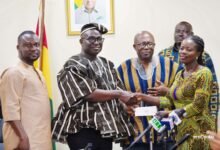
Veteran Ghanaian journalist Kwesi Pratt has called for a global push for reparatory justice, insisting that reparations for the transatlantic slave trade and colonialism should be treated as a matter of justice rather than charity.
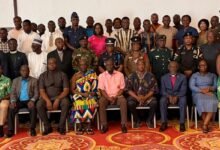
Speaking on the second day of the High-Level Consultative Conference on the next steps following the landmark United Nations Resolution A/Res/80/250 on the trafficking of enslaved Africans, Pratt said reparations are a political, legal and historical necessity.
According to him, the transatlantic slave trade was not an isolated event but a system that was organised and supported by governments, chartered companies, churches and intellectual institutions that benefited from the exploitation of Africans.
He argued that the plantation economy that emerged from slavery created a racial order that portrayed Africans as inferior and justified their enslavement.


He added that the effects of this ideology survived through colonialism, apartheid and other systems that continue to disadvantage African people.
Pratt said reparatory justice must go beyond apologies and financial compensation.
He explained that it should include restitution, rehabilitation, institutional reforms, cultural restoration, educational correction and guarantees that such injustices never happen again.
“The demand for reparations is rooted in memory but directed towards the future,” he said, adding that the goal is not only to correct historical wrongs but also to transform conditions that continue to produce African underdevelopment.
He called for the return of stolen African artefacts and the rewriting of distorted historical accounts, arguing that both are essential components of reparatory justice.
The veteran journalist urged African governments, the African diaspora and international partners to ensure that the recent United Nations resolution becomes the basis for a concrete programme of action rather than a symbolic document.
He proposed the establishment of a permanent and coordinated reparations mechanism involving the African Union, CARICOM, African states, diaspora organisations, legal experts, historians, economists and civil society groups.
According to Pratt, the body should be tasked with researching historical crimes, documenting evidence, advocating for justice and engaging international institutions, including the United Nations, courts, financial institutions, universities and museums.
He called for extensive legal investigations into states, companies, banks, churches and other institutions that participated in or profited from slavery and colonial exploitation.
Mr. Pratt stressed the need for a global reparations education campaign, saying schools, universities, media organisations and cultural institutions must help correct misconceptions about Africa’s history.
He argued that Africa’s poverty and underdevelopment were not the result of destiny but were linked to centuries of exploitation, extraction of resources and colonial domination.
On development, he said reparations should include debt cancellation, industrial support, technology transfer, educational investment, healthcare development and infrastructure expansion across Africa and African-descended communities.
He further criticised attempts to reduce reparations to cultural tourism and symbolic gestures, insisting that the campaign is fundamentally about restoring dignity and addressing historical injustices.
Mr. Pratt questioned the participation of French President Emmanuel Macron in the conference, describing it as inappropriate in the context of discussions on reparatory justice.
Responding to questions after his presentation, he called on civil society organisations, the media and social movements to build international solidarity around the reparations agenda.
He argued that the struggle for reparatory justice is connected to broader global struggles against oppression and inequality and requires the support of people across the world.
Despite the challenges, Pratt expressed confidence that the campaign would succeed.
“We are not begging,” he said. “We are engaged in a struggle for justice.”
He maintained that Africa and its diaspora must continue pushing for accountability and meaningful action, expressing optimism that the fight for reparatory justice would ultimately be won.
By: Jacob Aggrey