Sanitation now key yardstick for MMDCEs – Minister
The government has reaffirmed its decision to make sanitation a key performance indicator for Metropolitan, Municipal and District Chief Executives (MMDCEs) in a move aimed at strengthening accountability and improving environmental cleanliness nationwide.
It explained that the policy is intended to enhance responsibility among local authorities and fast-track efforts to tackle persistent sanitation challenges such as open defecation, poor waste management and environmental degradation.
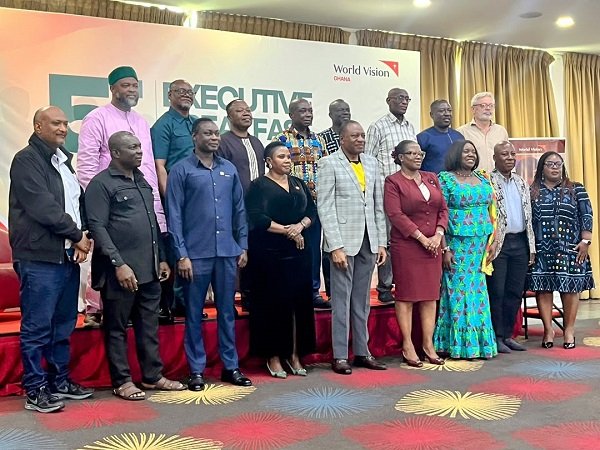
The Deputy Minister of Local Government, Chieftaincy and Religious Affairs, Rita Naa Odoley Sowah, disclosed this when she delivered a statement on behalf of the sector minister, Ahmed Ibrahim, at the Fifth Multi-Stakeholder Executive Breakfast Conversation on Sanitation in Accra yesterday.
The event also marked the launch of the Seventh School Sanitation Solutions Challenge.


Organised by World Vision Ghana and its partners, the programme was held on the theme: “Sanitation as a Key Performance Indicator for MMDCEs and the Role of Relevant Ministries, Departments and Agencies: Prospects, Opportunities and Constraints.”
Mr Ibrahim indicated that the decision underscored the Government’s determination to shift sanitation from the margins of governance to the core of local development planning and implementation.
He noted that with about 40 per cent of households still without access to toilet facilities, and many people continuing to practise open defecation, there was an urgent need for stronger leadership and accountability at the local level.
The minister stressed that sanitation should not be viewed only as an environmental concern, but also as an issue of governance, public health, economic growth and national development, as it directly affects public health, workforce productivity and the attractiveness of communities.
He further explained that Metropolitan, Municipal and District Assemblies would no longer be assessed solely on infrastructure development such as roads, markets and other projects, but also on the cleanliness and environmental conditions within their jurisdictions.
Mr Ibrahim called for coordinated efforts among ministries, departments and agencies, as well as traditional authorities, religious leaders, civil society organisations and community groups, to address sanitation challenges.
The Minister of Labour, Jobs and Employment, Dr Rashid Pelpuo, in a separate address, said sanitation should equally be seen as an economic and employment issue, given the opportunities within the sanitation value chain.
He pointed out that activities such as waste collection, recycling, resource recovery and environmental services had the potential to generate sustainable jobs, particularly for the youth and women, while contributing to a cleaner environment.
Dr Pelpuo also stressed the need to ensure decent working conditions, occupational safety and fair labour practices for those engaged in sanitation-related work.
In her welcome address, the National Director of World Vision Ghana, Dr Tinah Mukunda, described the annual Executive Breakfast Conversation as an important platform for shaping national dialogue on water, sanitation and hygiene.
She noted that recommendations from previous engagements had influenced policy discussions and reforms in the sector, including the adoption of sanitation as a key performance indicator for MMDCEs and the allocation of 10 per cent of the District Assemblies Common Fund to environmental sanitation.
Dr Mukunda, however, expressed concern that Ghana’s progress in reducing open defecation had seen little improvement since 2015, despite gains made by some countries in sub-Saharan Africa.
She, therefore, called for increased investment, stronger partnerships and sustained commitment from all stakeholders to improve sanitation outcomes and ensure healthier communities, particularly for children and their families.
BY STEPHANIE BIRIKORANG
Follow our WhatsApp Channel now! https://whatsapp.com/channel/0029VbAjG7g3gvWajUAEX12Q