‘Strengthen gender institutions to implement gender-responsive policies, programmes’
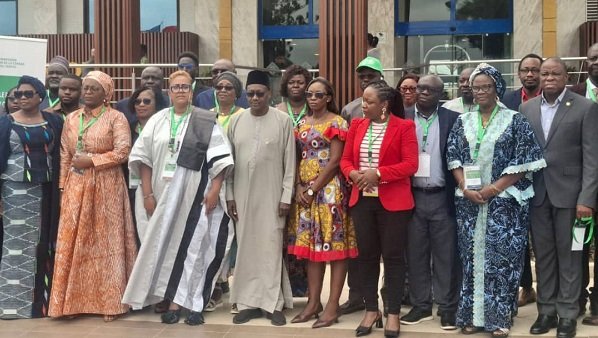
The Economic Community of West African States (ECOWAS) has called on member states to strengthen their national gender institutions to accelerate progress towards gender equality and the implementation of regional and international commitments.
According to the ECOWAS Resident Representative in Ghana, Ambassador Mohammed Lawan Gana, weak institutional capacity, inadequate financing and poor coordination among national gender mechanisms remained major obstacles to advancing gender equality across the sub-region.
“It is imperative that our regional and national gender mechanisms are equipped with the institutional strength, technical expertise and financial sustainability necessary to effectively implement gender-responsive policies and programmes,” he urged.
Amb. Gana made the call in Accra yesterday at the opening of the ECOWAS Gender Development Centre (EGDC)’s Annual Briefing and Information Sharing Meeting with Gender focal persons.


The four-day meeting, on the theme: “Strengthening the Institutional and Organisational Capacities of Regional and National Gender Mechanisms,” seeks to promote knowledge sharing and strengthen coordinated action to advance gender equality across the sub-region.
Amb. Gana stressed that gender equality was not only a fundamental human right but also a prerequisite for sustainable development, peace, democratic governance and inclusive economic growth.
While acknowledging progress in women’s participation in leadership, education, entrepreneurship, peace building and politics across West Africa, he noted that persistent inequalities, coupled with emerging socio-economic and security challenges, continued to undermine those gains.
He said strong institutions were essential for translating policy commitments into measurable outcomes and urged member states to invest in building the capacity of their national gender mechanisms.
The Resident Representative further called on participants to openly share ideas and experiences to develop practical recommendations that would support the implementation of the EGDC’s 2026–2030 strategic agenda and reinforce ECOWAS’ vision of a people-centred and prosperous region.
The Minister of Gender, Children and Social Protection, Dr Agnes Naa Momo Lartey, in a speech read on her behalf, highlighted Ghana’s strides in promoting gender equality and women’s empowerment.
She cited the passage of the Affirmative Action Act, which seeks to achieve at least 30 per cent representation of women at all decision-making levels, the revised National Gender Policy, the Gender Act and strengthened social protection interventions such as the Livelihood Empowerment Against Poverty (LEAP) programme.
“The Women’s Development Bank, which is about to be established, demonstrates government’s strong commitment to advancing women’s economic empowerment, expanding access to finance and creating opportunities for women-owned and women-led enterprises to thrive,” she added.
Dr Lartey reaffirmed government’s commitment to leveraging the ECOWAS Gender Observatory to improve gender data and strengthen evidence-based policymaking towards achieving gender parity.
The Technical Advisor for the Women, Youth, Peace and Security (WYPS) Component of the GIZ/ECOWAS Peace, Security and Governance (EPSG) project, Valerie Arikpo-Ettah, urged participants to identify bold priorities that respond to the evolving needs of women and girls across West Africa.
“The success of the next four years will depend not only on sound strategies but also on the strength of the partnerships and shared ownership that emerge from meetings such as this,” she said.
BY ABIGAIL ANNOH