World Vision launches land restoration project in Nabdam
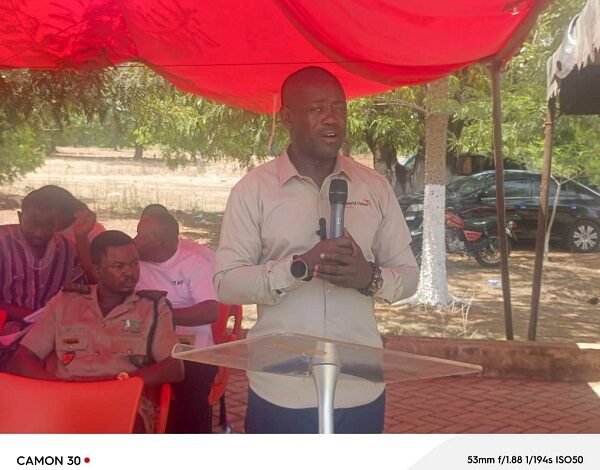
World Vision Ghana, an international non-profit organisation, has launched a new project aimed at restoring degraded lands and improving livelihoods in the Nabdam District of the Upper East Region.
The initiative, known as the Farmer-Managed Natural Regeneration (FMNR) Heritage Project, is expected to help revive the environment while strengthening the resilience of communities over the coming years.
Speaking at the launch at Nangodi yesterday, the Strategy and Integrated Programme Director of World Vision Ghana, Mr Joshua Richard Baidoo, said the two-year project had the potential to restore more than 1,500 hectares of degraded land.
He explained that the initiative would also benefit over 10,000 people, particularly women, the youth and other vulnerable groups in communities across the region.

Mr Baidoo indicated that the FMNR approach was a low-cost, community-driven method of land restoration that relied on regenerating indigenous trees from existing underground root systems.
He noted that the project would help tackle deforestation, improve soil fertility and strengthen climate resilience among smallholder farmers, especially in deprived and conflict-prone communities in the five northern regions.
According to him, World Vision Ghana had, over the past decade, successfully implemented similar interventions in parts of the Upper East Region, including the Kassena-Nankana West District, Kassena-Nankana Municipality and the Builsa North Municipality, with the Nabdam District now joining as the latest beneficiary.
Mr Baidoo observed that for decades, communities in northern Ghana had grappled with land degradation, erratic rainfall and declining crop yields, which he said had negatively affected food security and incomes, while placing pressure on families.
He expressed optimism that the project, funded by the European Union under the Sustainable Forest and Cocoa Programme and implemented by the European Forest Institute, would empower communities to regenerate vegetation at minimal cost by nurturing naturally occurring tree stumps and roots.
He further called on the Nabdam District Assembly to incorporate the initiative into its development plans to ensure its long-term sustainability.
The Programme Officer for the Centre for Community Development Initiatives (CODI), Mr Julius Agolisi, also noted that effective implementation of the FMNR initiative would help address climate change and its impact on the environment.
He gave an assurance that his organisation would support the project through capacity building, community mobilisation, technical collaboration and monitoring to ensure measurable results.
Mr Agolisi also appealed to traditional authorities, opinion leaders and residents to support the successful implementation of the initiative.
For his part, the Nabdam District Manager for the FMNR project, Mr Jonas Bogre, urged farmers to take full advantage of the initiative to improve their livelihoods.
He expressed confidence that, if properly implemented, the project would help mitigate the effects of erratic rainfall in the area.
The Nabdam District Chief Executive, Mr Francis Yenwona Tobig, described the initiative as life-changing and commended World Vision Ghana for extending it to the district.
He emphasised that restoring degraded lands today would secure food for the future, protect soils for economic growth and promote the wellbeing of future generations.
FROM FRANCIS DABRE DABANG, NANGODI
Follow our WhatsApp Channel now! https://whatsapp.com/channel/0029VbAjG7g3gvWajUAEX12Q