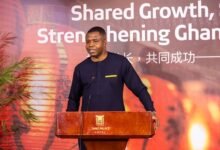
Be responsible towards environment – Dr Jantuah

The Chief Executive Officer of African Energy Consortium Limited, Dr Kwame Jantuah, has appealed to Ghanaians to be responsible towards the environment in order to secure the future of the country.
According to him, Ghana’s quest to attain environmental sustainability would continue to prove elusive unless the citizenry take up the responsibility to ensure it.
He said beyond the political-will from political actors, Ghanaians must show much more interest in issues of the environment, stressing that “We can blame the lack of political-will for things like galamsey and destruction of our water bodies, but if we as citizens don’t take up the responsibility to ensure environmental sustainability, then we will fail future generations.”
Dr Jantuah made the call at the second edition of the Business and Financial Times (B&FT) Environmental Sustainability Summit in Accra yesterday.

This year’s summit held in collaboration with the University of Energy and Natural Resources (UENR) was on the theme: ‘Climate change and its impact on food systems and sustainable environment’.
The summit sought to highlight the significance of addressing climate change and its effects on food systems which had gained greater importance.
It was structured into two sessions with the topic for the first plenary session: Climate change and its impact on sustainable agriculture, and resilient agri-food systems in Ghana, while the topic for the second session was: Striking a balance between resource exploitation and environmental sustainability: The role of mining, oil and gas companies.
Dr Jantuah said despite the country’s abundance resource, there was very little benefit which had accrued to the country.
He said the level of degradation in the name of resource exploitation was very worrying as the level of benefits did not correspond with the level of development.
On his part, the Vice Chancellor of UENR, Professor Elvis Asare-Bediako, commended the B&FT and its partners for organising the summit.
He explained that the summit provided a valuable platform for addressing climate change and food systems which was a critical issue.
“While the climate may change, our resilience as a people to do our best to mitigate it will not change. And the University of Energy and Natural Resources is poised as a key partner in this fight to do all it can for Ghana and humanity,” he said.
Prof. Elvis Asare-Bediako said the effects of climate change on food systems were expected to be widespread, intricate, varying geographically and temporally, and significantly influenced by socioeconomic conditions.
“According to the Food and Agriculture Organisation (FAO), food systems encompass a wide range of interconnected activities involving various factors that contribute to the production, aggregation, processing, distribution, consumption, and disposal of food products originating from agriculture, forestry, or fisheries,” he stressed.
He explained that these systems were embedded within broader economic, societal, and natural environments.
In addition, he said food systems were characterised by environmental, biophysical, and socioeconomic drivers, which are aligned with the three pillars of sustainable development.
“Moreover, food systems should possess the capacity to address the four dimensions of food security: availability, access, stability, and utilisation,” he emphasised.
BY CLIFF EKUFUL