GRA deepens use of data to drive revenue growth
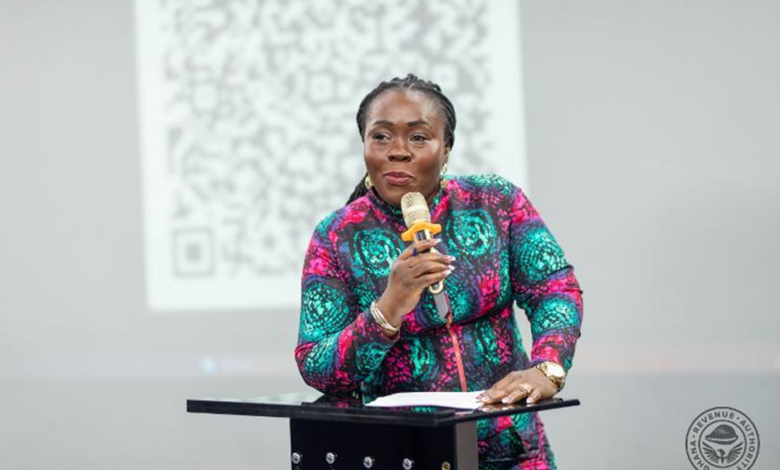
The Ghana Revenue Authority (GRA) is deepening the use of data analytics in tax administration to improve revenue mobilisation, strengthen compliance and support evidence-based decision-making.
The Technical Advisor to the Commissioner-General of the GRA, Mrs Elsie Appau-Klu, said modern statistical tools had become critical to the effective administration of taxes in an increasingly digital economy.
Speaking at the opening of the 2026 GRA Statistics and Data Analysts’ Seminar in Ho, she said the country’s revenue administration system needed to evolve to keep pace with rapid changes in the economy.
Delivering a speech on behalf of the Commissioner-General, Mr Anthony Kwasi Sarpong, Mrs Appau-Klu said Ghana continued to face significant challenges in revenue mobilisation, with the country’s tax-to-GDP ratio remaining below its potential.


She disclosed that only about half of the expected Value Added Tax (VAT) revenue was currently being collected, while corporate income tax performance also remained below expectations.
“The traditional tools of tax administration remain important, but they are no longer sufficient on their own,” she said.
Mrs Appau-Klu said the growth of digital transactions, mobile money and e-commerce, as well as the increasing use of artificial intelligence (AI), was transforming the economy and creating new challenges for tax administrators.
“As the economy becomes increasingly digital, tax administration must become increasingly intelligent, responsive and data-driven,” she added.
The five-day seminar, which runs from August 18 to 22 at the Volta Serene Hotel, is being held on the theme: “The Modern Statistician: Driving Revenue Growth Through Data Analytics.”
Mrs Appau-Klu said statisticians and data analysts at the GRA were moving beyond their traditional role of producing periodic reports to becoming key contributors to strategy, forecasting, policy formulation and compliance management.
She identified four critical roles for modern statisticians: detectives, risk managers, policy advisers and guardians of data integrity.
As detectives, she said, analysts should use data to identify untapped segments of the economy, uncover emerging business activities and detect inconsistencies between economic activity and tax performance.
She said data-driven analysis should help answer questions such as who remained outside the tax net, which sectors were underperforming and where new opportunities for revenue growth existed.
On risk management, Mrs Appau-Klu said the Authority would harness analytical tools to identify high-risk sectors, unusual compliance patterns and emerging tax threats.
She said effective risk management would enable the GRA to allocate resources more efficiently while reducing unnecessary compliance burdens on taxpayers who met their obligations.
Mrs Appau-Klu also urged analysts to become active policy advisers by measuring the impact of tax reforms, compliance interventions and taxpayer education programmes.
She said tax policy decisions should be supported by rigorous modelling rather than intuition.
“It is not enough to say that a campaign was conducted or that a programme was implemented. We must also be able to say, ‘What changed because we did it?” she said.
She further stressed the importance of data integrity, warning that poor-quality data could undermine decision-making and result in ineffective policies.
As the GRA expanded its data integration and analytical capabilities, she said, the Authority remained committed to confidentiality, information security and the responsible use of taxpayer information.
FROM SAMUEL AGBEWODE, HO
Follow our WhatsApp Channel now! https://whatsapp.com/channel/0029VbAjG7g3gvWajUAEX12Q