Inadequate funding stalls women, peace and security plan — FOSDA
THE Director of the Foundation for Security and Development in Africa (FOSDA), Mrs Dorothy Barnes, has called for adequate and dedicated funding for the implementation of Ghana’s National Action Plan on Women, Peace and Security (WPS), saying inadequate financing has undermined the delivery of key activities under the programme.
She said only three out of the 46 activities under the Second Ghana National Action Plan (GHANAP II) had been fully implemented, while 24 were partly delivered, 11 recorded limited delivery and eight were not implemented.
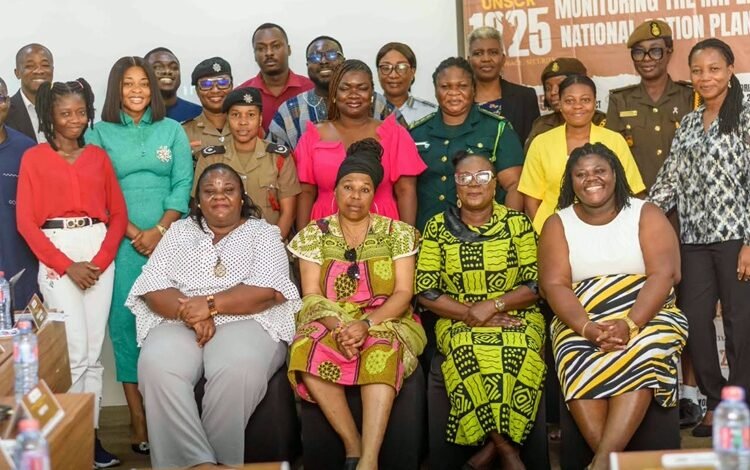
Mrs Barnes made the call when she delivered the keynote address at a stakeholder validation meeting on the final evaluation of FOSDA’s monitoring of the GHANAP II project in Accra on Tuesday.
The meeting brought together stakeholders from government institutions, security agencies and civil society organisations to contribute to the evaluation report.


She said although Ghana had made progress in promoting gender equality, peace and security, including the passage of the Affirmative Action Act, inadequate funding remained a major obstacle to the effective implementation of the action plan.
Mrs Barnes noted that institutions relied substantially on donor support and resources allocated to other programmes to undertake activities under GHANAP II because there was no dedicated budget for its implementation.
“Ghana is in a stronger position on women, peace and security than it was at the beginning of GHANAP II, which was in 2020. We have also witnessed encouraging developments in women’s leadership and representation,” she said.
“At the same time, gender mainstreaming must go beyond having policies, offices and focal persons. It must be reflected in budgets, recruitments, promotions, operational practices, accountability mechanisms and the everyday experiences of women and men within our institutions,” she added.
The GHANAP II sought to increase women’s representation in peacebuilding and decision-making roles by 30 per cent, eliminate sexual and gender-based violence and protect human rights.
Mrs Barnes also expressed concern about the limited availability of shelters and psychological support for victims of gender-based violence.
“Women and girls experiencing violence should not have to travel long distances or face additional financial and social barriers to access protection and justice,” she said.
She called for a shift from broad commitments under the action plan to a focused, measurable and adequately resourced implementation framework as Ghana prepared to develop its third action plan on women, peace and security.
The Senior Programme Liaison Officer at the High Commission of Canada, Mrs Bertha Desmennu, commended the government and other stakeholders for their contributions to GHANAP II.
She said advancing the women, peace and security agenda required sustained commitment and collaboration among relevant stakeholders.
Mrs Desmennu reaffirmed Canada’s commitment to supporting the agenda in Ghana through civil society organisations, including FOSDA, and other institutions.
She said the evaluation findings provided valuable evidence to strengthen accountability, inform future programming and support the development of the next national action plan.
BY LAWRENCE VOMAFA AKPALU
SKIP THE QUEUE, TAP THE NEWS

Read the Ghanaian Times and The Spectator newspapers from the comfort of your device via TimesNewsPlus.
Follow our WhatsApp Channel now! https://whatsapp.com/channel/0029VbAjG7g3gvWajUAEX12Q