Partners in Birth: How collaboration is saving mothers in Ghana
When 30-year-old Cecelia Egyiri went into labour at Ekumfi Bogyano in the Central Region, she did not call an ambulance.
She went to the home of Abrewa Kotwewaa, a traditional birth attendant (TBA), who had assisted her during her previous delivery.
“The clinic is too far, and when it rains, no car can pass,” Cecelia said.
“Abrewa delivered my last child safely, so I trusted her.”


For Cecelia, Abrewa was the person she could reach when labour started.
Her decision is not unusual in communities where access to health facilities remains difficult.
The 2022 Ghana Demographic and Health Survey (GDHS) found that TBAs attended 7.2 per cent of live births nationally.
In the Central Region, the figure was 11.0 per cent, compared with 4.1 per cent in the Volta Region.
The survey also showed that skilled providers attended 85.0 per cent of live births in the Central Region and 93.5 per cent in the Volta Region.
The 2022 Births and Deaths Registry Statistical Report recorded that 88.2 per cent of registered births occurred in health facilities, while 11.8 per cent took place outside health facilities.
Figures from the Ghana Health Service show that Ghana’s institutional maternal mortality ratio increased from 109.22 deaths per 100,000 live births in 2023 to 110 in 2024.
Skilled delivery coverage also declined from 60.6 per cent in 2023 to 55 per cent over the same period.
A familiar face
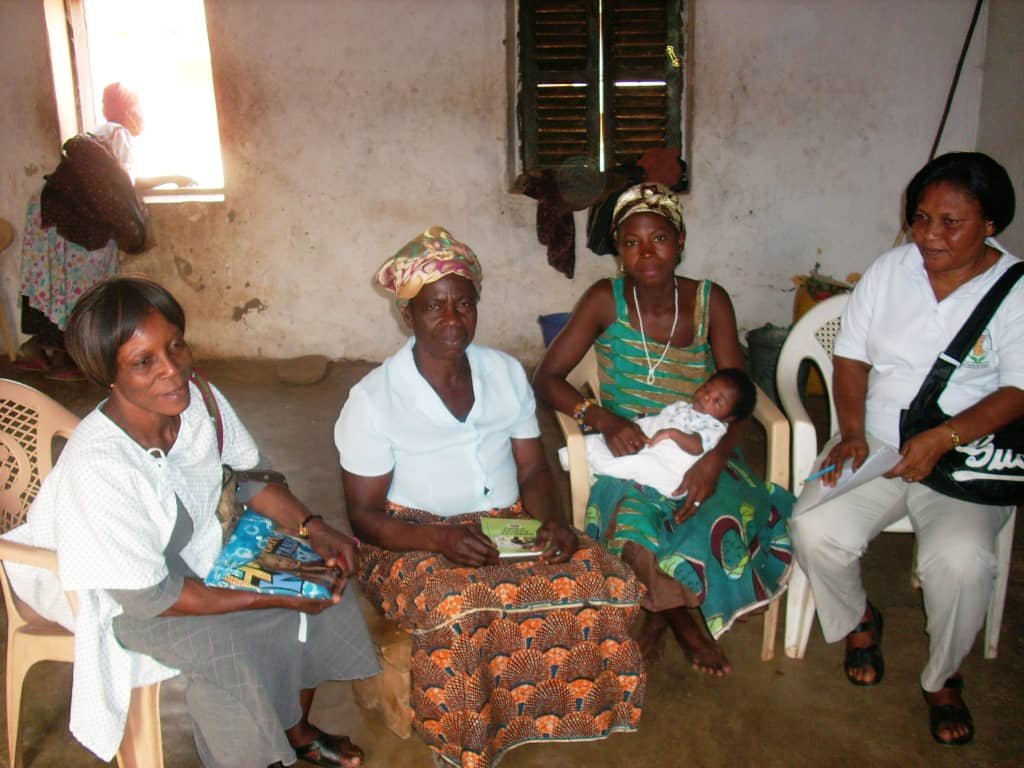
At Ekumfi Bogyano, Abrewa has assisted women during childbirth for many years.
She started the work at the age of 23 after an older midwife who had been teaching her left the community to attend to a woman in a neighbouring village.
“My teacher, an old midwife, had gone to the next village when a woman’s labour started suddenly,” she recalled.
“I had no gloves, no lamp, only my hands and the knowledge I had been given. When the baby cried at last, it felt like a miracle.”
Abrewa said she later assisted with hundreds of deliveries.
She also encountered cases in which women developed complications during labour.
Some, she said, could not get to a health facility quickly enough.
The experiences, she said, made her want more training to recognise danger signs and refer women early.
When complications
occur
A Registered Community Nurse at the Ajumako Abaasa Health Centre, Awura Ama Jackson, said health workers had received women who spent several hours in labour at home before being brought to the facility.
She recalled the case of Ama, a 22-year-old woman who spent more than a day in labour under the care of a TBA.
“By the time her family brought her on a motorbike, she had lost too much blood. We couldn’t save her or the baby,” she said.
Jackson said the case showed why women who developed complications needed to be referred early.
She said TBAs might not have the equipment, medicines or specialist support required to manage serious complications.
The case also illustrates the importance of timely referral when a woman develops complications during labour.
Trust and access
Former Chief of Ekumfi Bogyano, Nana Kwame Mensah, said the community had confidence in the TBAs because of their long association with women and families.
“Our TBAs are like mothers to us. If they are given training to recognise danger signs and refer cases early, we save lives without losing trust,” he said.
He called for closer cooperation between TBAs and health workers.
The continued reliance on TBAs is also seen in other parts of the country.
In the Volta Region, some TBAs are being trained to recognise danger signs and refer women to health facilities early.
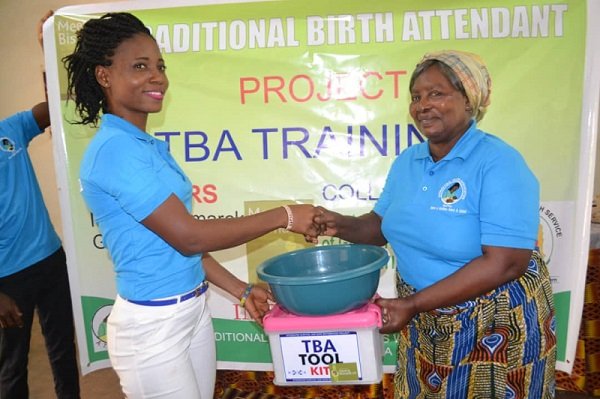
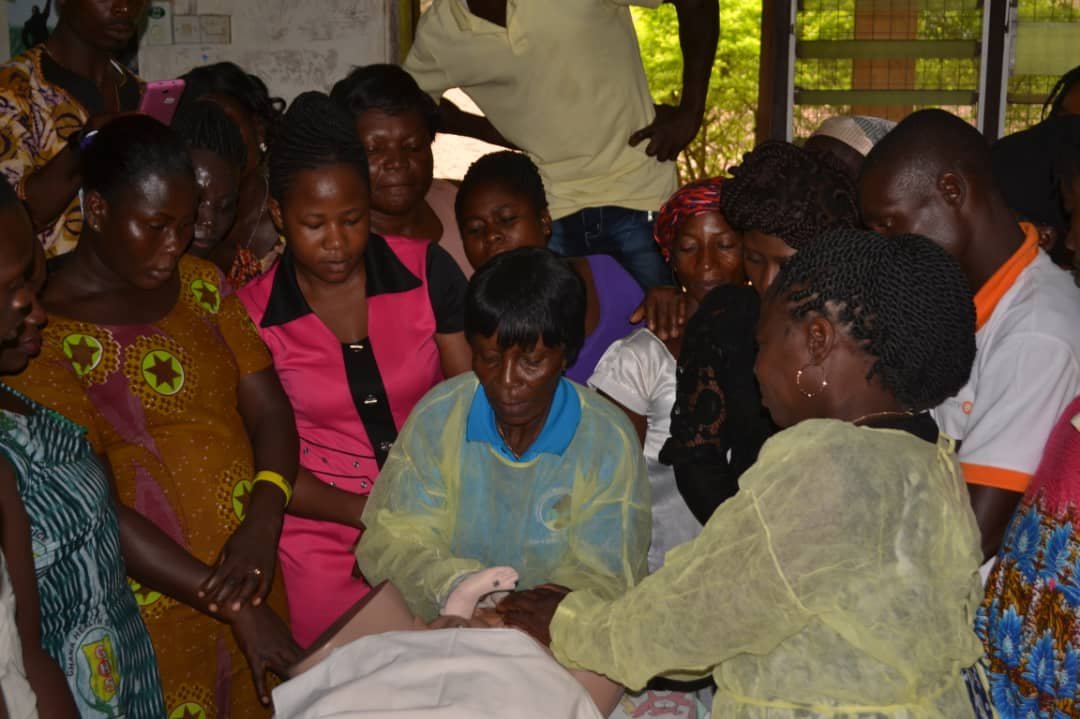
The Mamacare Foundation has introduced a programme to train TBAs in hygiene, safe practices, recognition of danger signs and timely referrals. The TBAs are also paired with supervising midwives.
The founder of the foundation, Mr Emmanuel Pewudie, said the programme was intended to improve the work of TBAs and strengthen their relationship with health facilities.
He said more than 860 TBAs had so far been trained and paired with supervising midwives.
Mr Pewudie said referrals from TBAs to health facilities had increased by 40 per cent since he began his advocacy and training work.
What training has changed
Madam Adzo Mawugbe, who has assisted with births for 27 years, said the training had changed the way she responded to emergencies.
“Before, I would panic when a mother started bleeding. Now I know how to check her blood pressure and send her quickly to the clinic. This training has given me hope,” she said.
At the Likpe Polyclinic, a nurse, Madam Amina Ayine, said health workers had also noticed changes in the way TBAs referred women.
She said some TBAs now identified danger signs earlier, contacted the health facility and accompanied women to the clinic.
“In the past, many women were brought to the facility too late, often after prolonged labour at home,” she said.
According to her, the earlier referrals gave health workers more time to attend to women.
The gap that remains
Back at Ekumfi Bogyano, Abrewa said TBAs in the community did not have the same level of support.
She said she and her colleagues were willing to work with health professionals but needed training, basic supplies and a clear referral system.
“If we get the training and support, we can help the women better,” she said.
District Director of Health at Ajumako-Enyan-Essiam, Stephen Tietoh, said efforts to improve maternal healthcare should also take into account the continued reliance on TBAs by some women.
“Women still rely on them. The best approach is to train, supervise, and make them partners, not enemies,” he said.
With training, he said, TBAs could help identify women who needed to be referred to health facilities.
The situation points to a wider challenge in rural maternal healthcare. Having a health facility within a district does not necessarily mean every woman can reach it quickly when labour begins.
Road conditions, availability of transport, distance and the time taken to arrange a referral can all affect how quickly a woman receives skilled care.
The choice Cecelia faced
For Cecelia, the decision to go to Abrewa was influenced by her previous experience and the difficulty of reaching the health facility.
Her experience reflects why some women continue to turn to familiar community-based attendants even as Ghana promotes skilled care during childbirth.
Abrewa said she was willing to continue assisting women but wanted stronger links with health workers.
“If we get the training and support, we can help the women better,” she said.
The challenge for communities such as Ekumfi Bogyano is not only to encourage women to seek skilled care. It is also to ensure that women who go into labour can reach that care quickly, particularly when complications develop.
This story was supported by Nigeria Health Watch
By Benedicta Gyimaah Folley