The United Nations (UN) marked 81 years of existence on Saturday, October 24, 2026, providing the world with a historic opportunity to align its commitment to gender equality with the leadership of its highest office. Since its establishment in 1945, the UN has had nine Secretaries-General, all men.
With the selection of the next Secretary-General approaching, the international community must confront a fundamental question: can an organisation that champions equality and inclusion continue to exclude women from its highest leadership position?
The case for appointing the first female UN Secretary-General is not about symbolism or the assumption that women are inherently better leaders. It is about equal opportunity, fair representation and the credibility of an institution whose founding principles include human rights, dignity and non-discrimination. After more than eight decades of male leadership, giving a qualified woman a genuine opportunity to lead would be a significant step towards addressing this persistent imbalance.
The UN Day 2026 message from Secretary-General, António Guterres, calls on the world to reaffirm its shared values, emphasising “dialogue over division, cooperation over confrontation, solidarity over fear.”

These principles are particularly relevant as the organisation prepares for a leadership transition amid armed conflicts, humanitarian crises, declining trust in multilateral institutions and growing demands for international cooperation.
From commitment to action
The UN has long championed women’s participation in governance, peacebuilding and development. Women have served as heads of state and government, diplomats, peace negotiators and senior international officials, contributing to conflict prevention, humanitarian response and the advancement of human rights. Yet none has held the office of UN Secretary-General.
This contradiction between the organisation’s commitment to equality and its leadership history deserves serious attention. The appointment of a woman would demonstrate that gender equality is not merely an aspiration to be promoted among member states, but a principle to be reflected within the UN itself.
The values highlighted in the UN Day message reinforce this argument. Dialogue requires leaders who can bridge political and ideological divisions. Cooperation demands the ability to build consensus across nations. Solidarity calls for leadership that responds to the needs of vulnerable communities and leaves no one behind.
These qualities are not exclusive to women, and gender alone cannot guarantee effective leadership. However, qualified women must have a fair opportunity to demonstrate their capacity to lead the organisation through the complex challenges confronting the international community.
Race for next Secretary-General
António Guterres’s second five-year term ends on December 31, 2026, with his successor expected to assume office on January 1, 2027.
Women who have featured in the selection process include Rebeca Grynspan of Costa Rica, Carolyn Rodrigues Birkett of Guyana, María Fernanda Espinosa of Ecuador and Lana Nusseibeh of the United Arab Emirates. Other candidates have also entered the contest, while withdrawals have altered the field.
The selection process gives the Security Council the decisive role of recommending a candidate, followed by formal appointment by the General Assembly. The council’s 15 members must reach the required level of support, and none of the five permanent members — China, France, Russia, the United Kingdom and the United States — must exercise a veto against the recommended candidate.
Consequently, public advocacy for a female Secretary-General must be matched by diplomatic engagement and political commitment. Member States have a responsibility to ensure that qualified women receive serious consideration and that candidates are assessed through a credible, transparent and merit-based process.
Why this matters for Africa and global governance
For Africa, the leadership transition presents an opportunity to reinforce priorities such as peace and security, conflict mediation, sustainable development and more inclusive international decision-making.
African governments, civil society organisations and women’s leadership networks, including the African Women Leaders Network, can help sustain engagement on women’s representation and encourage member states to translate their commitments to gender equality into action.
The broader issue extends beyond who occupies the office. It concerns the kind of international system the world wants to build — one in which leadership opportunities are accessible to qualified people regardless of gender and institutions reflect the principles they expect others to uphold.
A female Secretary-General would not automatically resolve the UN’s geopolitical and institutional challenges. The successful candidate must demonstrate diplomatic skill, integrity, independence and the ability to build consensus. However, those standards should be applied fairly, without historical patterns or structural barriers limiting women’s access to the position.
A defining moment for the United Nations
United Nations Day is an occasion to celebrate the organisation’s achievements while recognising the work still required to fulfil its founding ideals. This year’s emphasis on dialogue, cooperation and solidarity provides a timely reminder that shared values must be demonstrated through decisions and actions.
After 81 years of male leadership, the international community should seize this opportunity to appoint the first female Secretary-General of the United Nations.
This is not a call to compromise merit. It is a call to ensure that merit is recognised fairly and that qualified women have an equal opportunity to lead. The next appointment will be a defining test of the UN’s commitment to gender equality and inclusive global governance.
As member states deliberate on the organisation’s future leadership, they must move beyond declarations and demonstrate their commitment through action.
The time has come for the United Nations to make history, not simply by appointing its first woman Secretary-General, but by demonstrating that equality begins at the highest level of leadership.
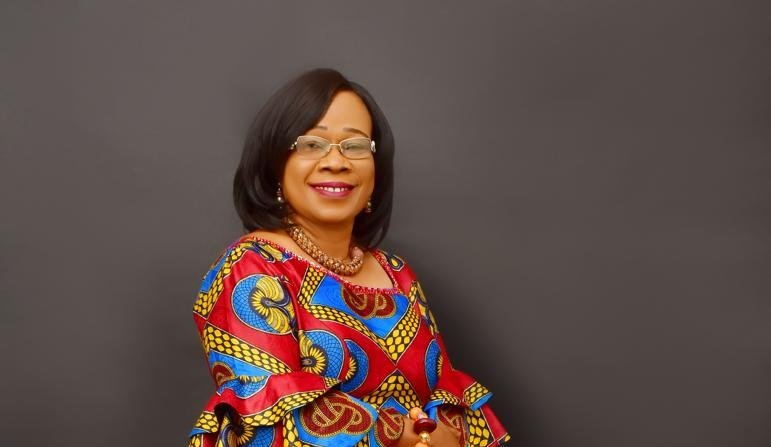
The writer is the Board Chair of New Times Corporation and also Chairperson of the African Leaders Network, Ghana Chapter.
BY DR CHARITY BINKA
SKIP THE QUEUE, TAP THE NEWS

Read the Ghanaian Times and The Spectator newspapers from the comfort of your device via TimesNewsPlus.
Follow our WhatsApp Channel now! https://whatsapp.com/channel/0029VbAjG7g3gvWajUAEX12Q