UNICEF donates medical training equipment to GHS
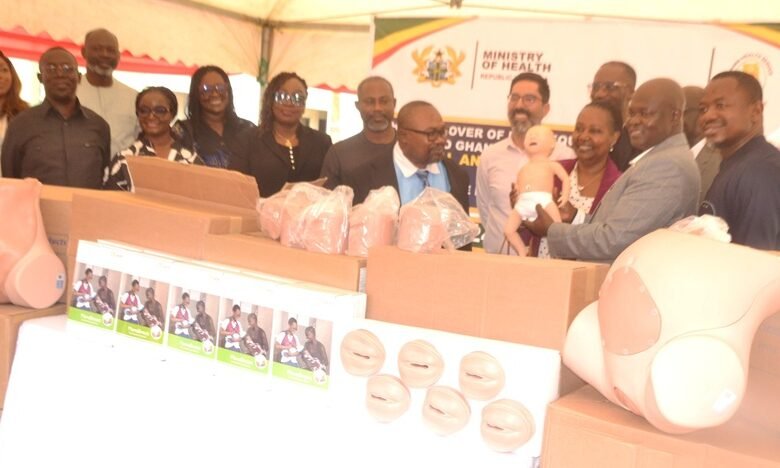
THE United Nations Children’s Fund (UNICEF) has presented clinical training mannequins to the Ghana Health Service (GHS) in the Greater Accra and Ashanti Regions to support the establishment of clinical skills laboratories for the practical training of healthcare workers.
The mannequins, which are models of the human body or parts of it, will enable nurses, doctors and midwives to practise procedures such as resuscitation, childbirth delivery and Cardiopulmonary Resuscitation (CPR) without putting real patients at risk.
The equipment presented included a childbirth simulator, an advanced light, a 3B Birthing Simulator PRO, an Episiotomy Suture Trainer Module P96, a carrying bag for gynaecological products and an S00000 85 Birthing Stages Trainer.
Other items were a PPH Trainer P97 Pro, a neonatal and maternal breastfeeding simulator, and a non-pneumatic anti-shock garment.


Speaking at the handover ceremony in Accra yesterday, the Director-General of the Ghana Health Service, Dr Samuel Kaba Akoriyea, said the equipment would strengthen the capacity of nurses, particularly those undertaking home visits, to respond to emergencies requiring resuscitation and first aid.
He described the donation by the Canadian partners as significant, saying the mannequins would play an important role in emergency care training at the sub-district and district levels.
Dr Akoriyea said the GHS had, under the Free Primary Healthcare initiative, undertaken a number of interventions, including the distribution of equipment and transport facilities such as motorbikes and tricycles, as well as the introduction of home visits.
He stated that the mannequins would complement those efforts by equipping nurses with the practical skills needed to respond effectively when they encountered emergencies during home visits.
The project seeks to build high-performing, efficient and sustainable health systems for gender-responsive reproductive, maternal, newborn, child and adolescent health and nutrition (RMNCAH&N) services through innovative approaches in the Ashanti Region.
For his part, the Chief of Health and Nutrition at UNICEF, Mr Juan Emmanuel Dewet, said the donation would contribute significantly to efforts to improve healthcare delivery in the country, particularly maternal and child health.
He said while Ghana had recorded encouraging reductions in child mortality in previous years, the slow progress in reducing maternal mortality remained a major concern.
Mr Dewet expressed hope that intensified efforts would help the country achieve the relevant Sustainable Development Goal (SDG) targets.
He indicated that UNICEF was encouraged by reports received in 2026 emphasising a decline in maternal mortality, particularly in the Ashanti Region, which had previously recorded some of the highest numbers of maternal deaths.
He expressed optimism that the trend would continue with sustained interventions to improve maternal healthcare.
BY AGNES OWUSU
SKIP THE QUEUE, TAP THE NEWS

Read the Ghanaian Times and The Spectator newspapers from the comfort of your device via TimesNewsPlus.
Follow our WhatsApp Channel now! https://whatsapp.com/channel/0029VbAjG7g3gvWajUAEX12Q