Born without a visa, but required to have one to explore the world: The paradox of sovereignty, human mobility and global inequality
I have often wondered why a human being needs permission, in the form of a visa, to travel to another part of the world. Why should someone who wishes to study, work, attend a conference, visit family or explore another country have to submit applications, attend interviews and demonstrate financial capacity before being allowed to travel?
There is an irony in this arrangement. None of us needed a visa to be born into the world. We did not complete forms, provide bank statements or explain our intentions before taking our first breath. Yet our ability to experience the world is heavily influenced by where we were born and the passport we carry.
A person holding one passport may travel to many destinations with relative ease, while another, with comparable qualifications, resources and legitimate intentions, may face a demanding application process. Why should the circumstances of one’s birth have such a profound influence on the freedom to move?
The issue is not whether countries should have borders or abandon immigration controls. Sovereign states have legitimate interests to protect. The question is whether the international system has struck a fair balance between those interests and the aspirations of people seeking to travel for legitimate purposes.
Sovereignty and human freedom
Sovereignty is a defining principle of the international system. States exercise authority over their territories and determine the conditions under which foreign nationals may enter, reside and work. The Peace of Westphalia of 1648 is often associated with the development of the modern state system and territorial sovereignty, although its precise historical significance remains debated.
Governments have a responsibility to protect national security, territorial integrity, economic interests and public welfare. Immigration controls are among the tools used to meet these responsibilities. But international relations is not only about state power. It is also about cooperation, diplomacy, institutions and human rights.
Governments promote trade, tourism, education, investment and professional collaboration. They sign agreements, establish partnerships and invite foreign participation in conferences and development programmes. Yet individuals seeking to participate in person may encounter significant immigration barriers.
We have created a world in which capital, information, goods and services move increasingly efficiently across borders, while the movement of people remains subject to considerable restrictions. How can global interconnectedness be fully realised when the people who make it meaningful cannot move with comparable ease?
The geography of passport privilege
A passport is an identity and travel document issued by a state. In practice, it also reflects diplomatic relationships, international standing and perceptions about the country that issues it. Some passport holders enjoy extensive visa-free access, while others must obtain prior authorisation to visit the same destinations.
Consider two professionals invited to the same international conference. They have similar qualifications, experience, financial circumstances and reasons for attending. One may simply book a flight; the other must gather extensive documents, attend an appointment and wait anxiously for a decision. The difference may have little to do with their individual abilities or intentions. It may simply be the passports they hold.
For many citizens of developing countries, particularly in Africa, international travel involves substantial costs, lengthy waiting periods and uncertainty. Visa fees, document preparation and other requirements can become significant burdens before a decision is even made. Unequal mobility can therefore affect access to education, professional development, business and family life.
Nationality may legitimately inform immigration risk assessments, but it should not replace an objective examination of an individual’s circumstances, evidence, travel history and stated purpose. A person should not automatically be treated as untrustworthy because of the passport they hold.
Security, fairness and international law
No serious argument for easier travel requires countries to open their borders without regulation. Governments must address transnational crime, human trafficking, irregular migration and threats to national security. The challenge is to pursue these objectives without creating unnecessary obstacles for legitimate travellers.
Financial capacity may be relevant to an application, but it should be assessed in relation to the purpose and duration of the visit, the arrangements made and the applicable requirements. Limited personal wealth should not automatically be equated with dishonesty or an intention to breach immigration rules. A visa refusal is an administrative decision under a particular legal framework; it should not, by itself, be treated as proof that an applicant is dishonest or undeserving of opportunity.
International human rights law provides an important framework. Article 13(1) of the Universal Declaration of Human Rights (UDHR), adopted by the United Nations General Assembly on December 10, 1948, states: “Everyone has the right to freedom of movement and residence within the borders of each State.” Article 13(2) adds: “Everyone has the right to leave any country, including his own, and to return to his country.”
Article 12(2) of the International Covenant on Civil and Political Rights (ICCPR) similarly provides: “Everyone shall be free to leave any country, including his own.” However, Article 12(3) permits restrictions prescribed by law and necessary to protect national security, public order, public health or morals, or the rights and freedoms of others, provided they are consistent with the other rights recognised in the Covenant. Article 12(4) states: “No one shall be arbitrarily deprived of the right to enter his own country.”
The distinction matters. The UDHR is a declaration, not a treaty, although it has profoundly influenced international human rights law. The ICCPR is binding on states that are parties to it. Neither instrument creates an unconditional right for everyone to enter any foreign country of their choice. The right to leave one’s country is distinct from a right to be admitted into another.
Nevertheless, immigration decisions should not be beyond scrutiny. The United Nations Human Rights Committee’s General Comment No. 27 emphasises that restrictions on the freedom of movement protected by Article 12 must meet the Covenant’s requirements. Sovereignty is not a licence for arbitrary treatment, just as the desire to travel is not an absolute entitlement to enter another state.
The human story behind an application
Behind every visa application is a person with a reason for wanting to travel: a student hoping to take up a university place, a researcher invited to present findings, a parent wishing to attend a child’s graduation, an entrepreneur pursuing a partnership or a patient seeking specialised treatment.
For these people, travel may represent education, professional advancement, family responsibility or economic opportunity—not simply leisure. A refusal may mean a missed academic opportunity, a lost professional engagement or a family occasion that cannot be recreated. The costs of applications and related arrangements may also be difficult to recover.
For an immigration authority, a refusal may be one decision among thousands. For an applicant, it may disrupt months or years of planning. Immigration policy should therefore be assessed not only through national security and administrative efficiency, but also through its human consequences.
Towards a fairer system
The goal need not be a world without borders. It should be a world in which borders are managed fairly and transparently, while legitimate mobility is facilitated.
Visa procedures should be clear and predictable. Applicants need accessible information about requirements, processing periods and decision-making criteria. Where applications are refused, meaningful reasons should be provided in accordance with applicable law and procedure.
Authorities should assess applications on their individual merits and give proper consideration to credible evidence. Countries should explore reciprocal visa arrangements and bilateral mobility agreements, particularly where educational, professional, diplomatic and economic relationships are strong.
More efficient procedures could be introduced for legitimate participants in international conferences, academic exchanges and professional programmes. Dedicated application channels and better coordination between host institutions and immigration authorities could reduce unnecessary delays without compromising security.
Responsibility is shared. Destination countries should ensure that their systems are fair and proportionate. Countries of origin must strengthen governance, security cooperation, institutional credibility and the integrity of travel documents. Improving international mobility requires commitment from both sides.
A world we all share
Why must a person seek permission to explore a world that humanity collectively inhabits? Borders define territories, jurisdictions and governmental authority. Their existence is a political and legal reality. But understanding why borders exist should not prevent us from questioning whether the systems governing them are always fair.
None of us chose our birthplace. We did not negotiate the boundaries that separate countries or decide which passport we would carry. Yet these circumstances can influence the opportunities available to us, the knowledge we acquire, the people we meet and the experiences we share.
As someone who approaches this subject through the lens of international relations, I recognise the importance of sovereignty, national security and territorial integrity. I also believe these principles must be considered alongside human dignity, equality and the legitimate aspirations of individuals.
A world that celebrates globalisation should examine the barriers that prevent people from participating fully in it. We are citizens of different countries, but inhabitants of the same planet. Our aspirations to learn, discover, connect and contribute are not confined by geography.
We were born without visas, with a natural curiosity to explore the world around us. Perhaps it is time for the international system to make greater room for that humanity, even as states protect their legitimate interests. The world may be divided by borders, but human aspirations have no nationality.
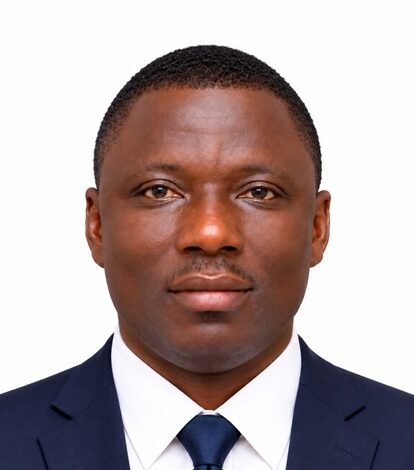
BY ISAAC AGYEI KWAKYE
The writer is a Public Relations Practitioner and International Relations Scholar.
SKIP THE QUEUE, TAP THE NEWS

Read the Ghanaian Times and The Spectator newspapers from the comfort of your device via TimesNewsPlus.
Follow our WhatsApp Channel now! https://whatsapp.com/channel/0029VbAjG7g3gvWajUAEX12Q