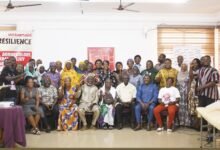
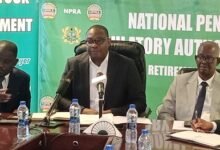
Stakeholders discuss SOPs for combating child labour in mining areas

A document on Standard Operating Procedures (SOPs) for combating Child Labour (CL) in Artisanal and Small Scale Gold Mining (ASGM) areas has been developed to address specific challenges confronting the sector.
The document dubbed, “ASGM Child Labour Standard Operating Procedures (SOPs)”, was developed by Network for Community Planning and Development (NECPAD) and the Child Labour and Responsible Mining Network (CLaRM-Net).
Findings of the document revealed that child labour in ASGM, required a more dynamic and pragmatic approach and mechanisms to deal with, due to the enormous attractions the mining sectors provided.
Presenting the document at a workshop, which was also used to review the CL and Responsible Network in Accra yesterday, the Executive Director of NECAP, Mr Paul Asamoah Kukwaw, said the SOPs would draw complementary alternatives available to help attract children from mining to available options.


He indicated that, an important aspect of tackling child labour was the prevention of occurrences in hazardous employment.
This, Mr Kukwaw said, would require consistent and proactive investigation on the part of law enforcement agencies for early detection of crime and collection of evidence to stop child labour before the crime was detected or took place.
“The prevention strategy for an area has to be developed looking into the community resources, forming networks for intelligence collection, analysis of existing data and consistent collection of information of identified key vulnerability indicators,” he noted.
According to him, prevention activities such as the creation of awareness among the public and vulnerable communities for prevention would ensure that children had access to free compulsory education as per the 1992 Constitution of the Republic of Ghana and the Education Act.
In addition, Mr Kukwaw said, institutional capacity building through the creation of prescribed institutional mechanisms and building capacity of institutions to carry out tasks assigned to them was also one of the prerequisites to prevent child labour.
“An important step towards preventions coordination among various child protection agencies at the national, district and community levels through ensuring enrolment and retention of all children in schools.”
In a statement read on his behalf, the Chief Director of the Ministry of Employment and Labour Relations (MERL), Mr Kizito Ballans said, the most hazardous forms of child labour was in the mining sector, saying “It is physically dangerous and strenuous, exposing children to unstable underground heavy equipment and structures, toxic and explosive chemicals and heat.”
Mr Emmanuel Kwame Mensah, the International Labour Organisation (ILO), National Programme Coordinator for Caring Gold Mining Project said, improving the working conditions of adult workers would address the major cause of CL which was poverty.
He noted that, there were 152 million children in child labour across the world and with Africa having the highest number in terms of proportion.
BY ABEDUWAA LUCY APPIAH