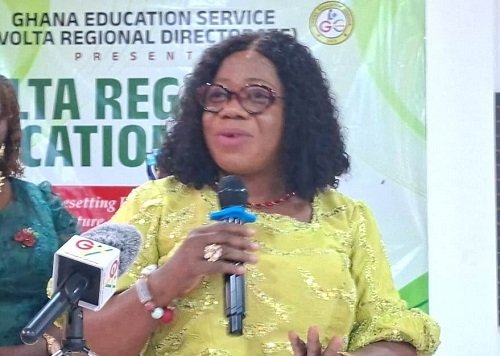
The Director-General of the Ghana Education Service (GES), Professor Ernest Kofi Davis, has called for greater collaboration among educational institutions to improve learning outcomes in the country.
He said the future of education depended largely on institutions working together and sharing best practices rather than operating in isolation.
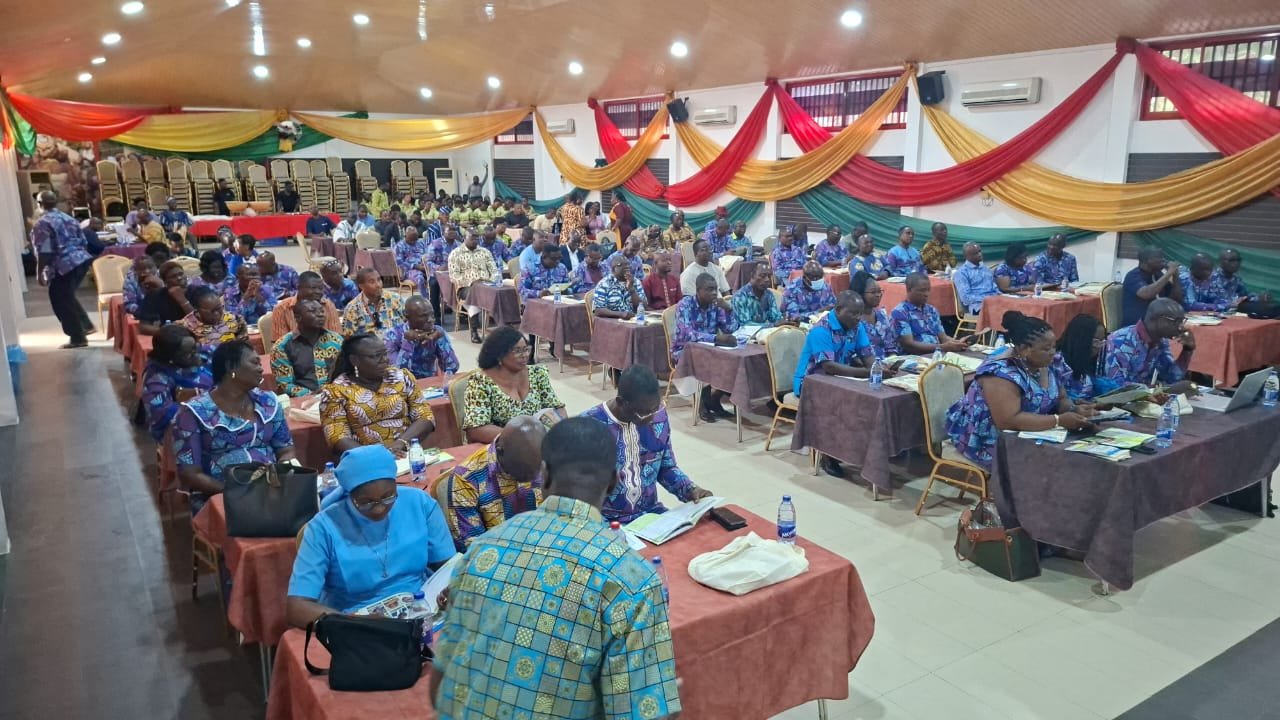
Professor Davis said resetting education outcomes should not be seen as the sole responsibility of the Ministry of Education, the GES or heads of educational institutions, but as a collective responsibility involving all stakeholders.
He said students were the future leaders of the country and, therefore, needed to be equipped not only to pass examinations but also with the knowledge, skills, values and character required to become responsible adults.


Professor Davis made the call in a speech read on his behalf by a Deputy Director-General of the GES, Professor Mrs Smile Dzisi, at the opening of a three-day educational clinic at Sokode-Lokoe near Ho on Wednesday.
The clinic, organised by the Volta Regional Directorate of Education, was aimed at finding solutions to the poor academic performance of schools in the region.
It was held on the theme: ‘Resetting Education Outcomes: The Future of Volta Region.’
Professor Davis explained that education outcomes should not be measured solely by the number of students who sat for examinations, the percentage who passed or the position of schools on league tables.
He said true education outcomes should encompass the knowledge, skills, competencies, attitudes, values and character that learners acquired through their educational experience.
He assured that the GES would continue to implement approved national education policies and ensure the effective administration of pre-tertiary education in the country.
The Acting Volta Regional Director of Education, Mrs Marian Jemima Adzroe, expressed concern about the poor performance of schools in the West African Senior School Certificate Examination (WASSCE) in 2023, 2024 and 2025.
She said the trend posed a threat to education in the region and was the reason the directorate organised the clinic to find practical solutions to the declining performance.
Mrs Adzroe said the Regional Directorate of Education could not overlook the downward trend after a close analysis of performance in the core subjects revealed systemic challenges across a significant number of schools, particularly in Mathematics and Integrated Science.
She disclosed that 18 out of 68 Senior High Schools (SHSs) and Senior High Technical Schools (SHTSs) in the region recorded zero per cent in the 2025 WASSCE.
She said nine schools recorded one per cent, while 27 others recorded less than 12 per cent progression in the examination.
According to her, the most worrying aspect was that some schools with historically strong academic records had also experienced a severe decline in performance.
She said the situation was not merely a statistical setback but represented a compromised future for thousands of young people in the region.
Mrs Adzroe urged stakeholders in education to use the clinic to identify the factors contributing to the poor performance and develop practical measures to reverse the trend.
FROM SAMUEL AGBEWODE, SOKODE-LOKOE
Follow our WhatsApp Channel now! https://whatsapp.com/channel/0029VbAjG7g3gvWajUAEX12Q