Critical thinking crucial for preparing, shaping children for life–Anis Haffar
An educationist, Anis Haffar, has called for greater emphasis on critical thinking in schools, stressing that the skill remains essential in preparing children for a rapidly changing world shaped by artificial intelligence (AI).
He said information was now readily available through digital platforms and AI-powered tools, reducing reliance on traditional methods of learning that depended heavily on textbooks and teachers as the primary sources of knowledge.
“Things have changed dramatically. Information is available everywhere and AI is becoming part of our daily lives. The challenge now is how we use these tools effectively while ensuring that young people develop the ability to think for themselves,” he explained.
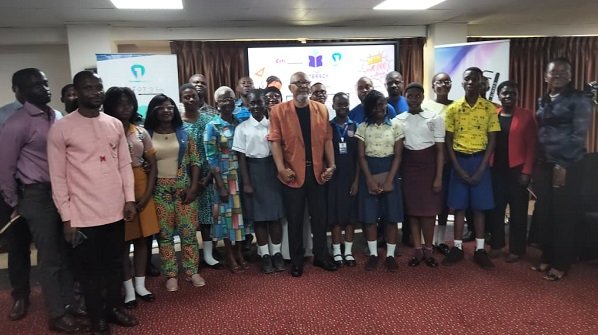
Speaking at the launch of the 2026 Citi FM and Citi TV Literacy Challenge in Accra on Thursday Mr Haffar said advances in technology had transformed access to information and learning resources, making it necessary for educational systems to focus on developing critical thinking and problem-solving abilities among students.


Mr Haffar advocated the introduction of critical-thinking skills at the basic school level, arguing that children should be equipped early with the ability to analyse issues, question assumptions and solve problems independently.
The Head of Programmes production at Channel One TV, Ms Apiokor Seyiram Ashong- Abbey, said the initiative had evolved significantly since its introduction in 2008 as an essay-writing competition known as “The Write Away Contest.”
She explained that while the programme initially focused on writing and communication skills, changing educational and technological trends had made it necessary to broaden the concept of literacy.
Participants will first submit essays on the topic, “In not less than 600 words, write a letter to the Minister of Education , as a Youth Consultant, discussing the advantages and disadvantages of the use of Artificial Intelligence (AI) in education.
The shortlisted students will then sit for an aptitude test comprising 100 application-based questions designed to assess reasoning and problem-solving abilities. The top contestants from each region will advance to a team-based quiz competition.
BY ESINAM JEMIMA KUATSINU
Follow our WhatsApp Channel now! https://whatsapp.com/channel/0029VbAjG7g3gvWajUAEX12Q