Quality education: The foundation of sustainable national development
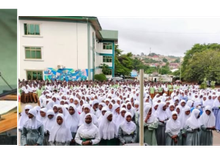
Education has always been recognised as the most powerful tool for transforming individuals, communities, and nations. It is the bridge between poverty and prosperity, ignorance and enlightenment, dependence and self-reliance. Every developed nation has invested heavily in quality education because it remains the most sustainable means of building competent human resources capable of driving national development.
There is a popular saying that “a nation can be destroyed without war simply by lowering its educational standards and permitting examination malpractice.” The consequences of such negligence are devastating. When students are allowed to graduate without acquiring the necessary knowledge, skills, values, and competencies, society eventually suffers from incompetent professionals. Poorly trained doctors endanger lives, incompetent engineers construct unsafe infrastructure, unethical judges compromise justice, and unqualified teachers perpetuate the cycle of mediocrity.
The effects are not immediate, but they are inevitable. The decline of educational standards eventually becomes the decline of national development.
Education is everyone’s responsibility

Every parent dream of seeing his or her child become successful and perhaps even surpass the achievements of previous generations. Likewise, every nation desire to raise a generation capable of solving emerging challenges and competing globally.
However, achieving this noble aspiration requires far more than government investment alone. It demands collective responsibility and deliberate action from every stakeholder, including:
- Government and policymakers
- Parents and guardians
- Teachers and educational administrators
- Religious and traditional leaders
- Civil society organizations
- The private sector
- Students themselves
National development cannot be achieved when each stakeholder works in isolation. Like the links of a chain, the absence or weakness of one stakeholder affects the effectiveness of the entire educational system.
Why this conversation matters
My passion for this subject stem from years of serving as a social worker whose primary concern has been children’s education and welfare. Through practical experience, I have come to appreciate that educational success is not merely about increasing school enrolment or improving examination pass rates. Rather, it is about producing responsible citizens who possess knowledge, critical thinking abilities, moral values, discipline, and the capacity to solve societal problems.
Over the years, I developed a simple but powerful concept.
Imagine a community with 1,000 children.
If 400 children receive quality education that combines academic excellence with moral discipline, critical thinking, creativity, patriotism, and lifelong learning, those 400 can become productive professionals, ethical leaders, responsible entrepreneurs, and committed citizens capable of transforming that entire community.
Conversely, if 950 children receive poor-quality education characterized by rote memorization, examination malpractice, weak discipline, and little understanding of real-life application, the nation gains certificates but loses competence.
This simple illustration demonstrates an important truth:
- Quality education will always outperform quantity education.
- Quality Versus Quantity in Education
- Many educational systems unfortunately reward memorization instead of understanding.
Students memorize notes, formulas, definitions, and past examination questions solely to obtain high grades. After examinations, much of that information disappears because genuine understanding was never developed.
Such learning creates certificate holders rather than problem solvers.
Quality education is fundamentally different.
It teaches students to:
- Think critically.
- Analyse problems.
- Develop innovative solutions.
- Communicate effectively.
- Work collaboratively.
- Adapt to changing circumstances.
- Demonstrate integrity and ethical behaviour.
- Become lifelong learners.
International education experts, including UNESCO, consistently emphasize that sustainable development depends not simply on increasing access to education but on ensuring that education develops relevant knowledge, practical skills, values, and competencies that prepare learners for real life.
The difference may be illustrated simply.
A builder who constructs one strong house creates lasting value.
A builder who constructs one hundred weak houses creates future disasters.
Education follows the same principle.
The importance of moral education
Academic excellence without moral discipline is dangerous.
Intelligence without integrity often produces sophisticated corruption, financial crimes, abuse of authority, examination malpractice, and unethical leadership.
Quality education therefore must intentionally nurture:
- Honesty
- Respect
- Patriotism
- Accountability
- Compassion
- Self-discipline
- Hard work and
- Responsibility
Students should learn not merely how to do things, but why they should do them and when it is appropriate to do them.
When moral consciousness becomes part of education, graduates become assets instead of liabilities to society.
Factors that promote or undermine quality education
1. teacher quality
Teachers remain the single most influential in-school factor affecting student achievement.
A competent and motivated teacher does far more than just completing the syllabus.
Excellent teachers:
- understand their subjects thoroughly;
- inspire curiosity;
- encourage critical thinking;
- adapt lessons to students’ learning needs;
- build confidence;
- promote creativity; and
- model ethical behaviour.
Governments must therefore prioritize recruiting qualified teachers, providing continuous professional development, improving working conditions, and ensuring attractive motivation packages that encourage excellence.
2. Conducive learning environment
Quality learning cannot occur in poor learning environments.
School infrastructure directly influences students’ concentration, motivation, attendance, and academic performance.
Essential facilities include:
- well-ventilated classrooms;
- adequate furniture;
- functional science laboratories;
- ICT centres;
- well-stocked libraries;
- reliable internet connectivity;
- clean sanitation facilities;
- potable water; and
- safe recreational spaces.
Overcrowded classrooms make effective teaching almost impossible. Similarly, poor sanitation contributes to absenteeism, particularly among girls.
Investment in educational infrastructure is therefore an investment in national productivity.
3. Student Discipline and Government Policy
Discipline remains one of the pillars of effective education.
Over the years, Ghana’s educational system has transitioned from corporal punishment towards rights-based positive discipline. While this shift has significantly reduced physical abuse, many teachers and school administrators believe it has unintentionally weakened their authority to enforce discipline.
Today, some students determine whether to attend school, complete assignments, or respect teachers without facing meaningful consequences.
There is therefore an urgent need to strike an appropriate balance between protecting children’s rights and maintaining discipline that supports effective teaching and learning.
Positive discipline should empower teachers to maintain order while preserving students’ dignity.
4. Overcrowded Classrooms
Large class sizes significantly reduce teaching effectiveness.
When one teacher is responsible for sixty, seventy, or even one hundred students, individualized attention becomes impossible.
Students who struggle academically often remain unnoticed, practical lessons become difficult to conduct, and classroom management suffers.
Reducing teacher-student ratios should therefore become a national priority.
5. Economic Hardship
The increasing cost of living has affected education at every level.
Many parents struggle to provide:
- school uniforms;
- exercise books;
- transportation;
- meals;
- digital devices; and
- internet access.
Teachers equally experience financial pressures that affect morale and productivity.
Students from economically disadvantaged households often combine schooling with income-generating activities, thereby reducing study time and increasing dropout risks.
Addressing poverty therefore contributes directly to improving educational outcomes.
Examination malpractice: A silent threat
One of the greatest enemies of quality education is examination malpractice.
When students believe that success depends on cheating rather than learning, they gradually lose the motivation to study, think independently, and develop competence.
Unfortunately, examination malpractice extends beyond students. It sometimes involves parents, teachers, invigilators, school authorities, and even organized networks that facilitate cheating.
Such practices produce graduates with certificates but without competence.
Ultimately, society pays the price.
Education and Sustainable National Development
No country has achieved sustainable development without investing in quality education.
Strong educational systems produce:
- competent professionals;
- ethical public servants;
- innovative entrepreneurs;
- productive workers;
- responsible citizens;
- scientific discoveries;
- technological advancement; and
- effective leadership.
Education influences every sector of national life, including healthcare, agriculture, engineering, security, governance, environmental management, and economic growth.
Simply put, the quality of a nation’s education determines the quality of its future.
Recommendations
To reverse the declining standards and position education as the engine of sustainable national development, the following actions deserve urgent consideration:
- Prioritize quality over examination results. Educational success should be measured by competence, creativity, innovation, and character—not merely pass rates.
- Strengthen teacher recruitment, motivation, and continuous professional development to ensure every classroom is led by qualified and competent educators.
- Increase investment in educational infrastructure, including classrooms, laboratories, ICT centres, libraries, sanitation facilities, and internet connectivity.
- Review existing disciplinary policies to restore appropriate authority to teachers while protecting the rights and dignity of learners.
- Reduce overcrowding by recruiting more teachers and constructing additional classrooms.
- Strengthen the fight against examination malpractice through stricter enforcement, ethical education, and public awareness campaigns.
- Integrate moral and civic education into every level of learning to nurture honesty, patriotism, integrity, responsibility, and respect for national values.
- Expand financial support programmes for vulnerable learners through scholarships, school feeding, learning materials, and digital access.
- Promote stronger parental involvement, recognizing that education begins at home long before children enter the classroom.
- Encourage stronger collaboration among government, faith-based organizations, traditional authorities, civil society, development partners, and the private sector to improve educational quality nationwide.
Conclusion
- Education is not merely about producing graduates; it is about producing responsible citizens capable of improving society.
- A nation does not become prosperous because many people possess certificates. It prospers because its citizens possess knowledge, competence, discipline, integrity, innovation, and a commitment to serving the common good.
- If Ghana is to achieve sustainable national development, we must move beyond expanding access to education and focus deliberately on improving its quality.
- The future of our nation will not be determined by how many children sit in classrooms today, but by how well those classrooms prepare them to solve tomorrow’s challenges.
- The time to restore quality education is now. The responsibility belongs to us all.
BY LAWRENCE SAAH VARNIE
The writer is the Founder and Director, Cradle of Hope for Relief and Development
You can now read the *Ghanaian Times* and *The Spectator* newspapers digitally on [TimesNewsPlus](https://timesnewsplus.com/newspapers).
Follow our WhatsApp Channel now! https://whatsapp.com/channel/0029VbAjG7g3gvWajUAEX12Q