Exploring the benefits of Ghana’s Kente geographical indication (2)
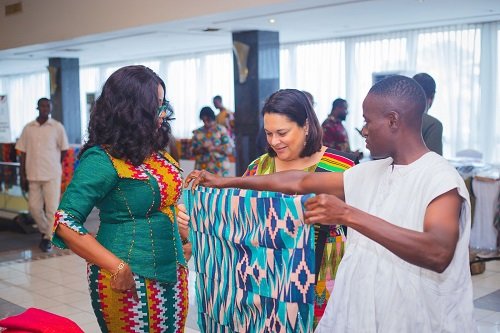
Ghana’s Kente and Smock are more than fabrics. They are living expressions of identity, craftsmanship, history, community knowledge and national pride. Yet cultural fame alone does not guarantee economic benefit to the true producers. When a heritage name becomes famous without a strong protection, quality and market system, imitation increases, quality signals become weak, and value leaks away from the weaving communities and from Ghana.
The opportunity before Ghana is therefore clear: move Kente and Smock from general recognition to protected premium positioning. This requires three connected pillars. First, credible standards must define what is authentic and how quality is maintained. Second, public institutions, producer associations and market actors must coordinate their roles. Third, the products must be prepared for premium local and international markets through traceability, labelling, packaging, storytelling and responsible commercial partnerships.
A Geographical Indication (GI) system provides the framework for this transformation. It links product reputation to origin, protects the name against misuse, and creates a structured pathway through which producers, consumers, regulators and buyers can trust the product. In practical terms, a GI is not only a legal registration; it is a system of rules, compliance, governance and market discipline.
Foundation of authenticity
A GI is only as strong as its product specification and compliance culture. Standards are what transform a heritage textile from simply being “popular” to being “premium.” They clarify what counts as authentic, how authenticity is maintained, and how consumers can trust what they buy.

For Kente and Smock, standards should be captured in a product specification or code of practice. This document becomes the operational rulebook for producers, associations, inspectors, retailers and enforcement bodies. It should define the recognised production area, materials and inputs, essential methods of craftsmanship, quality parameters, labelling requirements, governance arrangements and procedures for compliance monitoring.
For example, the product specification may set out the recognised weaving communities, how origin is determined, the types of yarn and dyes allowed, the essential weaving or tailoring steps, recognised patterns and attributes, finishing requirements, durability standards and minimum requirements for colour fastness and uniformity. It should also set out how approved labels or tags may be used, how producer records must be kept, how inspections will be conducted, and what sanctions apply when the GI name is misused.
This is important because a heritage textile cannot be protected only by emotion or reputation. It must be protected by verifiable rules that can be understood and applied by producers, consumers, public officers, traders and international buyers.
Protecting consumers and producers
Consumers are harmed when products are mislabelled or when quality varies widely under the same famous name. Standards protect consumers by reducing confusion and making it harder for counterfeit or misleading products to benefit from the reputation of authentic Kente and Smock. In premium markets, buyers increasingly expect traceability: they want to know the origin of the product, the producer group behind it, and the assurance system that supports the claim of authenticity.
For producers and weaving communities, standards do more than impose discipline. They unlock value. When buyers understand what they are paying for, producers are better placed to negotiate premium prices and stable demand. Standards also reduce unfair competition because those who cut corners cannot easily pass their products off as authentic. Over time, standards make it possible for compliant producers to supply formal markets such as hotels, airlines, museums, fashion houses, export retailers, embassies, universities and institutional gift markets.
In this sense, standards are not an obstacle to creativity. Rather, they provide a shared foundation for authenticity, quality assurance and market confidence. Producers can continue to innovate in design and presentation, but within a protected framework that preserves origin, community reputation and product integrity.
Practical GI compliance
For Kente and Smock producers to benefit from GI protection, the compliance journey must be simple, practical and well communicated. Producers should be able to understand what is required and why it matters. A workable compliance journey may include the following steps:
- Weavers, tailors, producer groups or cooperatives register with the recognised association linked to the GI.
- Producers complete practical training on the product specification, standards, labelling, quality control and recordkeeping.
- Basic internal controls are adopted, including production records, pattern and quality checks, approved labels and batch or producer identification.
- Association-level verification is introduced, with third-party certification or conformity assessment where necessary for premium or export markets.
- Only compliant products use the approved GI label, authenticity tag or producer identification mark.
- Records are maintained to support traceability from producer to market.
- A registered product specification manual, rules of use and sanctions framework are applied consistently.
- A national association or producer governance structure is strengthened to protect and promote the GI over time.
This compliance journey must not be seen as paperwork alone. It is a pathway for building trust, reducing misuse, improving buyer confidence and preparing producers for higher-value markets.
Institutional coordination
Kente and Smock sit at the intersection of intellectual property, culture, trade, standards, enforcement, tourism, local enterprise development and international market access. No single institution can protect and commercialise these heritage products alone. If institutions work in silos, value leaks out through counterfeit supply, weak labelling, inconsistent quality, poor packaging and missed opportunities in premium markets.
A whole-of-government and whole-of-value-chain approach is therefore required. The objective should be simple: protect the name, strengthen compliance, improve market readiness and convert cultural pride into sustainable economic benefit for weavers, producer communities and Ghana.
This coordination should bring together intellectual property authorities, standards and regulatory bodies, trade and export-promotion institutions, tourism and cultural agencies, customs and enforcement bodies, local government authorities, producer associations, training institutions, designers, retailers and development partners. Each actor has a different instrument, but the instruments must work together.
A practical model would be the establishment of a National Heritage GI Coordination Platform for Kente, Smock and related heritage textiles. The platform may operate through three layers consisting a Steering Committee, Technical Working Groups and a Secretariat
- Within this structure, GI and intellectual property authorities would manage the legal framework, rules
- of use and actions against misuse. Standards and regulatory bodies would support product
- specification, quality parameters, labelling guidance and conformity assessment pathways. Trade and
- export institutions would assist producers with packaging, buyer requirements, market entry and
- export documentation.
- Tourism and culture institutions would integrate authentic Kente and Smock
- into cultural programming, visitor circuits, museums, festivals and national branding. Customs and
- enforcement agencies would help detect and deter misleading use of protected names in markets,
- imports and online trade.
Local authorities and producer organisations would also be central, because the GI must be owned and implemented where production actually takes place. They can facilitate producer registration, cluster development, apprenticeship, youth participation, training and local monitoring.
Premium markets
Premium markets do not simply buy cloth. They buy assurance, story, consistency and service. Once authenticity and standards are credible, Ghana can convert decades of promotion into sustainable benefit for weavers and the wider economy. A GI-backed Kente or Smock can move beyond souvenir pricing into premium positioning if the value chain is organised for quality, traceability, packaging and reliable delivery.
Buyers pay more for authenticity when it is verifiable and consistent. Heritage products carry identity and meaning, especially for diaspora consumers, collectors, cultural institutions and people seeking products with a credible origin story. Ethical sourcing is also increasingly important: consumers and fashion partners want to know that their purchases benefit the true makers and not only intermediaries or imitators. For retailers and fashion houses, documented origin also reduces reputational risk.
Ghana should therefore target several market segments. These include local premium buyers for weddings, corporate gifts, state events and high-end fashion; visitors and tourism channels such as museums, hotels, airports and curated retail points; diaspora and global Kente lovers through verified online sales; institutional buyers such as government agencies, embassies, universities and cultural institutions; and fashion houses or designers through licensing and collaboration models that respect the GI and producer communities.
To compete in premium markets, authentic Kente and Smock products must be presented with discipline and consistency. Minimum market-readiness requirements should include quality grading, standardised labels, protective and gift-ready packaging, clear product documentation, reliable records for traceability, predictable lead times and after-sales care guidance.
A simple heritage product pack can help signal premium value. Each authentic product should ideally include:
- Authenticity tag: a GI-backed label with origin statement, producer or association identification and, where feasible, a serial or lot feature.
- Care label: washing and handling instructions suitable for both local and international buyers.
- Story card: a short, respectful narrative linking the product to the weaving community, craft method and meaning of selected motifs or patterns.
- Verification option: a QR code or official link explaining the GI, the producer group and the authenticity system.
- Gift-ready packaging: clean, protective and visually consistent wrapping, sleeve or box that supports premium presentation.
Such packaging turns the product into a complete heritage experience: product, story, assurance and service. It also helps retailers, tourists and diaspora buyers explain what they have purchased and why it matters.
Kente and Smock already have cultural power. What is now required is a system that converts this cultural power into protected economic value. That system must rest on credible standards, functioning producer governance, institutional coordination, traceability, quality assurance, enforcement and premium market positioning.
A strong GI framework can help Ghana protect authenticity, build consumer trust, reward true producers, improve competitiveness and preserve cultural dignity. The task is not only to celebrate heritage, but to organise it for long-term benefit. If standards, coordination and market readiness are pursued together, Kente and Smock can stand as global examples of how traditional knowledge, craftsmanship and national identity can generate sustainable value for communities and for the country.
The authors are with the Registrar General’s Department, Ghana
By Grace Ama Issahaque & Dr Courage Komla Besah-Adanu