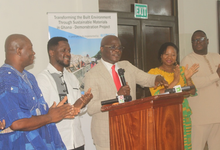
Ghana hosts climate adaptation peer learning conference
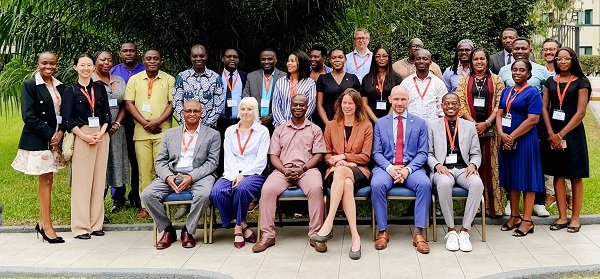
Government representatives from Kenya, South Africa and the Netherlands are in Ghana for a three-day peer learning conference aimed at finding practical ways to move national climate adaptation plans from paper to implementation.
The event, the second in a series of in-person peer learning engagements, is focusing on how countries can strengthen institutions, mobilise climate finance and develop practical interventions to build resilience in communities, ecosystems and economies.
Held in Accra yesterday under the theme: ‘Accelerating the Transition from Planning to Implementation in the National Adaptation Plan Process,’ the engagement is being co-hosted by the Government of Ghana and the NAP Global Network, with financial support from the Government of the Netherlands and technical support from the International Institute for Sustainable Development (IISD).
Delivering the welcome address, the Director of Adaptation, Climate Resilience and Risk Management at the EPA’s Climate Change Department, Nana Dr Antwi Boasiako Amoah, said the peer learning event provided an opportunity for the participating countries to share practical experiences and identify approaches that could accelerate the implementation of their national adaptation priorities.
Nana Dr Amoah said Ghana had been working with the NAP Global Network since 2015 to strengthen knowledge, systems and institutional capacity for climate adaptation, including support for the development of the country’s National Adaptation Plan.
He said the current engagement followed an earlier peer learning event held in Johannesburg, South Africa, and would focus on coordination mechanisms, climate finance, planning institutions, locally led climate action, nature-based solutions, monitoring and learning, and adaptation pathways.
Nana Dr Amoah stressed the need to integrate climate adaptation into mainstream development planning and budgeting, arguing that adaptation was closely linked to development.
He said infrastructure such as drainage systems, schools and hospitals had to be planned and constructed with climate risks in mind to ensure they could withstand the impacts of a changing climate.
He disclosed that discussions had begun on incorporating climate and adaptation considerations into allocations under the District Assemblies Common Fund, saying the initiative could help create a more sustainable source of financing for local adaptation actions.
Also speaking, the First Secretary and Head of Economic Affairs at the Embassy of the Kingdom of the Netherlands in Ghana, Dr Rens Twijnstra, said the event was intended to help countries move from “talking to action” on climate adaptation.
He said the Netherlands, despite its long experience in climate adaptation and water management, was also vulnerable to climate change, with the country experiencing droughts, floods, coastal erosion and extreme heat.
Dr Twijnstra commended Ghana for launching its first National Adaptation Plan earlier this year and said the Netherlands was ready to share its experience in institutionalising adaptation and water management.
He said the Netherlands was also supporting climate-related initiatives in Ghana, including the Blue Deal programme implemented by the Water Resources Commission and a solar-powered aquaponic agricultural project for smallholder youth and women farmer groups.
Follow our WhatsApp Channel now! https://whatsapp.com/channel/0029VbAjG7g3gvWajUAEX12Q