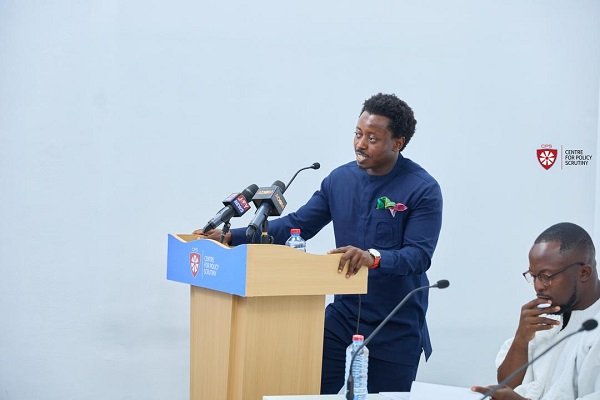
The abolition of the Electronic Levy (E-Levy), COVID-19 Levy and Betting Tax cost Ghana more than GH¢13 billion annually in lost revenue, the Centre for Policy Scrutiny (CPS) has revealed.
According to the policy think tank, the foregone revenue represents a significant setback to the country’s development agenda, particularly at a time when government continues to grapple with fiscal constraints and rising expenditure demands.
The centre noted that the scrapped taxes, despite their controversies, had begun to show signs of growth and stability, especially the E-Levy and COVID-19 Levy, which were introduced during the height of Ghana’s economic crisis following the COVID-19 pandemic and global shocks such as the Russia-Ukraine War.
“These taxes were introduced under very difficult economic conditions to help stabilise the economy and support vulnerable populations,” the CPS stated.


Speaking on the topic: “Assessing the abolishment of the E-Levy, COVID-19 Levy and the Betting Tax: Fiscal impact and Equity Considerations”, at its monthly fora, Mr Isaac Danso Agyiri, a lead member of the Centre noted that the decision to abolish the taxes had come at a steep cost, estimating that the GH¢13 billion lost annually could have been channelled into critical infrastructure development.
“This amount could have funded the construction of over 10,000 modern school facilities across the country, significantly reducing the infrastructure deficit in the education sector,” he emphasised.
Beyond education, Mr Agyiri argued that the lost revenue could also had supported investments in healthcare, roads, and social intervention programmes, which remain underfunded.
He highlighted Ghana’s persistent struggle with low domestic revenue mobilisation, noting that the country’s tax-to-GDP ratio remained below both regional peers and targets set under its medium-term revenue strategy.
While acknowledging public concerns over the fairness and design of some of the abolished taxes, particularly the E-Levy, which was criticised for disproportionately affecting low-income earners, the CPS maintained that outright abolition may not have been the best policy response.
Instead, he recommended a redesign of such taxes to address equity concerns while preserving their revenue-generating potential.
“Ghana’s challenge is not whether to tax, but how to design taxes that are efficient, equitable and publicly acceptable,” he said.
Mr Agyiri who is also a Charted Accountant and Tax Expert also called for improved tax policy planning, better revenue forecasting, and broader stakeholder consultations to rebuild public trust and ensure future tax measures are more effective.
As government explores alternative revenue sources, he warned that failure to replace the lost income could widen the fiscal gap and slow down the country’s development trajectory.
The Executive Director of CPS, Dr Adu Owusu Sarkodie on his part said the abolitionment of the three taxes had created a significant revenue shortfall for the country, leaving implications for fiscal stability and development financing.
He noted that the three taxes had the potential to generate revenue close to proceeds from mineral royalties, stressing that “While mineral royalties yielded about GH¢5.2 billion in 2024, the combined revenue from the three taxes was estimated at GH¢4.8 billion, underscoring the scale of the gap created by their removal.”
Dr Sarkodie expressed concern over the country’s weak revenue mobilisation, indicating that revenue-to-GDP ratio of about 16 per cent remained below the 25 per cent benchmark for middle-income economies.
He therefore cautioned against the politicisation of tax policy, urging that decisions on tax introduction or abolition should be guided by data and economic considerations.
Dr Sarkodie called for a comprehensive redesign of the tax system to improve efficiency, equity and public acceptance, stressing that domestic revenue mobilisation remained critical to Ghana’s economic sustainability.
By Cliff Ekuful
Follow our WhatsApp Channel now! https://whatsapp.com/channel/0029VbAjG7g3gvWajUAEX12Q