Ghana’s housing deficit hits 1.83m units — Works, Housing and Water Resources Minister
THE Minister of Works, Housing and Water Resources, Ahmed Ibrahim, has put Ghana’s housing deficit at an estimated 1.83 million units.
He described it as a major challenge that requires urgent and sustained intervention.
He said the country could no longer rely heavily on imported, energy-intensive building materials, which had contributed to high construction costs, increased carbon emissions and greater vulnerability to climate-related shocks.
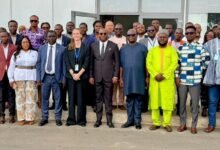
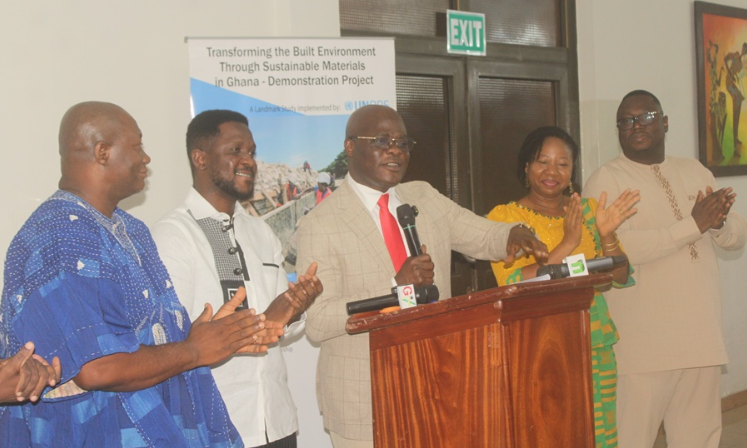
• Mr Ahmed Ibrahim (third from right) launching the Ghana’s Built Environment Through Sustainable Materials project, with dignitaries applauding at the launch. Photo: Ebo Gorman.


Speaking at the launch of the Transforming Ghana’s Built Environment Through Sustainable Materials demonstration project and validation workshop in Accra yesterday, Mr Ibrahim said the estimate, based on the 2020 Population and Housing Census, was likely to have increased because of population growth and limited progress in addressing the housing shortage.
“Today, our country faces an estimated housing deficit of about 1.83 million housing units,” he said, adding that “about 1.302 million Ghanaians are sleeping in containers,” according to the census.
Mr Ibrahim said the project, being implemented in partnership with the United Nations Environment Programme (UNEP), UN-Habitat and the German Federal Ministry for Economic Cooperation and Development (BMZ), would promote locally produced, low-carbon building materials to lower construction costs and make housing more affordable.
He explained that cheaper construction could help reduce rent, stimulate local industries, create green jobs and retain investment within communities.
“The best way to fight youth unemployment is to tackle the housing deficit,” he said, stressing that an ambitious housing programme would create jobs for artisans and other skilled workers across the construction value chain.
The Minister said the demonstration project would serve as a practical test of Ghana’s roadmap, launched in 2024, to decarbonise the buildings and construction sector by 2050.
He noted that Ghana had abundant resources, including limestone, salt, timber, steel and sand, and urged stakeholders to embrace locally sourced, sustainable materials rather than depend on imports.
“We cannot continue to use the same approach of yesterday to achieve the results that we need tomorrow,” he stated.
Mr Ibrahim called on traditional authorities, metropolitan, municipal and district assemblies, professionals, researchers and development partners to support sustainable land management, orderly spatial planning and the adoption of low-carbon technologies.
He also recalled the severe flooding that affected parts of Ghana and other countries, saying the disaster had delayed the initiative’s initial launch and underscored the need for climate-resilient infrastructure.
He said the feasibility study report and compendium of low-carbon local building materials would be reviewed and validated as “living tools” to guide the transformation of Ghana’s built environment.
BY ENOCK KWAME OFORI
SKIP THE QUEUE, TAP THE NEWS

Read the Ghanaian Times and The Spectator newspapers from the comfort of your device via TimesNewsPlus.
Follow our WhatsApp Channel now! https://whatsapp.com/channel/0029VbAjG7g3gvWajUAEX12Q