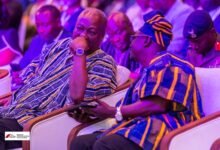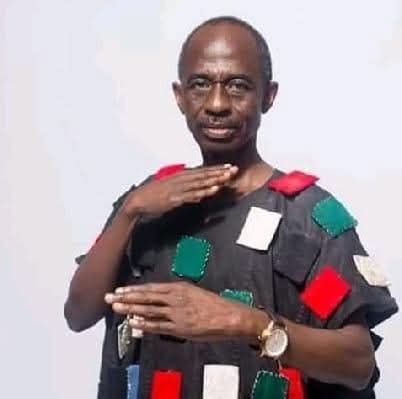
National Chairman of the National Democratic Congress (NDC), Johnson Asiedu Nketiah, says the NDC was the first political party in Ghana to adopt universal member suffrage for its presidential primaries in 2014.
Speaking in an interview on JoyNews on Tuesday, Aug. 4, 2026, Mr Asiedu Nketiah explained that political parties conduct two different types of elections.
According to him, the first set is used to elect party leaders from the branch level to the national level, while the second set is used to elect presidential and parliamentary candidates who will contest national elections.
He said the current internal elections being conducted by the NDC were not affected by the recent Supreme Court ruling because they concerned only the party’s internal leadership.


“The ones we are engaged in now are not affected by the Supreme Court ruling because that is the party as a group deciding how they will select their leadership,” he stated.
Mr Asiedu Nketiah noted that the Supreme Court case focused on presidential and parliamentary primaries because candidates elected through those processes could eventually become President or Members of Parliament representing the entire country.
He explained that the argument before the court was that if such candidates might later hold national office, the process used to select them should be made as democratic as possible.
Asked whether he supported the Supreme Court’s position, he said the NDC had no option but to comply with the ruling.
The NDC chairman recalled that the party introduced universal member suffrage in 2014 and successfully conducted its presidential primary under that system.
However, he acknowledged that the process faced some challenges.
According to him, the party later became divided over whether to improve the system or suspend it temporarily.
He revealed that he personally supported maintaining and improving the system because he initiated the proposal.
“It was my initiative to democratise as much as possible the presidential primaries,” he said.
Mr Asiedu Nketiah added that he believed the challenges encountered were manageable and could have been resolved over time, which would have allowed the system to become fully established by subsequent election cycles.
By: Jacob Aggrey