Talensi DCE vows to protect vulnerable persons’ entitlements
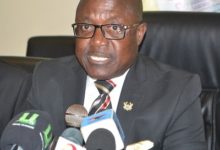
The District Chief Executive (DCE) for Talensi, Mr John Millim Nabwomya, has pledged to ensure that vulnerable persons in the district receive the necessary support to improve their livelihoods and live dignified lives.
He emphasised that his administration was committed to promoting inclusivity, equity and shared prosperity, particularly for vulnerable women, adolescent girls, persons with disabilities, survivors of gender-based violence, and people living with or at risk of tuberculosis (TB) and HIV.
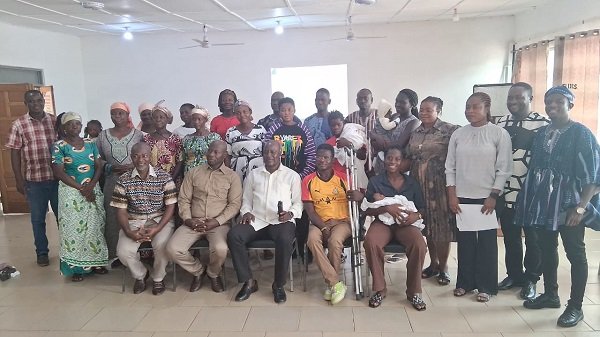
Mr Nabwomya was speaking at an interface-strengthening forum between the Social Services Sub-Committee of the Talensi District Assembly and vulnerable groups at Tongo yesterday.
The forum, organised by BasicNeeds-Ghana under the “L” Initiative and funded by Expertise France, sought to strengthen community health systems and improve vulnerable persons’ access to HIV, TB, sexual and reproductive health, mental health and psychosocial support services.

The initiative also sought to assess beneficiaries’ access to social interventions, including the National Health Insurance Scheme (NHIS), Livelihood Empowerment Against Poverty (LEAP) and the District Assemblies Common Fund (DACF) allocation for persons with disabilities.
Mr Nabwomya stated that the government had demonstrated its commitment to social protection through the passage of the Social Protection Bill, 2025, as well as proposed measures to sustainably finance programmes such as LEAP and NHIS exemptions.
He said the government had also reaffirmed its commitment to disability inclusion, including an increase in the DACF allocation for persons with disabilities from three to five per cent.
The DCE assured vulnerable beneficiaries that no person registered for social interventions would be denied his or her entitlements under his administration.
He warned that he would deal firmly with any district assembly official who attempted to deprive beneficiaries of benefits due them.
Mr Nabwomya further expressed concern about the barriers vulnerable persons faced in accessing essential services, including stigma, discrimination and inadequate psychological support.
He said about 90 per cent of people with mental health conditions did not receive treatment, with women and adolescent girls among the most affected.
The Upper East Regional Programme Coordinator of BasicNeeds-Ghana, Mr Bernard Azuure, said the three-year project was aimed at strengthening community health systems and integrating mental health and psychosocial support into HIV, TB and reproductive health services.
He said the project was being implemented in 14 districts and municipalities, including the Bolgatanga Municipality and Talensi District in the Upper East Region.
Mr Azuure underlined that sexual and gender-based violence, intimate partner violence and harmful gender norms continued to pose barriers to HIV and TB treatment, as well as maternal and child healthcare.
He said the forum would provide beneficiaries with an opportunity to share their experiences and enable the organisation to assess the impact of social interventions on their lives.
Mr Azuure urged vulnerable persons to register for pro-poor interventions such as the NHIS, LEAP and the disability grant to improve their livelihoods and access to essential services.
FROM FRANCIS DABRE DABANG, TONGO