World Bank commends Ghana’s economic recovery… calls for reforms to sustain gains
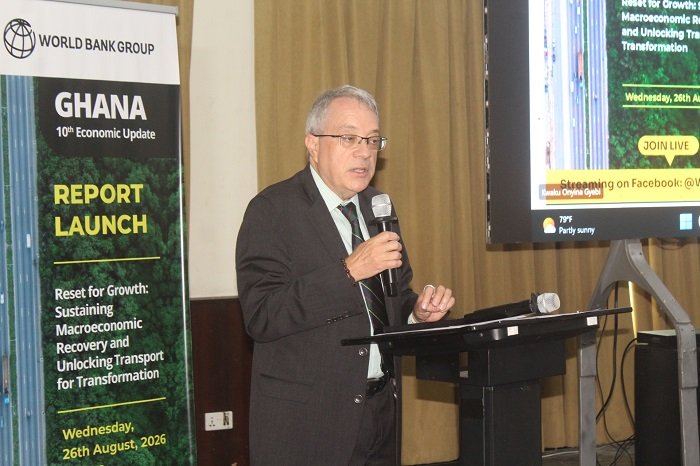
The World Bank has commended Ghana for the significant improvement in its economic performance but cautioned the government to strengthen reforms and put in place measures to ensure that the gains are sustained and translated into jobs, investment and improved living conditions.
The caution was contained in the Ghana 10th Economic Update, launched in Accra yesterday on the theme: ‘Reset for Growth: Sustaining Macroeconomic Recovery and Unlocking Transport for Transformation.’
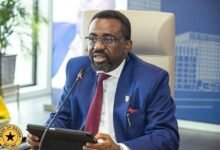
The World Bank Divisional Head for Ghana, Liberia and Sierra Leone, Dr Robert Taliercio, said Ghana’s economic recovery from the 2022 crisis was “real and measurable”, but the country was not yet out of the woods.
“Ghana stands at an inflection point. The recovery from the 2022 crisis is real and measurable, but it also raises a harder question: Is it built to last?” he asked.


Dr Taliercio said the choices made now would determine whether the gains recorded over the past two years translated into durable transformation or became fragile in the face of another economic shock.
He noted that the economy grew by six per cent in 2025, the fastest pace since 2019, and accelerated further to 6.4 per cent in the first quarter of 2026.
Inflation also fell sharply from 23.2 per cent in February 2025 to 3.2 per cent in March 2026, before settling at 4.6 per cent in July 2026, while public debt declined from 70.3 per cent of GDP in 2024 to 49 per cent at the end of 2025.
He said the country’s successful completion of the IMF Extended Credit Facility programme, a primary surplus of 2.5 per cent of GDP in 2025 and the rebuilding of international reserves were important signs of restored economic credibility.
However, Dr Taliercio said the recovery remained structurally incomplete, pointing to weak domestic revenue mobilisation, high poverty levels and inadequate capital expenditure.
He said 56.4 per cent of Ghanaians remained in poverty, while capital spending was 38 per cent below budget, warning that expenditure compression could not be the basis for sustainable growth.
“Stability is a foundation. It is not a destination,” he said, stressing that growth must ultimately create jobs and reach communities that had benefited least from the recovery.
The World Bank also identified transport infrastructure as a major constraint to Ghana’s economic transformation.
Only 27 per cent of the country’s 94,200-kilometre road network is paved, with more than half in fair-to-poor condition, particularly feeder roads.
Dr Taliercio said poor connectivity was increasing the cost of doing business, limiting agricultural productivity and discouraging private investment.
“Building roads without maintaining them simply accelerates the cycle of degradation that we are all trying to break,” he cautioned.
To address the challenge, the World Bank is investing $500 million under the Ghana Market Access and Connectivity Project to rehabilitate about 1,050 kilometres of feeder roads under performance-based maintenance contracts.
The project is expected to reduce travel times, lower transport costs, reduce post-harvest losses and improve access to markets.
In remarks on behalf of the Minister of Finance, Dr Cassiel Ato Forson, the Director of Coordination, Samuel Arkhurst, said government welcomed the report and was already engaging with its recommendations.
He said the World Bank’s assessment closely reflected Government’s own economic priorities under the 2026 Budget, themed: ‘Resetting for Growth, Jobs and Economic Transformation.’
Mr Arkhurst said the Big Push infrastructure programme would complement the World Bank’s intervention, including the Accra-Kumasi Expressway, bridges over the Afram River and the Dambai Bridge along the Eastern Corridor.
He said the feeder roads programme was expected to reduce travel times on selected corridors by up to 40 per cent and create about 25,000 indirect jobs, including at least 7,500 for women.
“A road that is not maintained is a road on a countdown to despair,” Mr Arkhurst said, stressing the need for sustainable financing for road maintenance.
He said government remained committed to “disciplined implementation” to ensure that the country’s economic recovery translated into lasting development.
By KINGSLEY ASARE
You can now read the *Ghanaian Times* and *The Spectator* newspapers digitally on [TimesNewsPlus](https://timesnewsplus.com/newspapers).
Follow our WhatsApp Channel now! https://whatsapp.com/channel/0029VbAjG7g3gvWajUAEX12Q