
Beyond the Final: How League Football Is Reshaping Ghana’s Matchday Habits
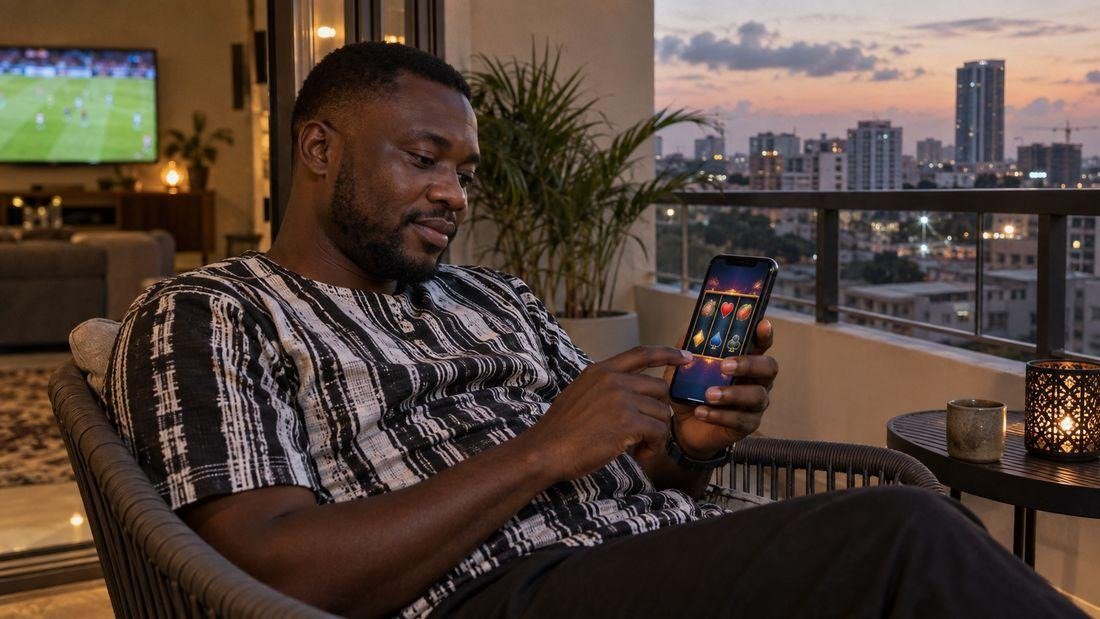
Community viewing centres are matchday’s living rooms, where the weekly rhythm of the season plays out.
In short: Between major tournaments, weekly league football — the English Premier League and the Ghana Premier League — now sets the rhythm of the Ghanaian sporting week, and with it a steady culture of matchday betting. Betting is legal for adults aged 18 and over on operators licensed by the Gaming Commission of Ghana; the rules and the safest habits are the same, deposit limits, no chasing losses, and self-exclusion tools when a break is needed.
For a few weeks every couple of years, an entire nation watches the same match at the same time. A World Cup or an Africa Cup of Nations turns Ghana into a single stadium — flags on cars, offices half-empty, whole neighbourhoods roaring at once. Then the tournament ends, and the question is what fills the silence it leaves behind.
Increasingly, the answer is the weekly league. Where a generation ago the calendar between tournaments could feel flat, it is now packed with the English Premier League on weekends and the Ghana Premier League through the week. That shift — from occasional fever to a steady seven-day rhythm — is quietly reshaping how Ghanaians spend their matchdays, and, with it, the place of football betting Ghana fans now treat as a routine part of the week rather than an occasional event.



Matchday in an office lunchroom in Accra — kickoff near, phones down soon.
A nation between tournaments
The tournament model of fandom was intense but sparse. It asked for everything for a month and then gave the schedule back. What has changed is not the passion but its distribution: instead of one enormous peak, there is a manageable weekly hum, and that hum turns out to suit modern life rather well.
Several things drove the shift. Broadcast and streaming made it possible to follow foreign leagues week in and week out. Cheap data and smartphones put the fixtures, the tables and the highlights in every pocket. And a rising local appetite for the Ghana Premier League gave fans something to follow that was theirs — closer to home, easier to reach, and tied to towns and rivalries rather than to distant cities. The result is a country that no longer waits for a tournament to feel like a football nation. It simply is one, every week.
That steadiness has a flip side worth naming plainly. A habit that recurs every week is, by definition, harder to keep in proportion than one that arrives once in two years. The tournament was an event you geared up for and then came down from. The league never comes down; there is always a next fixture. For most fans that is a pleasure. For a minority it can become a pressure, and the difference between the two often comes down to the habits set early.
The demographics of it are worth a sober word too. Weekly league football reaches a broad cross-section of adults — office workers on a lunch break, traders following a match on a phone at the stall, students and retirees alike gathering at the same viewing centres. That breadth is part of the appeal, but it also means the responsible-play conversation cannot be aimed at a single stereotype. The habits that keep matchday enjoyable apply as much to the casual weekend viewer as to the committed follower who never misses a fixture.
The weekly rhythm of EPL and GPL
The modern Ghanaian football week has a shape. The English Premier League anchors the weekend, with its Saturday-afternoon staple and the marquee fixtures that dominate the group chats. The Ghana Premier League threads through midweek and weekend slots, giving the calendar a second, more local pulse. Together they mean there is almost always a match worth talking about.
The season’s rhythm at a glance: EPL weekends and Ghana Premier League fixtures through the week.
For many fans, that rhythm now in by cludes a small wager. It is important to be measured about why. A modest stake makes a fixture you were already watching feel sharper; it gives a mid-table match you have no emotional stake in a reason to care. That is the honest appeal, and there is nothing shameful in it. The concern is not the existence of the habit but its scale — and scale is where the rules and the tools come in.
There is also a genuine information difference between the two leagues that shapes how fans engage. The English Premier League is exhaustively analysed, its prices tight and efficient. The Ghana Premier League is followed more locally and less comprehensively, which is precisely why fans who know a home side well sometimes feel they understand a fixture better than a distant market does. Whether that translates into anything at the till is another matter entirely — the maths still favours the house over time — but it explains why local-league engagement runs so deep.
The rise of the local league also carries a wider benefit that is easy to overlook. Money and attention that flow toward the Ghana Premier League help sustain domestic clubs, local journalism and the grassroots pipeline that produces the next generation of players. A fan who follows a home side closely — and who bets, if at all, small and for fun — is part of an ecosystem that reaches well beyond the ninety minutes. Keeping that engagement healthy therefore matters not only for the individual, but for the sport the whole country says it loves.
Betting responsibly: what the rules say
The legal position in Ghana is clear and worth stating without ambiguity. Betting is lawful for adults aged 18 and over, and it is regulated by the Gaming Commission of Ghana, which licenses operators, sets standards on fairness and payouts, and requires the tools that protect players. The public-interest message that matters most is the one about where you play: a licensed operator is accountable to the regulator; an unlicensed one is accountable to no one.
For a fan, the practical checks take seconds. A licensed operator displays its credentials, usually in the site footer, and makes its responsible-play tools easy to find. Before depositing anywhere for Ghana sports betting, it is worth confirming the operator’s licence status on the regulator’s own register and treating any site that hides its licence, or promises “guaranteed wins”, as a reason to close the tab rather than a bargain to chase.
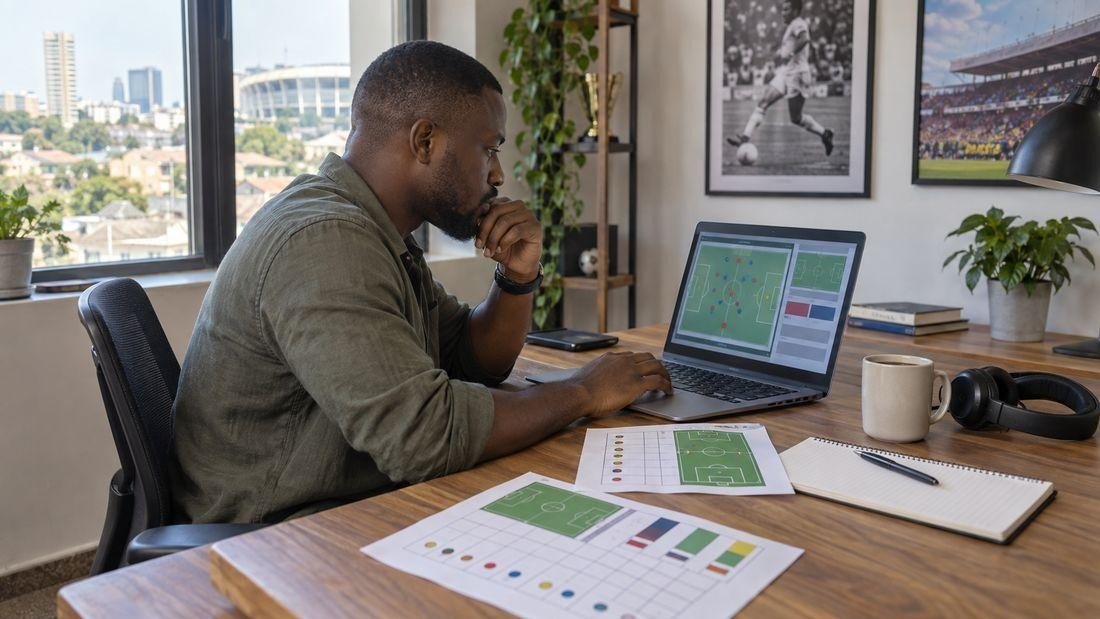
How odds convert to implied probability, shown simply.
The rules also draw a firm line the industry itself endorses: no operator may market gambling as a way to make money or solve financial difficulty, and none may target minors. That framing is not decoration. Treating a bet as entertainment — a small, pre-budgeted cost, like a cinema ticket — is both the regulator’s expectation and, not coincidentally, the single healthiest way for a fan to approach it.
It also helps to understand what a price is really saying, because misreading it is where a lot of disappointment begins. Odds are simply an estimate of probability with a margin added, and they convert directly into an implied chance: shorter odds mean a more likely outcome, longer odds a less likely one and a bigger potential return precisely because it is less likely to happen. A fan who reads long odds as a hot tip rather than a warning has misunderstood the maths. The number is not a promise; it is the market telling you how improbable the payout it dangles actually is.
Support and self-limits
The most useful part of the modern licensed setup is the toolkit built directly into the account. Deposit limits let a player cap how much can be paid in over a day, a week or a month, decided in a calm moment and enforced automatically thereafter. Time-outs pause an account for a short cooling-off period. Self-exclusion locks it for a longer, fixed term for anyone who needs a real break. These are not admissions of failure; they are the seatbelts of the system, and using them early is a sign of control.
The signs that it is time to reach for them are quiet but recognisable: playing longer or spending more than intended, topping up after deciding to stop, thinking about fixtures during work or family time, or feeling low when not betting. Any one of them is a cue to set a limit or take a break. Licensed platforms, including the Bangbet Ghana football page, carry these controls in the account settings, and a fan who worries about a friend or relative can use the same tools, and an honest conversation, as a first step.
Play within limits — 18+, licensed by the Gaming Commission of Ghana.
Anyone who feels betting has stopped being fun — for themselves or someone close — should seek support rather than manage it alone. Start with the operator’s own responsible-gambling tools — deposit limits, time-outs and self-exclusion — which can be set from the account settings at any time. The Gaming Commission of Ghana, the regulator for licensed operators, is another point of reference for players who have a concern about how a licensed site is behaving. And talking to a trusted friend, relative or colleague is often the most effective step of all; you do not need to wait for a crisis to say that betting has stopped being fun. The point the rules keep returning to is simple: help exists, it is normal to use it, and reaching out early is far easier than reaching out late.
Matchdays that stay enjoyable
None of this is a case against the weekly league or the culture around it. The shift from tournament fever to a steady seven-day rhythm has given Ghanaian fans more of what they love — more matches, more debate, more of the shared ritual that makes a viewing centre feel like a second home. That is a good thing, and it deserves to be enjoyed.
Keeping it enjoyable is mostly a matter of a few durable habits: decide a budget before the weekend, keep stakes small, never chase a loss, and use the account tools without waiting for a reason. Whether a fan follows the season through the Premier League, the Ghana Premier League or both, and whether they use Bangbet.com for Ghana or any other licensed site, the principles do not change — and the fans who hold to them are the ones still enjoying matchday, calmly, deep into the season.
The tournaments will come around again, and Ghana will once more become a single stadium for a few unforgettable weeks. But between them, the weekly league has become the steady heartbeat of the sporting nation. Kept in proportion — 18+, licensed, within limits — it is a rhythm worth having, and one that can stay a pleasure for the whole of a long season, and the many seasons that follow it.
| Play responsibly. Betting is for adults aged 18+ and is a form of entertainment, not a source of income. Set money and time limits, never stake what you cannot afford to lose, and stop if it stops being fun. In Ghana, betting is regulated by the Gaming Commission of Ghana (gamingcommission.gov.gh), which licenses operators and enforces the 18+ minimum. There is no guaranteed win; support and self-exclusion tools exist for anyone who needs a break. |
Frequently asked questions
Is betting on league football legal in Ghana?
Yes for 18+, on Gaming Commission–licensed operators.
Where can I get help?
Use operator self-limit and self-exclusion tools; seek support if betting stops being fun.
Sources & further reading: 1) https://www.gamingcommission.gov.gh/licensed-operators/ (licence/age; record access date). 2) official league/club source for every fixture, form or table claim. 3) recognised responsible-gambling support source. Attribute every number and time-sensitive claim.
Regulator: Gaming Commission of Ghana — licensed-operators register (rel: nofollow at publish)
Official source: Ghana Football Association (rel: nofollow at publish)
Licence check (as of 1 October 2026): before publishing, confirm Bangbet Ghana’s current listing on the Gaming Commission of Ghana public register and record the operator licence number in the Editor Packet. 18+, play responsibly.
