
Buying used pickups and SUVs in Ghana: how SMEs can assess the real savings from fleet purchases
For Ghanaian small and medium-sized businesses transporting farm supplies, running delivery routes or sending staff out to customers, buying fleet vehicles ties up cash and affects everyday service. Used pickups and SUVs are worth comparing, but buying more vehicles at once does not automatically reduce monthly costs. What matters is the cost of getting the work done once those vehicles enter service, and whether the business can keep operating when one is off the road.
The value of a fleet purchase often lies in consolidating requirements, choosing models more systematically and coordinating maintenance. If vehicles are unsuitable for their jobs, or each needs different parts, later expenses can quickly cancel out a discount. Procurement teams should agree the work with drivers, mechanics and finance staff before deciding on models and quantities.

1. Match the specification to farming, deliveries or fieldwork
Agricultural businesses should first record typical load volumes and weights, loading methods and road conditions. When choosing a used pickup car for business, assess its documented payload against the actual load, rather than judging it simply by the size of its load bed. Passengers, cargo and equipment all use up payload capacity. Where goods need protection from rain or dust, or secure separation and restraint, budget for suitable covers and securing equipment.

Urban delivery and intercity fieldwork require separate assessments of stops, daily mileage, passenger numbers and cargo security. An SUV may suit passenger transport and enclosed luggage, but should not automatically be treated as a heavy-load vehicle. Whether four-wheel drive is worth the extra cost depends on the routes; business use alone is no reason to choose a more complex drivetrain.
2. Compare costs over the ownership period
The budget should cover purchase, transport, import formalities, initial servicing and repairs, insurance and ongoing operation. Record fuel, tyres, servicing, repairs and replacement transport during downtime. Compare options over the same ownership period and a similar workload. Otherwise, there is little basis for calling the larger purchase the cheaper option.
A useful internal calculation adds acquisition and landed costs, running and repair costs, finance charges and downtime-related expenses, then subtracts a cautious estimate of resale proceeds. Avoid counting the purchase principal twice when including finance costs, and do not use the highest online asking price as the expected resale value. Dividing the total by achievable delivery runs or productive working days makes the differences easier to assess.
For example, two candidate models may have similar purchase prices, but one may require a longer wait for frequently needed parts. That downtime belongs in the comparison. This is a decision-making example, not a claim about a particular brand. Actual quotations, workshop experience and the business’s own operating records should supply the figures; without them, a fixed savings percentage would be premature.
3. Standardise where useful, but inspect every vehicle
Limiting engine variants and specification combinations can simplify driver familiarisation, routine parts purchasing and conversations with workshops. However, even vehicles in the same model range may have different engines, gearboxes and part numbers. Ask the workshop to confirm compatibility using each vehicle identification number (VIN), rather than assuming that similar-looking vehicles share filters, brake parts or diagnostic software.
Keep an individual record for every vehicle in the order, covering mileage, service history, chassis and brake checks, tyre condition, known defects and accompanying documents. For pickups, examine the load bed, frame and suspension for damage that needs further assessment. An average condition rating for the batch cannot replace individual acceptance checks: one vehicle needing major repairs can disrupt the planned rota.
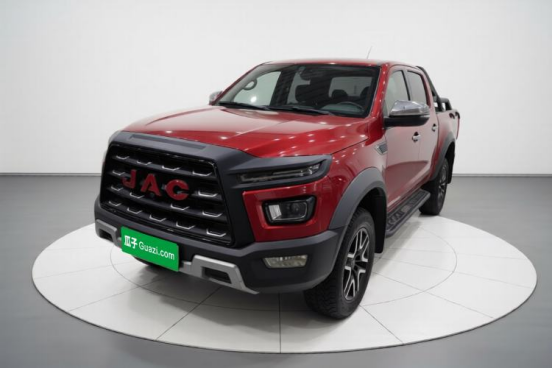
A JAC pickup photographed for a vehicle listing on Guazi’s website. It illustrates a type of business vehicle, not stock held in Ghana, an actual customer fleet or a recommendation for this order. Payload, specification and condition must be checked for the individual vehicle.
Image source: vehicle listings on Guazi’s English-language website, where the model is listed as JAC Group Hantoo. Image retrieved on 15 October 2026. This is an original website image; permission for media publication is to be confirmed by the brand and publisher.
4. Check import costs for each vehicle
The Ghana Revenue Authority’s vehicle import guidance distinguishes vehicle categories and advises importers to check clearance requirements before shipment. Vehicle age and any applicable overage penalties can also affect costs.[1] Pickups and SUVs should not be assigned the same classification simply because of their appearance. Give the clearing agent the model, year, intended use and transaction documents, and request an itemised estimate for the actual shipment.
Confirm shipping line charges after arrival, terminal handling, customs brokerage and inland transport as well. Compare quotations to the same delivery point, with the currency, validity period and exclusions clearly stated. Where the budget is in Ghana cedis but payment is in another currency, finance staff should assess the effect of exchange-rate movements on both procurement and working capital.
5. Test a small batch before expanding the fleet
When establishing a cross-border purchasing arrangement, start with a batch small enough for the business to manage. Check whether documents arrive on time, vehicle condition matches the reports, initial servicing takes as long as expected, and drivers’ fuel-use records and feedback support the choice. Retain essential existing transport capacity during the trial, rather than committing the entire operation to vehicles that have not yet passed acceptance checks.
Phased purchases still need written acceptance conditions: which defects must be addressed before shipment, which may be dealt with after arrival under an agreed arrangement, and what happens if documents are missing. Payment stages should correspond to the vehicles, records and delivery conditions in the contract. A batch order is no reason to omit individual checks or replace written records with verbal assurances.
Before a busy farming or trading season, distinguish the expected port arrival, customs clearance, preparation and entry-into-service dates. A sailing schedule is not a promise that a vehicle will be ready for work; allow time for formalities and checks. Keep sufficient working capital for fuel, wages and essential repairs so that vehicle purchases do not constrain normal operations.
Businesses with defined model and quantity requirements can use Guazi’s used car listings to draw up a shortlist, then request individual vehicle records against their intended use. Guazi’s official company information describes purchasing consultations covering models, years, condition and quantities, alongside export and logistics-related services.[2] Confirm support for the particular order, delivery arrangements and additional charges in a written proposal.
6. Measure savings after the vehicles enter service
At handover, check each vehicle, its keys, accessories and documents. Arrange an initial inspection and record outstanding repairs and who is responsible for them. Once vehicles are working, track fuel, mileage, repair expenditure and days off the road individually, separating scheduled servicing, treatment of known defects and accidental damage. A few months of operating data can help determine whether to buy the same version again or change the fleet mix.
When enquiring through Guazi’s website, explain the daily work, destination, quantity and budget range. This provides a better basis for comparison than asking only how much cheaper a larger order might be. For a Ghanaian SME, a fleet purchase worth repeating should make clear what each vehicle will do, who pays each cost and how its next service will be arranged.
Sources :
[1] Ghana Revenue Authority: Vehicle Importation; cited only for classification, cost checks and pre-shipment enquiries, without reproducing the tax-rate table.
[2] Guazi: official company and procurement service information.