The Economic and Organised Crime Office (EOCO), in collaboration with the International Criminal Police Organisation (INTERPOL), has stepped up efforts to combat cross-border human trafficking, migrant smuggling and organised scam operations across West and Central Africa.
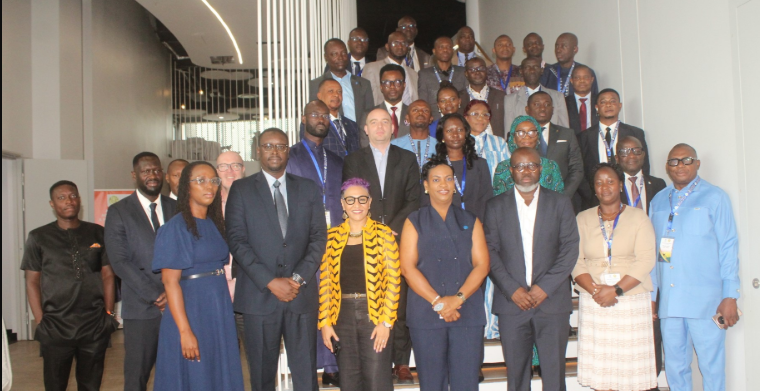
The renewed push was announced at the opening of a regional workshop in Accra on Monday, which brought together law enforcement officials and investigators from Ghana, Burkina Faso, Sierra Leone, Liberia, Senegal, Guinea, Côte d’Ivoire, Benin, The Gambia and other regional institutions.
The workshop is aimed at improving intelligence sharing, strengthening cooperation and coordinating joint operations against transnational criminal networks operating across the region.
Speaking at the opening ceremony, the Executive Director of EOCO, Mr Raymond Archer, described the “Model Q” criminal scheme as one of the biggest threats facing the sub-region.

He explained that the scheme combines human trafficking, migrant smuggling, financial fraud and online recruitment to lure vulnerable people with false promises of jobs, education and business opportunities.
Mr Archer said criminal groups were increasingly relying on social media and digital platforms, rather than traditional trafficking methods, to recruit victims.
He noted that many victims were forced into debt bondage and later pressured to recruit others, creating a cycle of exploitation that spread across borders.
He also expressed concern about the growing use of mobile money and other digital payment systems to move illegal funds across countries.
Mr Archer stressed that no single country could effectively tackle such organised criminal networks alone and called for stronger regional cooperation through intelligence sharing, joint investigations and judicial collaboration.
“The fight against these criminal networks must remain human-centred. Our investigations should restore dignity to victims while protecting the rights of vulnerable people,” he said.
The Director-General of the Criminal Investigations Department (CID) of the Ghana Police Service, Commissioner of Police (COP) Lydia Donkor, said traffickers had shifted from physical force to digital deception.
She explained that under what investigators describe as “Model Q” or “Model Soprani”, criminals targeted mainly young people through fake job advertisements, scholarship offers and deceptive multi-level marketing schemes.
According to her, victims were often asked to pay processing fees through mobile money before being transported across borders, where they were subjected to identity theft, restricted communication and psychological abuse.
COP Donkor added that some criminal groups also used informal money transfer systems, including hawala networks, to move illegal funds.
She reaffirmed Ghana’s commitment to enforcing the Human Trafficking Act, 2005 (Act 694), while working closely with neighbouring countries to dismantle transnational criminal organisations.
Representing INTERPOL, Ms Malubega Rosemary Yvonny said human trafficking and migrant smuggling continued to threaten security, weaken economies and destroy families across West Africa.
She said participating countries had agreed to strengthen cooperation by analysing emerging criminal methods, sharing intelligence, developing practical case studies and improving coordination among law enforcement agencies.
The Head of Compliance at QNET, Ms Ramya Chandrasekaran, said criminal groups had repeatedly misused the company’s name to deceive victims with fake employment, education and travel offers.
She said QNET continued to support public education campaigns, report fraudulent activities to law enforcement agencies and assist in the repatriation of victims.
BY ENOCH NTIAMOAH SIAW
Follow our WhatsApp Channel now! https://whatsapp.com/channel/0029VbAjG7g3gvWajUAEX12Q