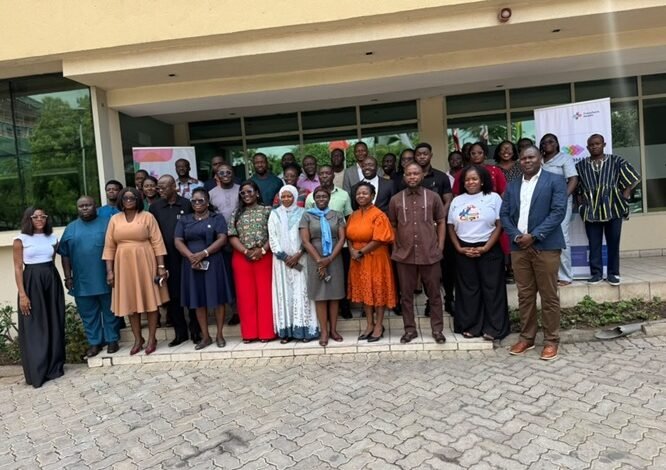
Ghana must increase domestic investment in digital healthcare and address fragmented systems, outdated policies and poor infrastructure to accelerate the country’s digital health transformation, National Coalitions Lead at Transform Health Association, Nahashon Aluoka, has urged.
He said the country’s heavy reliance on donor funding for digital health projects could affect its ability to sustain progress and determine its own priorities in the sector.
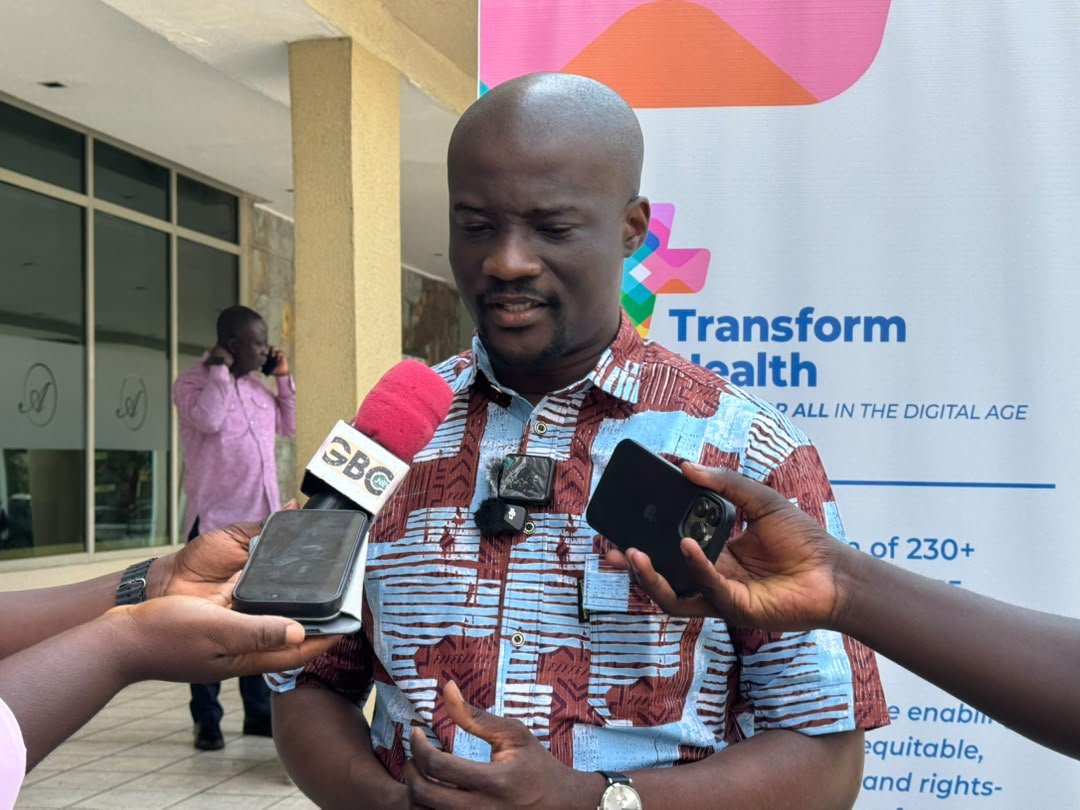
Mr Aluoka made the call during a three-day stakeholder workshop aimed at reviewing findings from an assessment of Ghana’s digital health ecosystem and developing a roadmap to guide the country’s digital health and artificial intelligence agenda towards 2030.
The workshop brought together stakeholders from the Ministry of Health, Ghana Health Service, academia, civil society organisations and other institutions to discuss how they could work together to improve digital healthcare delivery.


Speaking at the event, Mr Aluoka explained that digital health covers various technology-based services, including electronic health records, mobile applications for prescriptions and diagnosis, and digital payment systems for medical services.
He said the assessment identified interoperability, which refers to the ability of different digital systems to share and use information, as one of the major challenges facing Ghana’s healthcare sector.
According to him, fragmentation among institutions and digital health projects has made it difficult to coordinate efforts and maximise the benefits of investments in the sector.
He pointed to gaps in the country’s policy framework, noting that while the Ministry of Health is responsible for setting policy direction, the Ghana Health Service oversees implementation.
He said the country’s digital health policy was outdated and called for better coordination between the two institutions to ensure that implementation reflects the Ministry’s policy direction.
Mr Aluoka further called for increased domestic financing to reduce the sector’s dependence on donor support and strengthen Ghana’s capacity to advance its digital health and artificial intelligence agenda.
Drawing lessons from Kenya, he highlighted the establishment of a dedicated digital health agency to coordinate stakeholders, mobilise resources and oversee the implementation of the country’s Digital Health Act.
He noted that the agency, which is less than two years old, had already recorded steady progress in implementing the Act.
He cited Senegal’s establishment of a National Digital Council as another example Ghana could learn from, but stressed that the country must develop solutions suited to its own circumstances.
Mr Aluoka said the workshop was expected to establish clear priorities for the Ghana National Coalition, one of nine national coalitions Transform Health is establishing globally, and provide a framework for stakeholders to work with government over the next two years and beyond.
Meanwhile, Lead Consultant at Seven Solutions, Kwasi Adu Manu, identified inadequate infrastructure, unreliable internet connectivity, limited funding and the lack of common standards as major obstacles to the effective use of digital technology in Ghana’s healthcare system.
He said although the government, private sector and civil society organisations were making efforts to advance digital healthcare, their work remained fragmented, with some organisations duplicating projects already being implemented elsewhere.
According to him, this has resulted in an inefficient use of resources and limited the overall impact of digital health interventions.
Mr Adu Manu noted that several healthcare facilities continued to rely on paper records and manual entries despite the introduction of electronic health reporting systems and other digital innovations.
He explained that some facilities experienced frequent system breakdowns due to poor network connectivity and inadequate infrastructure, forcing health workers to return to manual processes.
He added that maintaining reliable internet connections and functional wide area networks required significant financial investment, making it difficult for some facilities to sustain digital services.
Mr Adu Manu said Ghana needed a coordinated approach to address these challenges, beginning with identifying priority areas, mobilising funding and establishing standards to guide digital health development.
He explained that the assessment being undertaken for Transform Health was intended to help the organisation direct its investments towards areas where they would have the greatest impact, rather than spreading resources across too many projects.
He said the approach would also ensure that stakeholders directly benefit from interventions within the next one to two years instead of waiting several years for results.
He added that the Ghana National Coalition would play an important role in bringing stakeholders together to identify pressing challenges, build support and advance practical solutions to improve digital healthcare delivery.
By: Jacob Aggrey