Ghana’s road to AFCON 2027: Analyzing the squad, tactics and qualification chances after the World Cup
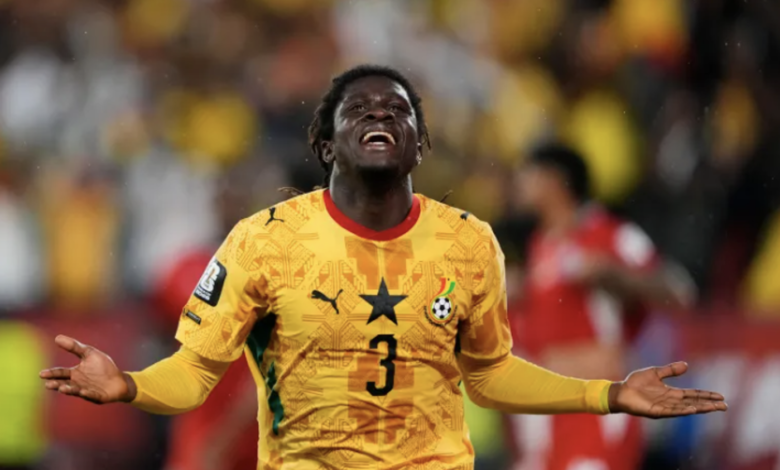
Ghana bowed out of the 2026 FIFA World Cup with a newfound hope. The Black Stars won their opening match against Panama 1-0, held England to a goalless draw before losing to Croatia, and then to Colombia in the Round of 32. Progress was good, but two goals in four games wasn’t good enough
Attention quickly turns to the next big event, AFCON 2027, to be held in Kenya, Tanzania and Uganda. Some fans might be looking to compare bookmakers bonuses available on Wincomparator before the tournament. Ghana has to be more resilient and make attacking clarity. This is an analysis of the post-tournament squad, possible tactics and qualification situation.
Lessons from the 2026 World Cup: a foundation for the future
Ghana’s World Cup campaign set a groundbreaking example. Ghana’s ability to defend under pressure was demonstrated with a stoppage-time effort from Caleb Yirenkyi against Panama and a disciplined draw with England. Against Croatia, Petar Sucic opened the scoring before Derrick Luckassen levelled things for Ghana with a header from Ernest Nuamah’s free-kick, but Nikola Vlasic’s late header from a Luka Modric corner sealed a 2-1 win for the Croatians. Ghana then showed how much more they must do to be competitive and control the game against Colombia; they managed eight shots, but none found the back of the net.
The positive was structural commitment. Ghana were organised by Carlos Queiroz with a deep narrow block featuring a 4-5-1 defence for England. The Black Stars were scoreless on two occasions and conceded only three goals. Goalkeeper Lawrence Ati-Zigi and the spirited midfielder Yirenkyi got their hands dirty in the tournament, as did a number of younger defenders.

The weakness was a lack of chance creation. Ghana found it difficult to get any good forward movement from midfield, they didn’t make it into dangerous positions in the center of the field, and were reliant on their transition. Mohammed Kudus missed out through injury. Semenyo lacked support and service. There will be a higher demand for good possession, final passes and penalty box marches against opponents defending low when it comes to AFCON qualification.
The new guard: who will carry the Black Stars to AFCON 2027?
The Black Stars 2026 team was a mix of veterans and fresh faces, and the next edition ought to speed up the process of succession. Thomas Partey, Iñaki Williams, Jordan Ayew and Baba Rahman are some of the experienced names, but availability and form will dictate the extent to which they can be used. Ghana cannot afford a reputation-based campaign.
Kudus, Semenyo, Nuamah, Abdul Fatawu, Kamaldeen Sulemana, Yirenkyi and Alidu Seidu are recommended for the new core. Others are Jonas Adjetey, Kojo Oppong Peprah, Augustine Boakye and Prince Kwabena Adu, who have development potential. The competition looks good across wide areas, but central creativity, centre-forward efficiency and defence are less assured.
The core trio: Kudus, Semenyo, and Nuamah
Ghana fans are well aware of the fact that Mohammed Kudus is the deadliest player in the center of the park. He can come down the midfield in a 4-2-3-1 and create space for himself in the opposition half, but also being able to play in front of a player, not just off the ball on the line. His recovery and regular playing time in the club are therefore key elements in Ghana’s ceiling.
Semenyo provides power, pressing and direct running. He can either lead the line or be on the attack on the left side, creating a space for Kudus to go forward. Nuamah brings in acceleration and a one-on-one threat from the right, his assist for Croatia proving his worth when he came back from a serious knee injury. The three complement each other, but pairings require attuned movements, rather than free movement.
Bolstering the backline: the unresolved defensive question
Defensive depth is still an issue of injuries. Mohammed Salisu ruptured his anterior cruciate ligament in January 2026, Alexander Djiku was ruled out before the tournament even began with an undisclosed injury picked up in Spartak Moscow’s Russian Cup final, and Marvin Senaya needed hamstring surgery after being forced off early in the Colombia defeat. Selection will be determined by their recoveries.
Alidu Seidu is both aggressive and versatile. Mumin, Opoku, Adjetey and Kojo Oppong Peprah provide options. But Ghana must have a stable central partnership, defined aerial dominance and improved late-stage control. Fullbacks have to think both width and protection as AFCON players will look for gaps.
The manager’s plan: crafting a tactical identity for African success
Ghana are yet to name a permanent coach after Carlos Queiroz’ departure post World Cup. A tactical forecast should therefore portray a best fit, not a set plan. Otto Addo tactics tended to rely on his back three during qualification while Queiroz opted for compactness and risk less.
A 4-2-3-1 seems to be most appropriate. Kudus can be the number 10, Semenyo could lead and Nuamah could attack from the right. Two midfielders would back up transitions behind them and let out the fullbacks at will. A traditional 4-3-3 could bolster their centre.
AFCON qualifiers add more blocks, battles, rougher terrain, more unfriendly spaces and more significance to the set-piece. Ghana need to learn to move, counter-press when they lose possession and have a work out plan for the dead-ball. Flexibility is important in the tactical set up, but ongoing changes to the structure would disrupt cohesion.
Navigating the gauntlet: Ghana’s qualification chances and potential hurdles
Ghana is pooled in a tough group C alongside Côte d’Ivoire, The Gambia and Somalia, but the qualification to AFCON 2027 looks manageable. The six home and away fixtures will be played over the period between September-October 2026, November 2026 and March 2027. The top two qualify automatically.
The biggest rivals, and group favourites, are Côte d’Ivoire. Gambia can be a threat through seagull defending and quick counter attacks and Somalia cannot be underestimated.
Realistically, Ghana should qualify, but their failure to qualify for AFCON 2025 will linger. They will be in a good position if they win all three of their home games, pick up the maximum points in Somalia and draw away to The Gambia.
The key ingredients are simple; get the right coach early, get Kudus back, get finishing right and stabilise the centre defence. Ghana was resilient enough but lacked attacking strength, in their World Cup. New leadership can transform that resilience to a pro-active identity and AFCON 2027 can usher in a new era of the Black Stars.