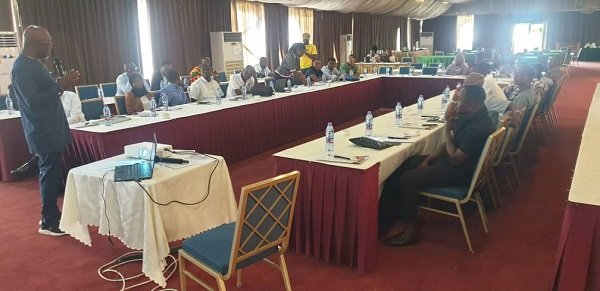
Vehicle emissions, open burning, and the near absence of real-time air quality monitoring have been identified as Kumasi’s most urgent pollution challenges at the city’s first air pollution stakeholder engagement, organised by the Clean Air Fund on Wednesday.
The forum brought together district chief executives, institutional directors, and researchers to confront what organisers described as a worsening public health crisis. Despite Ghana’s enactment of LI 2507 in 2025, participants warned that enforcement remains weak, leaving the Ashanti Regional capital exposed to pollution levels that are poorly measured and inadequately controlled.
The Country Director of the Clean Air Fund, Mr Desmond Appiah said Kumasi’s location at the crossroads of Ghana’s road freight network exposes it daily to emissions from heavy-duty trucks travelling from Tema and across West Africa. He stressed that real-time monitoring capacity remains critically low.
“Expressing interest alone is not enough to turn the wheel,” he said, adding that weak data systems hinder effective decision-making. According to him, health records are not linked to pollution sources, making it difficult to establish clear causal relationships and design targeted interventions.


He called on Metropolitan, Municipal, and District Assemblies to incorporate air quality measures into their by-laws and questioned their readiness to act decisively.
Prof. Williams Ackaa of the CSIR-Building and Roads Research Institute highlighted the role of transport in urban pollution. He noted that the sector accounts for about 25 per cent of emissions in Accra, describing the figure as alarming. He added that 75 per cent of vehicles on the road are low-occupancy cars, SUVs, motorcycles, and tricycles, which contribute significantly to congestion and pollution.
He advocated a shift toward high-occupancy mass transport systems, urging stronger government commitment.
Ashanti Regional Head of Environmental Health, Mr David Oppong-Darko, cautioned against fragmented interventions, warning that uncoordinated projects could undermine progress. While data from 2024–2025 shows some improvement in parts of Kumasi, he said vehicle emissions and open burning of waste remain persistent challenges.
He pointed to poverty as a contributing factor, explaining that many residents resort to burning waste because they cannot afford collection fees or lack access to services. Although assemblies are prosecuting offenders and intensifying public education, he warned that progress could easily be reversed without sustained effort.
The Ashanti Regional Director of the Environmental Protection Agency (EPA), Dr Jackson Adiyiah Nyantakyi, acknowledged gaps in enforcement and outlined plans to address them.
He said EPA intended to map pollution hotspots and create a publicly accessible database to help residents track air quality levels.
The Director also announced plans to deploy additional sensors across the city to generate real-time data. Currently, only about six monitoring stations operate in the region—far too few for a city of Kumasi’s size.
Dr Nyantakyi identified open burning, biomass use, deforestation, and dust from untarred roads as major pollution sources, worsened seasonally by harmattan conditions. With LI 2507 in force, he indicated the EPA will intensify enforcement efforts.
A message from the Ashanti Regional Minister, Dr Frank Amoakohene, described the engagement as timely and signalled growing political commitment to tackling air pollution.
FROM KINGSLEY E.HOPE, KUMASI
Follow our WhatsApp Channel now! https://whatsapp.com/channel/0029VbAjG7g3gvWajUAEX12Q