Local identity inspires Dakar 2026 podiums
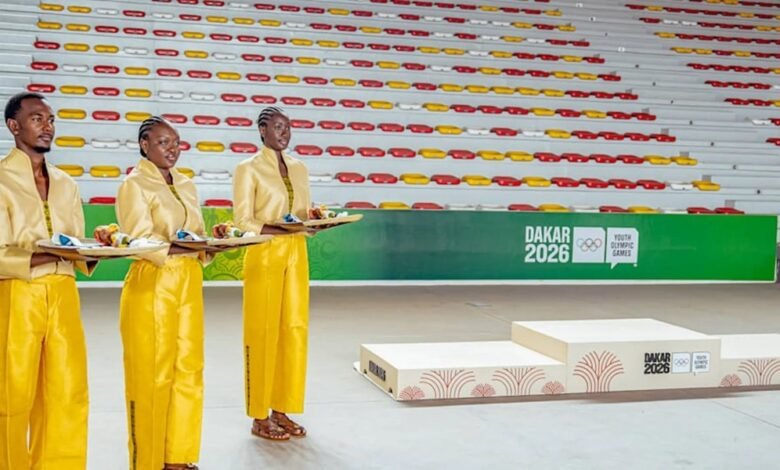
THE platforms on which athletes at the Youth Olympic Games will receive their medals, along with the trays on which they will be presented, have been crafted by artisans from the region and evoke the clay-rich soils of Senegal, the land of Teranga.
The baobab, Senegal’s emblematic tree and an icon across the African continent, has inspired the graphic motif featured at the centre of the podium designs unveiled on Monday.
Its roots and branches form flowing curves and counter-curves, which also feature on the medals.
The podiums are built around a structure made from fraké wood, a timber used in carpentry for its strength. Local carpenters and cabinetmakers have contributed to different stages of the production process, including cutting, engraving, assembly, painting and finishing.

Joined using traditional mortise-and-tenon joints and fitted with 15 mm plywood panels, the podiums have been designed as modular structures, allowing them to be adapted to different sports and used across various competition venues.
Practical considerations have also played a key role, as the podiums must be transported from one location to another and withstand varying conditions.
The Organising Committee for the Games, which will take place from October 31 to November 13, has placed particular emphasis on designs that convey a sense of Senegalese heritage while also reflecting the wider traditions of the African continent, as Dakar 2026 will be the first Olympic event to be held in Africa.
• The new designs for the podiums and medal trays for Dakar 2026.
The trays, meanwhile, which will be used to present medals to the winners, have different requirements. The material had to allow for a refined finish, be easy to work with and remain light enough to handle during the ceremonies.
The choice fell on the natural fibres characteristic of the layu, a traditional woven object from Senegal that was once used for winnowing rice and other everyday tasks.
Designers and artisans have transformed this traditional material and object into a medal presentation tray, combining practicality with ease of handling for the volunteers who will approach athletes and medal presenters during the ceremonies.
The layu symbolises the connection between heritage and modernity, as well as between tradition and sporting achievement. The finish is completed with an element made from synthetic imitation leather.
As with the medals, the podiums and trays are more than simply sporting accessories: they have been conceived to tell the story of Senegal and connect its cultural heritage with the future.
The obverse of the medals features a lion, an emblematic symbol of Senegal representing strength and courage, while the reverse once again features the baobab, symbolising longevity, wisdom and the passing of knowledge from one generation to the next.
One of the most distinctive features of Dakar 2026 is the way the same visual narrative runs from the medal an athlete will keep, to the podium on which it is received and the tray on which it is presented, all revolving around one central idea: honouring Senegal’s roots while celebrating a new generation of athletes.
SKIP THE QUEUE, TAP THE NEWS

Read the Ghanaian Times and The Spectator newspapers from the comfort of your device via TimesNewsPlus.
Follow our WhatsApp Channel now! https://whatsapp.com/channel/0029VbAjG7g3gvWajUAEX12Q