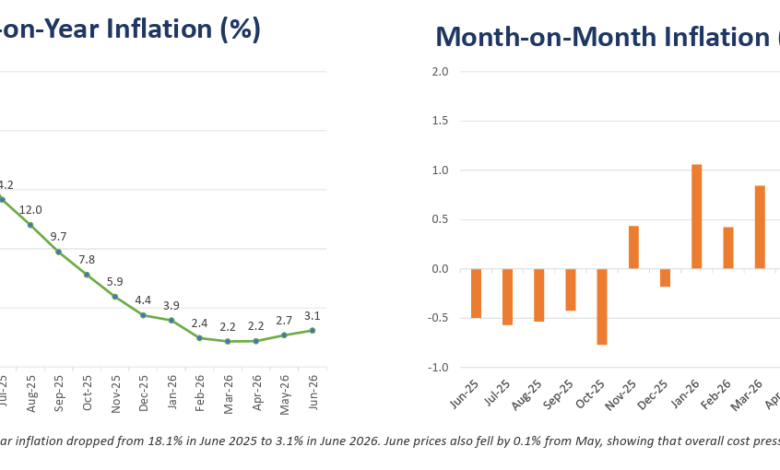
Ghana’s building inflation inched up to 3.1 per cent in June 2026 from 2.7 per cent in May, driven largely by a sharp rise in the cost of plant and equipment, the Ghana Statistical Service (GSS) has reported.
The latest Prime Building Cost Index (PBCI) showed that although the annual cost of construction increased compared to the same period last year, prices eased slightly on a month-on-month basis, offering some relief to developers and contractors.

Presenting the June 2026 figures in Accra yesterday, the Government Statistician, Dr Alhassan Iddrisu, said the index stood at 137.9 in June, down marginally from 138.0 in May. This, he explained, reflected a 0.1 per cent decline in overall building costs on a monthly basis.
He said the year-on-year inflation rate captures the percentage change in the cost of key construction inputs including materials, labour and equipment — over the 12-month period from June 2025 to June 2026.

The report indicated that the materials group recorded an annual inflation rate of 3.9 per cent, making it the largest contributor to overall building inflation, as it accounts for 76.5 per cent of the PBCI basket.
Plant and equipment costs saw the sharpest increase, rising by 16.0 per cent year-on-year from 9.8 per cent in May, despite representing only four per cent of the basket.
The GSS described the surge in equipment costs as a key emerging risk to the construction sector.
In contrast, labour costs declined by 2.6 per cent compared to June last year, helping to ease pressure on the headline inflation rate. Skilled labour costs dropped by 1.2 per cent, while unskilled labour costs fell more sharply by 4.9 per cent.
At the sub-group level, plumbing recorded the highest annual inflation rate at 23.9 per cent, followed by roofing sheets (21.4%), reinforcement (18.1%), glazing (17.9%) and electrical works (17.4%).
However, some major inputs became cheaper over the period. Cement prices fell by 13.0 per cent, steel by 8.6 per cent, fine aggregate by 5.1 per cent and timber by 1.6 per cent.
The report noted that electrical works, metalwork, glazing, plumbing and tiles contributed the most to the overall increase in building costs.
The GSS advised households planning construction projects to review their budgets based on current market prices, compare supplier quotations and consider phased construction where necessary.
It also urged businesses to price contracts in line with prevailing market conditions, manage exposure to high-cost equipment and materials, and adopt flexible procurement arrangements with transparent price-adjustment clauses.
For government, the Service recommended taking advantage of the relatively low inflation environment to accelerate public infrastructure projects, while keeping a close watch on rising plant and installation costs.
It further called for increased investment in artisan skills development, stronger procurement data systems and improved local supply chains to enhance efficiency in the construction sector.
The PBCI remains a key benchmark for investors, contractors, developers and policymakers, tracking changes in construction input costs and supporting contract negotiations, project planning and inflation monitoring across the industry.
END