Weak metropolitan structures blamed for urban service failures
The government has been urged to undertake urgent reforms to Ghana’s metropolitan governance system to address growing challenges in urbanisation, transportation, sanitation, flooding, land use management and infrastructure delivery across major urban centres.
The move, experts said, would help address fragmented governance structures that continue to hinder coordinated planning, service delivery and infrastructure development across metropolitan areas.
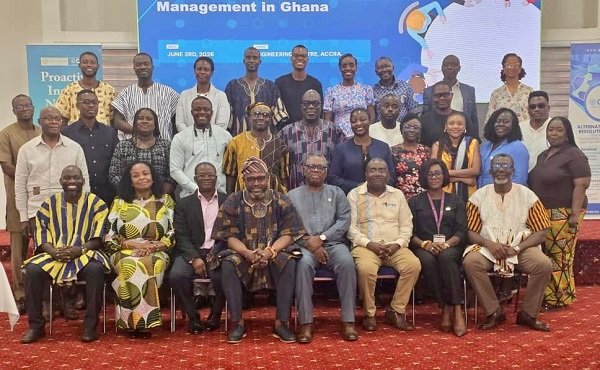
The call was contained in a press release issued by the Ghana Institution of Engineering (GhIE) in Accra yesterday following a Built Environment Professionals Breakfast Roundtable held in Accra on the theme: ‘Greater Metropolitan Area Management in Ghana: Towards Integrated Planning, Governance and Infrastructure Delivery.’
The roundtable, jointly organised by the GhIE, the Ghana Institute of Architects (GIA), the Ghana Institute of Planning (GIP) and the Ghana Institution of Surveyors (GhIS), brought together engineers, architects, planners, surveyors, governance experts and urban development practitioners to deliberate on solutions to challenges confronting Ghana’s metropolitan areas.

According to the release, the current governance arrangements were inadequate to effectively manage rapidly expanding metropolitan areas and require stronger coordination, integrated planning and improved collaboration among key stakeholders to ensure sustainable urban development.
It said participants observed that although decentralisation had increased the number of Metropolitan, Municipal and District Assemblies (MMDAs), it had also resulted in fragmented governance structures that often hindered coordinated planning, service delivery and infrastructure development across contiguous urban areas.
The release, signed by the President of the Ghana Institute of Architects, Tony Asare, on behalf of the Built Environment Professionals, reaffirmed the commitment of the participating institutions to work with government, policymakers, development partners, traditional authorities, academia and civil society organisations to promote integrated planning and coordinated management of Ghana’s metropolitan regions.
Delivering the keynote address, a Governance Expert and Lecturer at the Institute of Local Government Studies, Mr Felix Agyei Amakye, stressed the need for integrated metropolitan governance frameworks capable of coordinating planning, transportation, housing, sanitation, infrastructure development and environmental management across multiple jurisdictions.
He said the growing challenge facing metropolitan areas required stronger collaboration among local assemblies and other stakeholders, as no authority could effectively address them alone.
They further noted that existing legislative frameworks offered opportunities for greater inter jurisdictional cooperation but required stronger implementation mechanisms, institutional coordination and political commitment to achieve their intended objectives.
The professionals also called for long term metropolitan planning, improved land use management, integrated transportation systems, climate resilient infrastructure and stronger enforcement of development regulations to promote sustainable urban growth. They urged the Inter Ministerial Coordinating Committee on Decentralisation (IMCC) to undertake broader stakeholder consultations on the proposed amendments to the Local Governance Act, 2016 (Act 936), particularly on the criteria for the creation and classification of MMDAs in relation to emerging metropolitan governance issues.
BY STEPHANIE BIRIKORANG
Follow our WhatsApp Channel now! https://whatsapp.com/channel/0029VbAjG7g3gvWajUAEX12Q