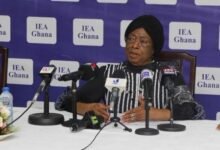
This year’s World Malaria Day was launched in Accra yesterday to be celebrated on the theme: “Driven to End Malaria: Now We Can, Now We Must.”
World Malaria Day is observed on April 25 each year to raise awareness and highlight global efforts to prevent, control and eliminate malaria.
At a news conference to launch the event, the Deputy Programme Manager of the National Malaria Elimination Programme at the Ghana Health Service (GHS), Dr Nana Yaw Peprah, cautioned the public against taking the recent gains made in Ghana’s fight against malaria for granted, but to seek prompt care whenever symptoms occur to prevent avoidable deaths.
“As we reduce the burden of the disease, we need to ensure that people get to our facilities as quickly as possible, so they do not get the complicated form of the disease and risk dying,” he advised.


Presenting progress on Ghana’s malaria elimination efforts, Dr Peprah disclosed that malaria-related deaths declined from 74 in 2024 to 52 in 2025, while confirmed cases dropped from 5,334,849 to 5,312,410 over the same period.
He said malaria admissions per 100,000 population also reduced from 1,150 to 992, while transmission rates declined significantly from 28 out of every 100 persons with suspected fever testing positive for malaria in 2011 to nine out of every 100 in 2025.
Despite the gains, the Greater Accra Region, which has the lowest malaria transmission rate in the country, recorded the highest malaria mortality among the 16 regions last year, while the Oti Region recorded the highest transmission rate.
“One of the critical issues coming up is the fact that people go months, almost a year, without having malaria.
What that means is that you will be losing your passive immunity, so your ability to fight the parasite when you get it will reduce,” Dr Peprah explained.
“Immediately you have the parasite, you could have severe symptoms, and if you do not go to the facility quickly, you may die,” he warned, stressing that malaria remained a major public health threat.
The Deputy Programme Manager called for sustained investment and stronger community support to consolidate gains and help Ghana eliminate malaria by 2028.
“Studies have shown that the more we invest in malaria control, the better it is for us. The return on investment is 32-fold,” he noted.
The Director of Public Health, Dr Franklin Asiedu-Bekoe, who read a speech on behalf of the Director-General of the GHS, noted that funding constraints, climate-related factors and behavioural barriers continued to affect malaria elimination efforts.
He reiterated calls for greater private sector investment to bridge existing funding gaps and bring innovation, efficiency and sustainability to malaria control interventions.
“Ending malaria is within our reach. Now is the time to act decisively and intensify our efforts to ensure that no Ghanaian dies from a preventable and treatable disease like malaria,” he said.
The disease, caused by the Plasmodium parasite and transmitted through the bite of an infected female Anopheles mosquito, is estimated to claim more than 600,000 lives worldwide each year, with the African Region bearing the heaviest burden.
Ghana is currently implementing a National Strategic Plan (2024–2028), which aims to reduce malaria mortality by 90 per cent, cut incidence by 50 per cent and achieve malaria elimination in 21 selected districts by 2028.
BY ABIGAIL ANNOH
Follow our WhatsApp Channel now! https://whatsapp.com/channel/0029VbAjG7g3gvWajUAEX12Q