Ghana’s CAF failure: Who is to blame?
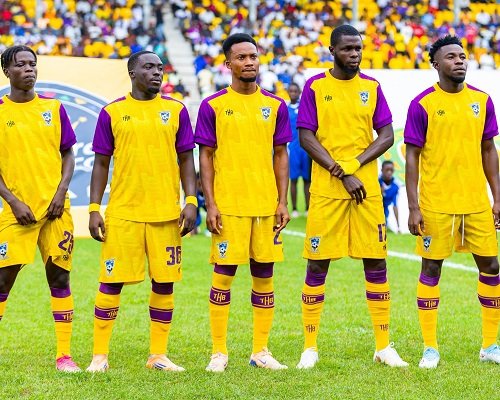
Ghana’s latest failure on the African club stage should not be treated as just another football disappointment.
It should be a wake-up call.
The early elimination of Medeama Sporting Club and Nations FC from the CAF inter-club competitions has once again exposed the difficulties Ghanaian clubs face when they leave the shores of the country to compete against the best on the continent.
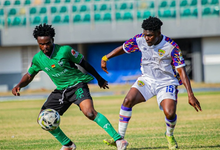
Medeama were knocked out of the CAF Champions League by TP Mazembe after a 4-1 aggregate defeat, while Nations FC, in their first appearance in the CAF Confederation Cup, exited after a 2-1 aggregate defeat to Malian side FC Diarra.


For a country with the rich history of Hearts of Oak, Asante Kotoko and other clubs on the African stage, the situation should concern every stakeholder in Ghana football.
The question now is simple: who should take the blame?

The answer is not one person or one institution.
The responsibility must be shared, but the clubs themselves must accept the biggest part of it.
Qualifying for Africa is one thing. Competing successfully in Africa is another.
Winning the Ghana Premier League or the FA Cup does not automatically make a club ready for the CAF Champions League or Confederation Cup.
African football requires experience, quality recruitment, proper preparation, tactical discipline and a strong squad.
Medeama found this out against TP Mazembe.
The Congolese club has years of experience in continental football and knows how to manage difficult games. Ghanaian clubs must reach that level of preparation if they want better results.
Nations FC also have lessons to learn from their campaign.
Their first continental appearance was always going to be a learning experience, but losing 1-0 away to FC Diarra and then drawing 1-1 at home meant they could not make their home advantage count.
And that is one of the biggest problems facing Ghanaian clubs.
Home advantage is becoming less useful when clubs cannot convert their chances into goals.
But the problem goes beyond individual clubs.
Ghana’s football system must also come under scrutiny.
Many Ghanaian clubs do not have the financial strength to build and maintain strong squads. A team can spend an entire season developing a competitive side, only to lose important players after winning a trophy.
When the continental campaign arrives, the club may have to start rebuilding.
That affects team chemistry and performance.
The Ghana Football Association cannot therefore completely wash its hands of the problem.
The GFA Communications Director, Henry Asante Twum, has argued that the early exits of Ghanaian clubs should not automatically be used to judge the strength of the Ghana Premier League.
He has pointed to Paris Saint-Germain’s dominance in Europe as an example of why the performance of individual clubs does not always represent the strength of an entire league.
That argument deserves consideration.
However, the GFA still has a responsibility to help improve the environment in which Ghanaian clubs operate.
The quality of the domestic league, coaching, refereeing, youth development, stadiums and commercial structure of the game all matter.
The issue of officiating also deserves serious attention.
President John Dramani Mahama has called for reforms in refereeing and raised concerns about the declining standards in Ghanaian football.
If the domestic game is to improve, such concerns cannot simply be ignored.
There is also the question of player development.
Ghana continues to produce talented footballers. But many of the country’s best young players leave the local league at an early age.
Transfers provide important income for clubs and opportunities for players, but the constant loss of key players makes it difficult for Ghanaian clubs to build teams that can compete consistently in Africa.
Perhaps the biggest problem, however, is the mentality.
Ghanaian clubs often celebrate domestic success as if it is the final destination.
It should not be.
Winning the league should open the door to a bigger challenge.
Once a club qualifies for Africa, preparation must begin immediately.
There must be proper scouting of opponents, better physical preparation, tactical planning and adequate squad depth.
Clubs must also recruit players who have experience of African football.
The days when a club could simply assemble a good domestic team and expect to succeed in Africa are gone.
Africa’s top clubs are better organised, better financed and more experienced.
Ghana must respond.
The blame should therefore not be placed only on Medeama, Nations FC or the GFA.
Club owners, sponsors, coaches, players, administrators, government and the wider football community must all accept responsibility.
But the clubs must lead the change.
The question Ghana must now answer is not whether its clubs can qualify for Africa.
The real question is whether they are prepared to compete in Africa.
Until Ghanaian clubs make that change in attitude, planning and preparation, early exits from CAF competitions may continue to be the story every season.
By Enoch Ntiamoah Siaw
You can now read the *Ghanaian Times* and *The Spectator* newspapers digitally on [TimesNewsPlus](https://timesnewsplus.com/newspapers).
Follow our WhatsApp Channel now! https://whatsapp.com/channel/0029VbAjG7g3gvWajUAEX12Q