The Governor of the Bank of Ghana (BoG), Dr Johnson Pandit Asiama, has announced that the central bank has ceased pre-financing the gold purchases by the GoldBod through its auction arrangement.
The decision, which took effect from July 1, marks an important change in the sources of liquidity within the banking system and will form part of the Monetary Policy Committee (MPC)’s assessment as it reviews the appropriate policy stance.
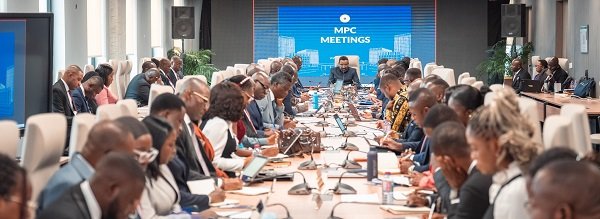
Opening the 131st MPC meeting in Accra on yesterday, Dr Asiama said the move marked a significant shift in the country’s domestic liquidity management framework.
He said the Committee would examine how the cessation of the pre-financing arrangement, together with other recent policy measures, had affected liquidity conditions, monetary policy transmission and broader macroeconomic outcomes.


The Governor explained that the withdrawal of the pre-financing arrangement comes at a time when private sector credit was expanding strongly, making it necessary for the committee to assess its implications for liquidity management and overall monetary policy.
Dr Asiama noted that the review was taking place against a backdrop of growing uncertainty in the global economy.
Although a mid-June ceasefire had briefly eased tensions and brought down crude oil prices, he said renewed hostilities around the Strait of Hormuz had once again pushed Brent crude above 85 dollars per barrel, increasing volatility in international energy markets.
On the domestic front, the Governor described the economy as resilient but acknowledged that inflation had begun to edge upwards after a prolonged period of decline. Headline inflation rose from 3.2 per cent in March to 5.3 per cent in June, largely driven by increases in transport and haulage costs.
He said inflation remained below the Bank’s target range and far lower than the 13.7 per cent recorded a year ago.
The key challenge before the committee, Dr Asiama said, was to determine whether the recent rise represented a temporary adjustment linked to higher import costs or the beginning of a more sustained inflationary trend.
The Governor said economic activity continued to show encouraging signs.
Ghana’s economy expanded by 6.4 per cent in the first quarter, compared with 6.2 per cent during the same period last year, while real private sector credit recorded strong growth after contracting a year earlier.
Dr Asiama said the exchange rate had also remained broadly stable, although the Governor observed that high non-performing loans continued to pose risks within the banking sector.
He identified four major issues that would shape deliberations during the meeting: the inflation outlook, the effectiveness of recent reforms to the cash reserve ratio framework, the impact of ending the GoldBod pre-financing arrangement on domestic liquidity, and the implications of renewed volatility in global oil markets for Ghana’s external position.
As part of efforts to promote transparency and deepen public understanding of monetary policy, the Bank also launched the inaugural Monetary Policy Committee Educational Observership Programme. Selected students from the University of Ghana are participating in aspects of this week’s MPC proceedings to gain first-hand exposure to the analytical and decision-making processes that shape monetary policy.
Dr Asiama said the initiative was intended to strengthen links between academia and policy institutions while fostering greater appreciation of the evidence-based approach that underpins the work of the Bank of Ghana.
BY KINGSLEY ASARE
Follow our WhatsApp Channel now! https://whatsapp.com/channel/0029VbAjG7g3gvWajUAEX12Q