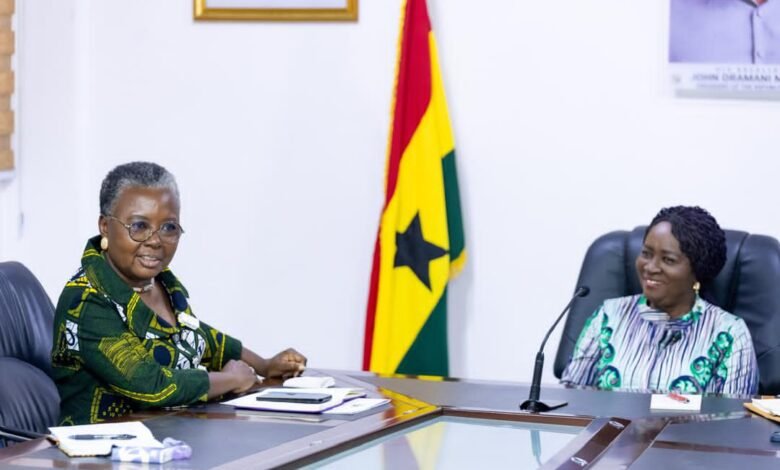
The Vice President Professor Naana Jane Opoku-Agyemang with the Minister for Fisheries and Aquaculture, Madam Emelia Arthur
The Vice President Professor Naana Jane Opoku-Agyemang has raised concern about the growing pollution of Ghana’s seas caused by illegal mining activities, known as galamsey, as well as the dumping of plastic and toxic waste.
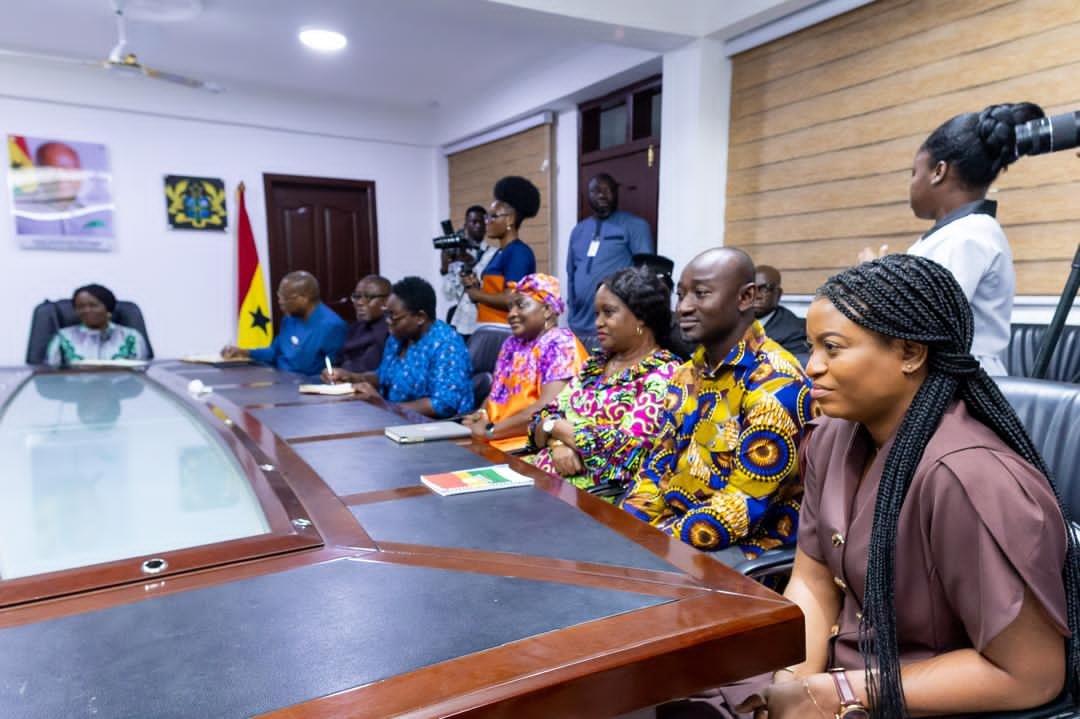
She described the situation as a serious threat to the marine ecosystem, public health and the livelihoods of fisherfolk.
The Vice President made the remarks during a working visit on Tuesday to the Ministry of Fisheries and Aquaculture on yesterday


The visit formed part of the government’s efforts to stay connected to public institutions and the people they serve.
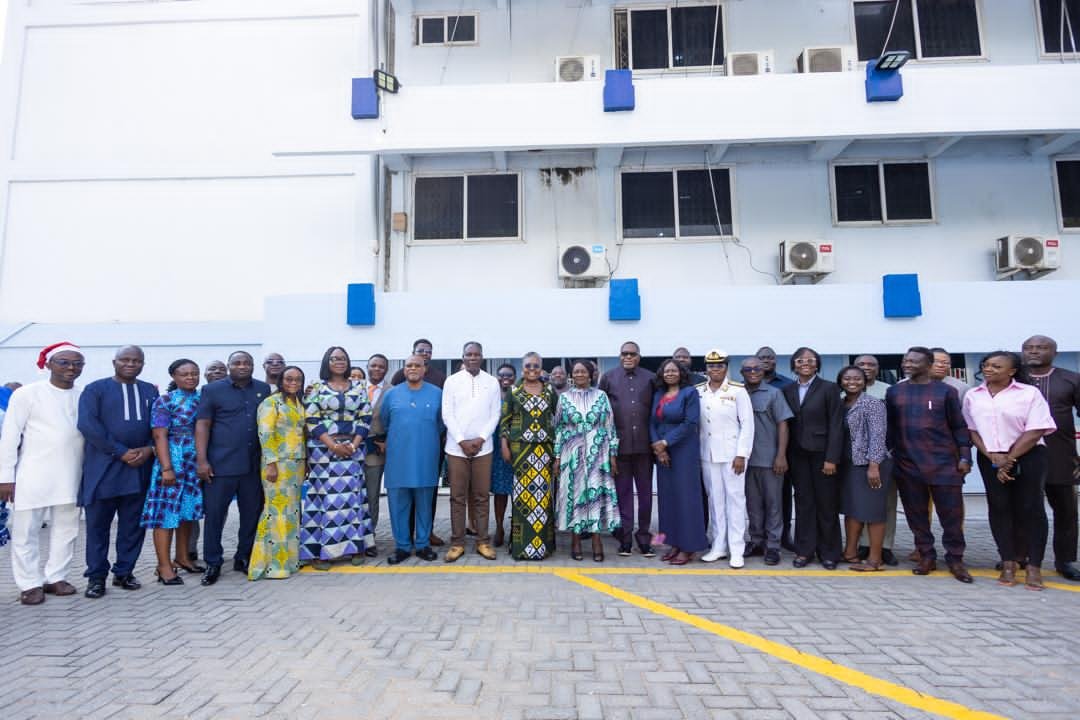
Professor Opoku-Agyemang said the government’s approach is to work closely with ministries, agencies and stakeholders, stressing that leadership is about partnership, not supervision or intimidation.
She noted that although the minister is in charge of the ministry, progress depends on the collective effort of all staff and stakeholders, including those not physically present.
“We are not here to spy on you or make you uncomfortable. We are here to work with you, not just for you. Our doors remain open, and whether you invite us or not, we will come,” she said.
She emphasised the importance of continuous engagement with the people, recalling that the President and the governing party consulted widely during the manifesto process.
According to her, implementing the manifesto does not mean disengaging from the people but strengthening collaboration.
The Vice President praised the diversity of appointments within the ministry, describing it as a strong statement about valuing different experiences and backgrounds, especially indigenous knowledge.
She lamented the tendency to overlook local expertise, particularly in fishing communities, and said this neglect may partly explain challenges in the sector.
Drawing on international examples, she noted that countries like Japan and South Korea treat fishing as a respected profession, with specialised fisheries secondary schools and laboratories where fish are bred and released into the sea.
She questioned why fishing was sometimes looked down upon in Ghana, even though fishermen play a vital role in feeding the nation.
“I come from a fishing village, Komenda, and the fishermen will tell you, ‘Sika wonsu’—there is wealth in the water. Our duty is to find ways to bring that wealth out to improve the lives of fishermen and fishmongers,” she said.
The Vice President also spoke about threats to the marine environment, including galamsey waste entering the sea, plastic pollution and toxic dumping.
She warned that these activities destroy fish stocks and endanger human health, calling for collective responsibility to protect Ghana’s waters.
She assured the ministry of government support, including efforts to improve the welfare of fisherfolk, staff accommodation, insurance and overall quality of life in fishing communities.
According to her, fishermen are not asking for excessive demands but simply the opportunity to contribute meaningfully to the economy with dignity.
Professor Opoku-Agyemang urged ministry staff and stakeholders to work as a team, put the country first and find local solutions to challenges, even without external support.
She encouraged them to aim for lasting impact and pledged continued engagement and fair evaluation.
Minister for Fisheries and Aquaculture, Madam Emelia Arthur, said about 60 per cent of Ghana’s fish supply came from artisanal fishers, but fish stock depletion has reduced supply, creating concerns for food security, national health and national security.
She said the ministry was focusing on agriculture and aquaculture to complement declining marine fish stocks, including partnerships under the 24-hour economy agenda.
The minister also addressed Ghana’s fisheries management challenges, including the European Union’s yellow card on Ghanaian fish, which has been in place for five years.
She said a new fisheries law has been introduced to address key concerns, including extending the inshore exclusion zone for artisanal fishers from six to 12 nautical miles.
Madam Arthur said although discussions with industrial players are ongoing, the reforms are necessary to protect local fishers and restore confidence in Ghana’s fisheries sector.
By AGNES OPOKU SARPONG