The government has set aside GH¢400 million to procure high-capacity buses for state-owned transport companies as part of efforts to improve public transportation across the country.
The initiative is expected to bolster the fleets of Metro Mass Transit (MMT), the State Transport Company (STC) and other public operators, while enhancing safe, reliable and affordable services for commuters.
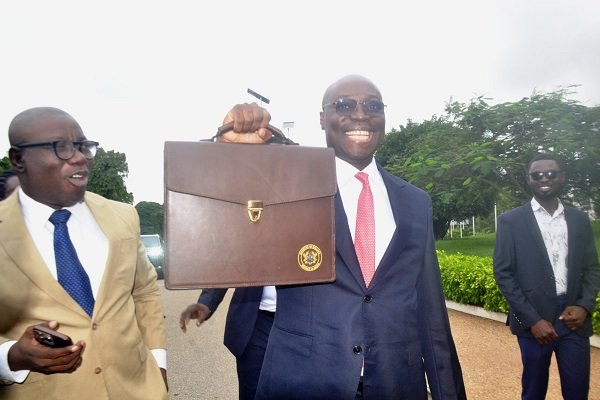
Presenting the 2026 Mid-Year Budget Review in Parliament in Accra yesterday, the Minister of Finance, Dr Cassiel Ato Forson, said the move formed part of measures to address the growing demand for mass transit and ease pressure on the transport system.
He explained that the new buses would increase capacity on busy urban and intercity routes, reduce long queues at terminals during peak periods and offer a more efficient alternative to private vehicle use.
Dr Forson added that the investment highlighted the government’s resolve to modernise public transport infrastructure and expand access to quality services to support economic growth.
Beyond transport, the minister outlined progress on key programmes aimed at driving economic transformation, infrastructure development and energy security.
He disclosed that reforms in the upstream petroleum sector had attracted more than US$3.5 billion in fresh investment commitments from partners in the Jubilee and Offshore Cape Three Points (OCTP) oil fields.
As a result, he said, production at the Jubilee Field had increased from a projected 68,000 barrels to about 95,000 barrels per day.
Gas output had also risen from 245 million to 282 million standard cubic feet per day, with further increases expected under a new agreement with OCTP partners.
Dr Forson further indicated that the government’s Gas-to-Power Strategy had generated savings of GH¢3.08 billion (US$268.5 million) in fuel costs in the first half of 2026, largely due to the increased use of natural gas instead of light crude oil for power generation.
On infrastructure, he said work had begun on 87 road and bridge projects under the Big Push Infrastructure Programme across all 16 regions.
He added that preparations for the 176-kilometre Accra-Kumasi Expressway were far advanced, with US$1.7 billion already secured in a dedicated account at the Bank of Ghana.
The minister also announced plans to construct a 3.6-kilometre bridge across the Afram River between Adawso and Ekye Amanfrom to replace long-standing ferry services.
When completed by the end of 2028, the bridge is expected to be the longest in the country and will provide a safe, all-weather crossing, link the Kwahu Afram Plains to the national road network and unlock economic opportunities in the area.
Dr Forson said the project would make it easier for farmers to transport produce such as maize, cassava, yam and rice to markets, reduce travel time and improve access to essential services, including healthcare and education.
He noted that the project would also create jobs, attract investment and strengthen food security.
On the Eastern Corridor, he said work on the Dambai Bridge was progressing steadily.
The project, which includes a 1.49-kilometre bridge and about 6.8 kilometres of approach roads, had reached six per cent completion by the end of June, slightly ahead of schedule.
Dr Forson further announced the commencement of the Agricultural Enclave Roads Programme, under which US$523 million is being invested to rehabilitate 1,050 kilometres of feeder roads across four major agricultural corridors in 13 regions.
He said the programme would improve connectivity between farms and markets, reduce post-harvest losses and transport costs, and create about 25,000 direct and indirect jobs, including at least 7,500 for women.
The minister reaffirmed the government’s commitment to sustained investment in transport, energy and road infrastructure to improve service delivery, stimulate economic growth and create employment opportunities nationwide.
BY KINGSLEY ASARE
ollow our WhatsApp Channel now! https://whatsapp.com/channel/0029VbAjG7g3gvWajUAEX12Q