Budget cuts may stall jobs, infrastructure – CPS
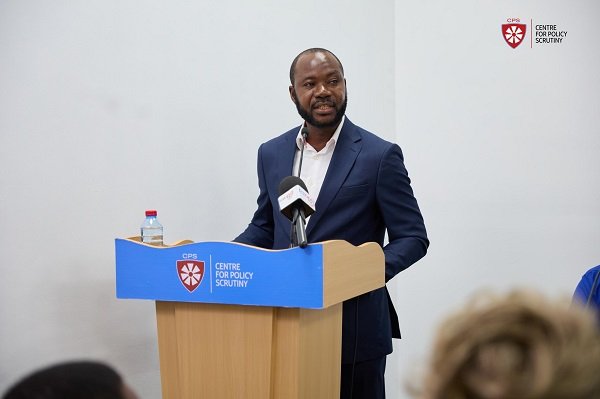
The Executive Director of the Centre for Policy Scrutiny (CPS), Dr Adu Owusu Sarkodie, has cautioned that persistent cuts in government expenditure could undermine infrastructure development, job creation and Ghana’s broader economic transformation agenda.
He said although the economy recorded stronger fiscal discipline and macroeconomic stability in the first half of 2026, overall development risked stagnating if the government continued to rely largely on expenditure cuts instead of increasing investment.
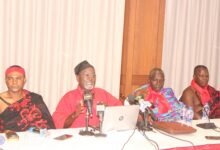
Dr Sarkodie was speaking at the Centre’s review of the 2026 Mid-Year Budget Statement and Economic Policy in Accra yesterday.
He indicated that the government had failed to execute about GH¢30.7 billion in programme-critical expenditure over the past one-and-a-half years, a situation he said had delayed capital projects and led to the under-delivery of key interventions.

According to him, while the fiscal deficit had fallen below target, the improvement had been driven mainly by expenditure compression rather than stronger domestic revenue mobilisation.
Dr Sarkodie explained that in the first half of 2026, government recorded a revenue shortfall of GH¢1.4 billion against its target, while primary expenditure fell short by GH¢28.7 billion. Capital expenditure alone underperformed by GH¢14.4 billion, representing 39.3 per cent of the budgeted allocation.
The CPS Executive Director, who is also a lecturer at the University of Ghana, said the reduced spending had strengthened fiscal balances, but at the cost of delayed infrastructure projects, reduced public investment and slower implementation of government programmes.
He further observed that about 18 per cent of programme-critical expenditure, amounting to GH¢30.7 billion, had not been executed since 2025, thereby weakening service delivery across Ministries, Departments and Agencies.
Dr Sarkodie also raised concerns about inconsistencies in figures contained in the 2026 Mid-Year Budget Review. He cited instances where total expenditure was reported as GH¢129.2 billion on one page and GH¢136.9 billion on another, while actual capital expenditure was variously stated as GH¢21.7 billion and GH¢22.2 billion.
He urged the government to shift from expenditure-led fiscal consolidation to stronger domestic revenue mobilisation by improving VAT compliance, broadening taxation within the informal sector, strengthening property tax administration and enhancing customs revenue collection.
Dr Sarkodie further called for increased public investment to complement private sector financing, faster implementation of capital projects, greater transparency in budget execution and the publication of programme-level expenditure data to improve accountability.
A labour economist, Dr Prince Adjei, also cautioned that persistent under-execution of capital and programme expenditure was having a direct impact on employment, particularly among young people entering the labour market.
He explained that delays in infrastructure projects and stalled public investments were constraining labour demand in construction, manufacturing support services and local supply chain sectors that traditionally absorbed large numbers of semi-skilled and low-skilled workers.
BY CLIFF EKUFUL
Follow our WhatsApp Channel now! https://whatsapp.com/channel/0029VbAjG7g3gvWajUAEX12Q