Interior Ministry reaffirms commitment to disaster risk reduction
THE Minister for the Interior, Muntaka Mohammed-Mubarak, has reaffirmed the Ministry’s commitment to strengthening disaster risk reduction in Ghana, emphasising collective efforts to prevent disasters, protect lives and property, and build resilient communities.
He said effective disaster risk management required proactive measures, stronger institutional coordination and the active involvement of households and communities to minimise the impact of disasters.
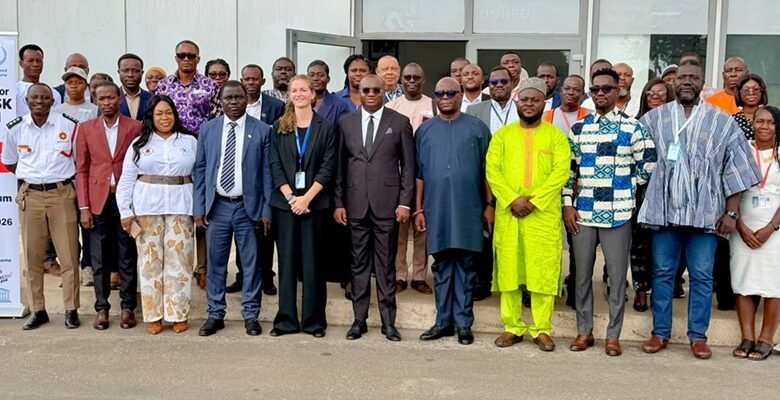
The Minister made the commitment in an address delivered on his behalf by the Deputy Minister for the Interior, Ebenezer Okletey Terlabi, at a high-level symposium marking the International Day for Disaster Risk Reduction, on the theme, “Resilience Starts at Home”.
He commended the National Disaster Management Organisation (NADMO) and development partners for organising the symposium, which provided a platform to examine challenges and develop practical recommendations to improve disaster management.


According to Mr Mohammed-Mubarak, Ghana continued to face flooding, fire outbreaks and extreme weather events, requiring greater emphasis on prevention, preparedness and early warning systems.
He stressed that protecting lives and property required coordinated action by government institutions, local authorities, traditional leaders, development partners, the private sector and citizens to identify risks, strengthen preparedness and integrate disaster risk reduction into national development.
The Presidential Adviser on National Resilience and Emergency Preparedness, Ernest Brogya Genfi, announced that President John Dramani Mahama had directed his office to assess Ghana’s national resilience and emergency preparedness architecture to inform a comprehensive strategic plan.
Stakeholder consultations were scheduled to begin in November.
Mr Genfi cited recent flooding in Accra and Hohoe, alongside fires at the Kumasi Central Market and other commercial areas, as evidence of the country’s vulnerability to disasters.
He identified household emergency plans, community-based early warning systems, improved drainage, market fire safety and climate-resilient infrastructure as priorities for reducing disaster risks.
He also called for inclusive emergency response systems and affordable insurance schemes to protect vulnerable households and said disaster risk reduction should be a fundamental priority for sustainable development and national security, rather than merely an emergency response function.
He noted that growing threats from flooding, extreme weather events and fires required sustained investment in preparedness, reliable early warning systems and risk-informed planning, adding that household preparedness must be supported by effective institutions and sound planning to enable communities to act before disasters occurred.
In an address read on his behalf by the Director-General in Charge of Technical at NADMO, Alhaji Ahmed Rufai-Aggudy, the organisation’s Director-General, Major (Rtd) Dr Joseph Bikanyi Kuyon, stressed the need to address underlying vulnerabilities, including poor drainage, uncontrolled development, environmental degradation and inadequate public awareness, which could worsen the impact of natural hazards.
BY STEPHANIE BIRIKORANG
SKIP THE QUEUE, TAP THE NEWS

Read the Ghanaian Times and The Spectator newspapers from the comfort of your device via TimesNewsPlus.
Follow our WhatsApp Channel now! https://whatsapp.com/channel/0029VbAjG7g3gvWajUAEX12Q